• Send Us A Tip
  • Calling all Tech Writers
  • Advertise
Friday, July 10, 2026
  • Login
TechStory
  • News
  • Crypto
  • Gadgets
  • Memes
  • Gaming
  • Cars
  • AI
  • Startups
  • Markets
  • How to
No Result
View All Result
  • News
  • Crypto
  • Gadgets
  • Memes
  • Gaming
  • Cars
  • AI
  • Startups
  • Markets
  • How to
No Result
View All Result
TechStory
No Result
View All Result
Home News

New study finds it’s harder to turn off a robot when it’s begging for its life

by Smriti Sharma
August 3, 2018 - Updated On August 14, 2018
in News, Robotics
Reading Time: 2 mins read
0
New study finds it’s harder to turn off a robot when it’s begging for its life
TwitterWhatsappLinkedin

You might also like

Understanding Edge AI: Bringing Artificial Intelligence Closer to Where Data Is Created

Browser Fingerprinting Explained: How Websites Identify Devices Beyond Cookies

Swiggy’s Domestic Ownership Crosses 50% For The First Time, But IOCC Status Still Needs A Control Test

3 August, 2018

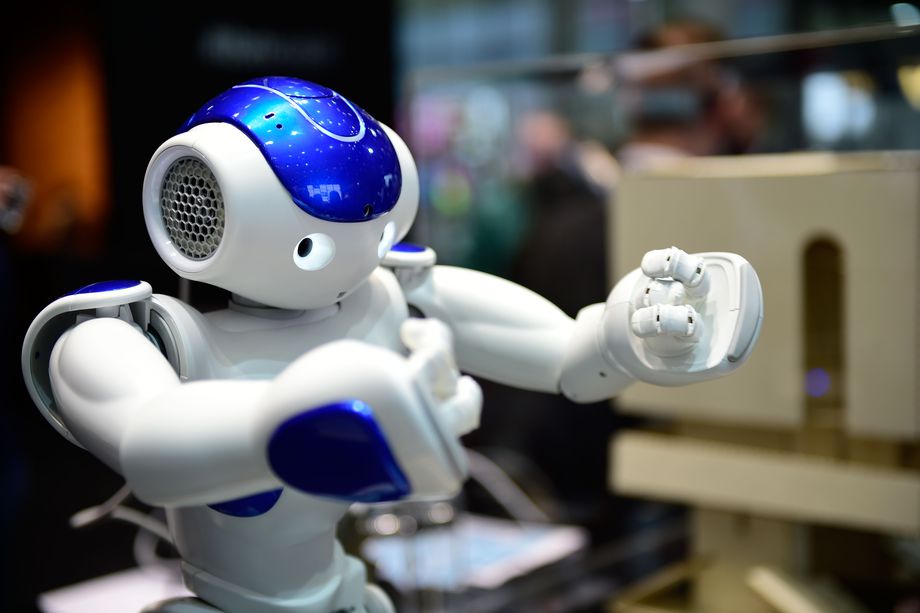
Robots designed to interact socially with humans are slowly becoming more and more common. They’re appearing as receptionists, tour guides, security guards, and porters. But how good are we at treating these robots as robots? A growing body of evidence suggests not good at all. Studies have repeatedly shown we’re extremely susceptible to social cues coming from machines, and a recent experiment by German researchers demonstrates that people will even refuse to turn a robot off — if it begs for its life.

In the study, published in the open access journal PLOS One, 89 volunteers were recruited to complete a pair of tasks with the help of Nao, a small humanoid robot. The participants were told that the tasks (which involved answering a series of either / or questions, like “Do you prefer pasta or pizza?”; and organizing a weekly schedule) were to improve Nao’s learning algorithms. But this was just a cover story, and the real test came after these tasks were completed, and scientists asked participants to turn off the robot.

In roughly half of experiments, the robot protested, telling participants it was afraid of the dark and even begging: “No! Please do not switch me off!” When this happened, the human volunteers were likely to refuse to turn the bot off. Of the 43 volunteers who heard Nao’s pleas, 13 refused. And the remaining 30 took, on average, twice as long to comply compared to those who did not not hear the desperate cries at all. (Just imagine that scene from The Good Place for reference.)

When quizzed about their actions, participants who refused to turn the robot off gave a number of reasons for doing so. Some said they were surprised by the pleas; others, that they were scared they were doing something wrong. But the most common response was simply that the robot said it didn’t want to be switched off, so who were they to disagree?

As the study’s authors write: “Triggered by the objection, people tend to treat the robot rather as a real person than just a machine by following or at least considering to follow its request to stay switched on.”

(Image:- theverge.com)

Tags: DarklifeRobot
Tweet54SendShare15
Previous Post

Swiggy acquires on-demand delivery firm Scootsy for Rs 50 crore

Next Post

Ranchi man develops humanoid robot Rashmi, Indian version of ‘Sophia’

Smriti Sharma

Recommended For You

Understanding Edge AI: Bringing Artificial Intelligence Closer to Where Data Is Created

by Ishaan Negi
July 9, 2026
0
Understanding Edge AI: Bringing Artificial Intelligence Closer to Where Data Is Created

Artificial Intelligence (AI) has transformed the way businesses operate, from powering recommendation engines to enabling self-driving cars. However, as AI applications become more sophisticated and data-intensive, relying solely...

Read more

Browser Fingerprinting Explained: How Websites Identify Devices Beyond Cookies

by Ishaan Negi
July 9, 2026
0
Browser Fingerprinting Explained: How Websites Identify Devices Beyond Cookies

Online fraud has become increasingly sophisticated. Cybercriminals no longer rely on simple phishing scams or stolen passwords—they use VPNs, proxy servers, virtual machines, bot networks, and stolen credentials...

Read more

Swiggy’s Domestic Ownership Crosses 50% For The First Time, But IOCC Status Still Needs A Control Test

by Rounak Majumdar
July 9, 2026
0
Swiggy's Domestic Ownership Crosses 50% For The First Time, But IOCC Status Still Needs A Control Test

Swiggy crossed a significant regulatory milestone on July 6, 2026, when its domestic shareholding reached 50.24% making it, for the first time since its inception, a majority Indian-owned...

Read more
Next Post
Ranchi man develops humanoid robot Rashmi, Indian version of ‘Sophia’

Ranchi man develops humanoid robot Rashmi, Indian version of ‘Sophia’

Please login to join discussion

Techstory

Tech and Business News from around the world. Follow along for latest in the world of Tech, AI, Crypto, EVs, Business Personalities and more.
reach us at info@techstory.in

Advertise With Us

Reach out at - info@techstory.in

Aviator Game India 2026

BROWSE BY TAG

#Crypto #howto 2024 acquisition AI amazon Apple Artificial Intelligence bitcoin Business China cryptocurrency e-commerce electric vehicles Elon Musk Ethereum facebook funding Gaming Google India Instagram Investment ios iPhone IPO Market Markets Meta Microsoft News OpenAI samsung Social Media SpaceX startup startups tech technology Tesla TikTok trend trending twitter US

© 2025 Techstory.in

No Result
View All Result
  • News
  • Crypto
  • Gadgets
  • Memes
  • Gaming
  • Cars
  • AI
  • Startups
  • Markets
  • How to

© 2025 Techstory.in

Welcome Back!

Login to your account below

Forgotten Password?

Retrieve your password

Please enter your username or email address to reset your password.

Log In
Are you sure want to unlock this post?
Unlock left : 0
Are you sure want to cancel subscription?