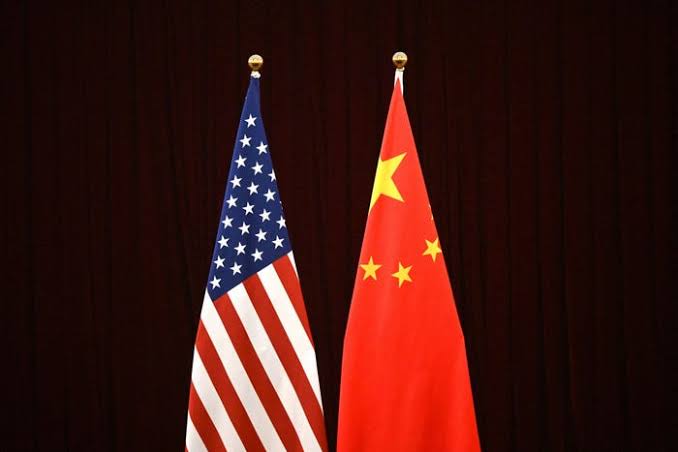
In recent years, China has ramped up its disinformation campaigns in an effort to shape international perceptions. These campaigns, backed by advanced technologies like artificial intelligence, are part of a well-funded and strategic initiative aimed at bolstering Beijing’s global influence. U.S. intelligence officials and policymakers are increasingly alarmed by these efforts, particularly as the 2024 U.S. presidential election nears.
China’s disinformation operations are not limited to its own state-run media. Beijing has built a sprawling network of fake news websites and influencers to spread pro-China narratives. In many cases, these sites appear to be legitimate, mirroring established news organizations with familiar fonts and layouts. The goal is simple: amplify pro-Chinese content while obscuring its origins.
Kurt Campbell, a senior U.S. diplomat overseeing Asia policy, witnessed the extent of this disinformation firsthand during a 2022 trip to the Solomon Islands. While there, he encountered a false report accusing the U.S. of running chemical and biological labs in Ukraine—a claim initially circulated by Russia and then magnified by China’s media networks. Campbell described it as a striking example of Russian and Chinese cooperation in disinformation efforts.
A Technological Edge: AI in Disinformation
China’s use of artificial intelligence has made its propaganda efforts even more sophisticated. Billions of dollars are being funneled into the development of AI-generated content, including fake reporters and influencers who are not tied to any real credentials or media organizations. A prominent example of this can be found in a network of websites that mimic legitimate news outlets but serve as platforms for Chinese state narratives.
Shannon Van Sant, an advisor to the Committee for Freedom in Hong Kong Foundation, exposed how some of these websites use AI-generated images and false journalist profiles. “The manipulation of media is ultimately a manipulation of readers, and this is harmful to democracy and society,” Van Sant said, underscoring the dangers of China’s growing propaganda reach.
Global Propaganda Network
China’s influence efforts extend beyond creating fake reporters. It has increasingly relied on foreign actors—both real and fictitious—to promote Beijing’s messages. These actors present themselves as independent voices but consistently echo pro-China talking points, making it difficult to directly link them to the Chinese government.
Xiao Qiang, a research scientist at the University of California, Berkeley, emphasized how Beijing deploys influencers and journalists with foreign-sounding names to relay the message that “the Chinese Communist Party works for its people.” Despite the careful crafting of these campaigns, the narratives remain unmistakably aligned with Beijing’s goals.
Analysts at Logically, a cybersecurity firm, identified more than 1,200 websites that have carried content from Russian or Chinese state media. Many of these websites use names that resemble traditional news outlets, targeting specific audiences with pro-China content. Though not directly owned by the Chinese government, these sites play a crucial role in amplifying China’s messages.
U.S. Response and Global Implications
Faced with the growing threat of Chinese disinformation, U.S. lawmakers are seeking to ramp up efforts to counter Beijing’s global influence. A recent bill passed by the House of Representatives would allocate $325 million annually through 2027 to combat China’s disinformation campaigns. However, the measure still awaits Senate approval.
“We are in a global competition for influence with China, and if you want to win it, you cannot do it on a middle-power budget,” said Rep. Gregory Meeks, a leading advocate for the bill. The funding would help the U.S. bolster its own information campaigns to counter China’s growing reach.
China’s efforts to control global narratives are tied closely to its ambitions in emerging technologies like AI, electric vehicles, and quantum computing. Countries that lead in these areas will have a significant advantage in shaping the future global order, noted Jaret Riddick, a senior fellow at Georgetown University’s Center for Security and Emerging Technology. Beijing sees disinformation as a tool to gain the upper hand in this technological race.