• Send Us A Tip
  • Calling all Tech Writers
  • Advertise
Friday, June 26, 2026
  • Login
TechStory
  • News
  • Crypto
  • Gadgets
  • Memes
  • Gaming
  • Cars
  • AI
  • Startups
  • Markets
  • How to
No Result
View All Result
  • News
  • Crypto
  • Gadgets
  • Memes
  • Gaming
  • Cars
  • AI
  • Startups
  • Markets
  • How to
No Result
View All Result
TechStory
No Result
View All Result
Home Cars

Ford’s EV Strategy Faces Financial Struggles as GM Surges Ahead in U.S. Market

by Samir Gautam
October 31, 2024
in Cars, Electric Vehicles
Reading Time: 3 mins read
0
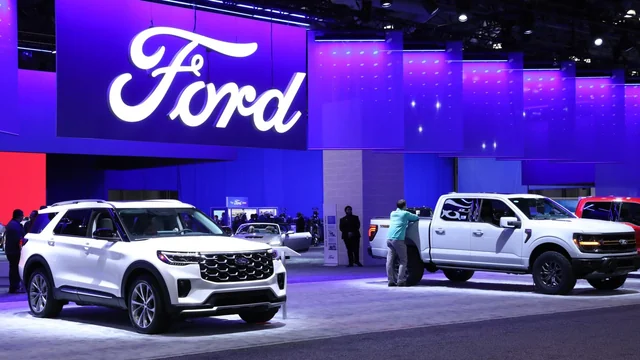
Ford just posted a $36 million net loss for the second quarter of 2025, despite pulling in record revenue of over $50 billion

Credit: reddit

TwitterWhatsappLinkedin

In the ongoing race to claim second place to Tesla in the U.S. electric vehicle (EV) market, Ford Motor Company initially sprinted ahead, debuting its Mustang Mach-E in 2020. Designed as a sporty electric SUV inspired by the classic Mustang, the Mach-E gave Ford an early edge over General Motors (GM) in the EV sector. However, as of this year, the competition between the two Detroit automakers has taken a new turn, with GM’s EV sales climbing and Ford encountering substantial financial setbacks in its electrification journey.

You might also like

Polestar Faces U.S. Sales Halt From 2027 After Commerce Department Denial

Ferrari Appoints Former BMW Italy Chief as Marketing Head After Luce EV Backlash

Are CVT Transmissions Reliable? What Drivers Need to Know Before Buying

The most recent indication of Ford’s challenges emerged on Monday, when the company disclosed a $1.2 billion loss from its EV division, Ford Model e, for the third quarter, bringing total losses for the year to $3.7 billion. Although Ford’s overall revenue rose by 5% to $46.2 billion, the company’s net profit dropped by 24% year-over-year, reaching $896 million. Ford’s Chief Financial Officer, John Lawler, acknowledged the company’s financial hurdles, noting, “Our strategic advantages are not falling to the bottom line the way they should because of cost.”

Ford’s Struggles with EV Demand Contrast with GM’s Profitable Growth

Ford’s EV lineup includes the Mustang Mach-E, the F-150 Lightning pickup, and an electric Transit van. Despite promising launches, these models have struggled to maintain momentum amid cooling consumer interest and rising production costs. Ford’s strategy relied heavily on outsourcing battery production, with suppliers like LG Energy Solution, SK On, and CATL providing battery packs from facilities in Poland, Georgia, and China. Ford also invested in dedicated assembly lines and expanded capacity, anticipating strong demand. However, as consumer interest waned, Ford was forced to cut production and lower prices, stretching profitability further out of reach.

In contrast, GM’s EV strategy appears to be paying off. With significant investments in standardized battery technology and new manufacturing plants, GM’s electric models have seen strong sales growth. Last week, GM reported a $3 billion profit for the third quarter, consistent with the previous year’s results, and expects to close the year with record earnings near or above $10 billion. Although GM, like Ford, faces initial losses on its EV models, it has indicated that it could soon reach profitability for each vehicle on a variable cost basis—covering manufacturing costs, excluding fixed expenses like factory and equipment investments. This optimistic outlook reflects GM’s more cautious, longer-term approach to EV production, prioritizing a standardized battery platform and in-house production to streamline costs and bolster profit margins.

Ford and GM: Divergent Strategies in the Race for EV Dominance

The disparity between Ford and GM highlights the different paths the two automakers have taken toward electrification. Ford adopted a rapid, supplier-based approach for its early EVs, including the Mach-E and Lightning, which preceded the upcoming Tesla Cybertruck by more than 18 months. While this accelerated timeline allowed Ford to gain a temporary lead, it also led to high dependency on external battery suppliers and added costs. GM, however, opted for a vertically integrated model, partnering with LG Energy Solution to create the Ultium battery platform, a standardized, scalable battery system designed to power its entire EV lineup. This approach, coupled with new, dedicated EV factories, positions GM to control costs more effectively and potentially achieve higher profitability on each vehicle sold.

Ford’s current EV challenges are not unique, with other major automakers like Volkswagen and Rivian also grappling with the economic realities of EV production. However, GM’s gains underscore the importance of a well-coordinated approach to electrification as it takes strides toward profitable EV production.

Ford’s road ahead will likely require reevaluation of its strategy to improve cost efficiencies and strengthen profitability as consumer demand for EVs continues to evolve. In the meantime, GM’s growing foothold in the U.S. EV market signals a shifting dynamic among traditional automakers, as each pursues a different path to meet the demands of an electric future.


Tags: Ford EVford motorGeneral Motor
Tweet55SendShare15
Previous Post

Kia Unveils Rugged EV9 and Electric Van Concepts Ahead of SEMA 2024

Next Post

How to Get and Use the Mangler Cannon in Call of Duty: Black Ops 6

Samir Gautam

Recommended For You

Polestar Faces U.S. Sales Halt From 2027 After Commerce Department Denial

by Samir Gautam
June 26, 2026
0

SEO Title: Polestar U.S. Sales Halted From 2027 Under Connected Vehicle Rule Slug: polestar-us-sales-halted-connected-vehicle-rule-2027 Keyphrase: Polestar U.S. sales halt Meta Description: Polestar U.S. sales halt begins with the...

Read more

Ferrari Appoints Former BMW Italy Chief as Marketing Head After Luce EV Backlash

by Samir Gautam
June 26, 2026
0
Ferrari Appoints Former BMW Italy Chief as Marketing Head After Luce EV Backlash

Ferrari has announced a major leadership change just weeks after its first fully electric vehicle, the Luce, triggered one of the most divisive reactions in the company’s recent...

Read more

Are CVT Transmissions Reliable? What Drivers Need to Know Before Buying

by Samir Gautam
June 25, 2026
0
Continuously Variable Transmissions, better known as CVTs, have become one of the most debated features in modern cars. They are praised for fuel efficiency and smooth city driving, but many buyers still hesitate when they see CVT listed on a spec sheet. The short answer is yes, CVTs can be reliable. But reliability depends heavily on the manufacturer, model year, driving habits, and maintenance history. A well-designed, properly maintained CVT can provide years of trouble-free service. A neglected one can become an expensive headache. Unlike a conventional automatic transmission, which uses fixed gears, a CVT uses variable pulleys connected by a steel belt or chain. This allows the engine to stay within its most efficient rev range, helping improve fuel economy and reduce jerky gear changes. The trade-off is that the system can be more sensitive to heat, fluid condition, and heavy loads. Why CVTs Earned a Mixed Reputation CVTs did not gain their reputation overnight. Some early models, particularly from the late 2000s and early 2010s, experienced issues such as overheating, hesitation, shuddering, and premature failure. Nissan’s older CVT-equipped cars are often mentioned in these discussions, and those experiences shaped public perception of the technology. However, it is important not to judge every CVT by the same standard. Modern versions have improved significantly through better cooling systems, updated software, stronger internal components, and more refined calibration. Brands such as Honda, Toyota, and Subaru have also continued to improve their CVT systems over time. Toyota’s hybrid e-CVT deserves a separate mention. Despite the name, it works differently from a belt-driven CVT and has developed a particularly strong reputation for durability in hybrid vehicles. Maintenance Makes the Biggest Difference A CVT is not a fit-and-forget component. The transmission fluid plays a crucial role because it lubricates the internal parts, controls hydraulic pressure, and helps manage heat. When the fluid becomes old or contaminated, the belt, pulleys, and bearings can wear faster. Many specialists recommend changing CVT fluid between 30,000 and 60,000 miles, depending on the vehicle, driving conditions, and manufacturer guidance. A drain-and-fill service is generally preferred over an aggressive pressurised flush. Using the exact fluid specified by the automaker also matters, as CVT fluids are not interchangeable with regular automatic transmission fluid. Drivers who regularly tow heavy loads, drive in extreme heat, tackle steep roads, or spend long hours in stop-start traffic should be especially careful. These conditions raise transmission temperatures and place more strain on the system. Warning Signs Owners Should Not Ignore A healthy CVT should feel smooth and predictable. If the car begins to shudder while accelerating, produces a new whining noise, hesitates when moving into Drive or Reverse, or revs without gaining speed, it is worth getting checked quickly. Ignoring early symptoms can turn a manageable fluid, sensor, or software issue into a full transmission replacement. That is where CVTs can become costly, because many units are replaced rather than rebuilt. The Verdict CVTs are not automatically unreliable, and they are not automatically the best choice for every driver either. For everyday commuting, city use, and fuel-conscious buyers, a modern CVT can be a sensible option. It delivers smooth performance and often better fuel economy than a conventional automatic. For buyers who tow regularly, drive aggressively, or want a transmission built for high torque and hard use, a traditional torque-converter automatic may still offer more confidence. The smartest approach is simple: research the exact model and year, check service records carefully, and do not skip CVT fluid maintenance. The badge on the car matters less than the engineering behind it and the care it receives.

Continuously Variable Transmissions, better known as CVTs, have become one of the most debated features in modern cars. They are praised for fuel efficiency and smooth city driving,...

Read more
Next Post
How to Get and Use the Mangler Cannon in Call of Duty: Black Ops 6

How to Get and Use the Mangler Cannon in Call of Duty: Black Ops 6

Please login to join discussion

Techstory

Tech and Business News from around the world. Follow along for latest in the world of Tech, AI, Crypto, EVs, Business Personalities and more.
reach us at info@techstory.in

Advertise With Us

Reach out at - info@techstory.in

Aviator Game India 2026

BROWSE BY TAG

#Crypto #howto 2024 acquisition AI amazon Apple Artificial Intelligence bitcoin Business China cryptocurrency e-commerce electric vehicles Elon Musk Ethereum facebook funding Gaming Google India Instagram Investment ios iPhone IPO Market Markets Meta Microsoft News OpenAI samsung Social Media SpaceX startup startups tech technology Tesla TikTok trend trending twitter US

© 2025 Techstory.in

No Result
View All Result
  • News
  • Crypto
  • Gadgets
  • Memes
  • Gaming
  • Cars
  • AI
  • Startups
  • Markets
  • How to

© 2025 Techstory.in

Welcome Back!

Login to your account below

Forgotten Password?

Retrieve your password

Please enter your username or email address to reset your password.

Log In
Are you sure want to unlock this post?
Unlock left : 0
Are you sure want to cancel subscription?