

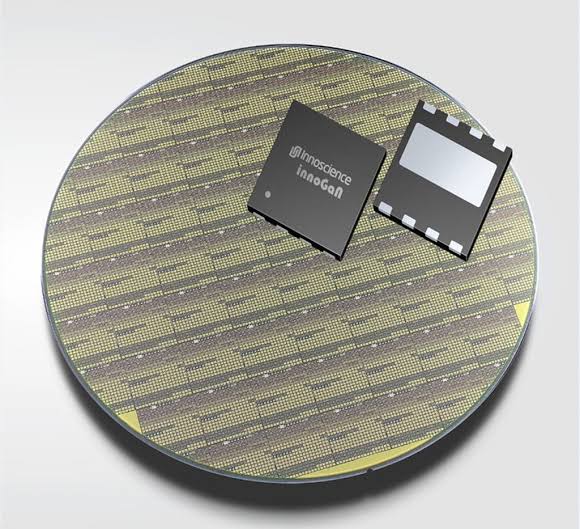
Chinese scientists have made a major breakthrough in semiconductor research by identifying the main cause of defects in gallium nitride (GaN), a critical material used in advanced electronics. Their discovery could lead to higher-quality, cost-effective GaN chips, potentially strengthening China’s position in the global semiconductor industry while intensifying competition with the United States.
GaN is a third-generation semiconductor widely used in 5G networks, radar systems, military communication, and aerospace technology. China dominates gallium production, supplying 98% of the world’s supply. In a strategic move, Beijing recently restricted exports of the material to the U.S., making it more difficult for the Pentagon to acquire GaN-based chips. If China refines its GaN manufacturing techniques, it could further expand its cost advantage over American semiconductor companies.
Cracking the Mystery of GaN Defects
The quality of GaN chips depends on how they are fabricated, typically using silicon or sapphire as a base material. However, during the production process, structural misalignments—known as dislocations—can occur, leading to defects that degrade performance.
Existing solutions, such as changing crystallization temperatures or switching substrates, only manage the symptoms rather than addressing the root cause of these defects. Professor Huang Bing, a researcher at the Beijing Computational Science Research Centre, led a team that sought a more fundamental solution.
“This time, we’re going straight to the source to improve both performance and cost-efficiency,” Huang said on Tuesday.
Unraveling the Mechanism Behind GaN Defects
Huang’s team, working with Peking University’s Department of Physics, conducted detailed experiments and theoretical analyses to pinpoint the origin of GaN defects. Their findings, published on February 5 in Physical Review Letters, revealed that defects in GaN crystals primarily form through a process called “climbing,” where atoms shift position at the microscopic level.
This is different from silicon, where defects mainly occur through “gliding,” a better-understood process that the semiconductor industry has learned to control. Until now, the atomic-level mechanism behind climbing defects in GaN was poorly understood, making it difficult to produce defect-free GaN chips.
Cutting-Edge Techniques Lead to a Breakthrough
To study these microscopic defects, Professors Yang Xuelin and Shen Bo of Peking University used advanced scanning transmission electron microscopy (STEM) combined with deep-sectioning techniques. These tools allowed them to observe atomic movements within GaN crystals in real time—something previously impossible.
Building on these observations, Huang’s team conducted simulations to analyze the atomic and electronic structures of defective regions. Their research led to a new approach: adjusting the Fermi level—the energy threshold that determines how electrons behave in semiconductors—to control the formation of defects.
Fine-Tuning the Semiconductor Fabrication Process
By manipulating the Fermi level, the researchers found they could significantly reduce defects in GaN materials. Introducing specific impurities during the crystallization process and increasing the gate voltage in GaN-based devices helped control defect density. These refinements could lead to more efficient and cost-effective GaN chip production.
Going forward, the team plans to monitor GaN crystallization in real time and assess the performance improvements of their technique in industrial applications.
Strategic Implications for China’s Semiconductor Industry
Peking University has played a key role in China’s push for semiconductor self-sufficiency. In 2017, the university’s Wide Bandgap Semiconductor Research Centre helped establish Beijing Lattice Semiconductor Technology Company, which focuses on domestic production of high-performance semiconductors like GaN and silicon carbide.
China’s dominance in gallium production gives it leverage in the global semiconductor market. According to the U.S. Geological Survey (USGS), China holds about 68% of the world’s gallium reserves and accounts for over 90% of production. In July 2023, Beijing imposed export controls on gallium and germanium, reinforcing these restrictions in December 2024. Since then, global gallium prices have more than doubled, according to Fastmarkets data.
The U.S. has voiced concerns about the impact of China’s gallium restrictions. In November, USGS director David Applegate warned that reduced access to these materials would have significant economic consequences for the American semiconductor industry. With China advancing its GaN technology while tightening control over raw materials, the global semiconductor competition is set to intensify.