

• Send Us A Tip
  • Calling all Tech Writers
  • Advertise
Monday, July 13, 2026
  • Login
TechStory
  • News
  • Crypto
  • Gadgets
  • Memes
  • Gaming
  • Cars
  • AI
  • Startups
  • Markets
  • How to
No Result
View All Result
  • News
  • Crypto
  • Gadgets
  • Memes
  • Gaming
  • Cars
  • AI
  • Startups
  • Markets
  • How to
No Result
View All Result
TechStory
No Result
View All Result
Home Future Tech AI

Sergey Brin Says 60 Hours A Week Is The ‘Sweet Spot’ For AI Success

by Reshab Agarwal
March 1, 2025
in AI, News
Reading Time: 2 mins read
0
Google Backed Fund Selects 4 Indian Firms for AI-Driven Climate Solutions to Tackle Environmental Challenges
TwitterWhatsappLinkedin

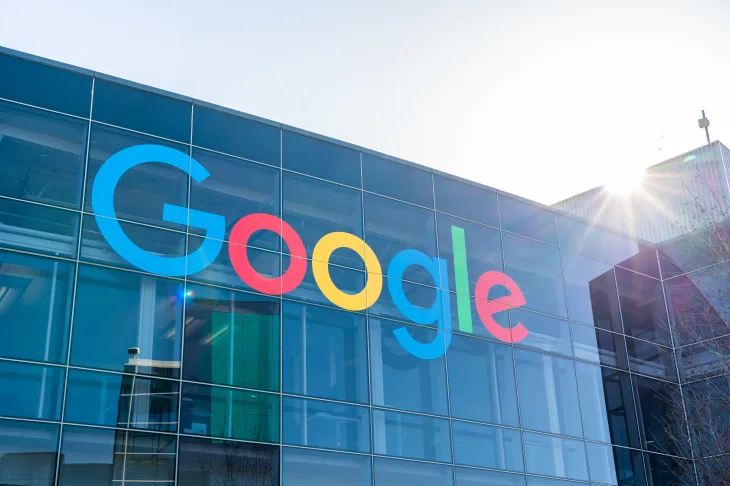
Google co-founder Sergey Brin is urging employees working on artificial intelligence to increase their office hours as competition for artificial general intelligence (AGI) intensifies. Sergey Brin says 60 hours a week is the ‘sweet spot’ for productivity, urging AI employees to extend their work hours. In an internal memo, Brin emphasized that spending 60 hours per week at work is ideal for productivity. He believes Google has the potential to lead in AGI development if efforts are accelerated.

You might also like

Netflix, Sony and Paramount Are Chasing a $250 Million Deal to Own Letterboxd

OpenAI and Google Are Selling AI to Pentagon-Blacklisted Chinese Firms And It Is Entirely Legal

Meta’s Own AI Image Detector Misses More Than Half Its Cropped Photos In Reuters Test, Exposing Deepfake Detection Gap

Brin’s memo, first reported by the New York Times, highlights the importance of extended work hours for employees involved in Google’s AI division, Gemini. He recommended that team members be present in the office every weekday, stating that “60 hours a week is the sweet spot of productivity.”

While advocating for longer hours, he also cautioned against exceeding this limit, warning that excessive work could lead to burnout. Brin specifically pointed out that some employees put in minimal effort, calling this behavior “demoralizing” for their colleagues.

Growing Competition in AGI Development

Brin’s comments come as the race to develop AGI becomes more competitive. Companies like OpenAI, Meta, Elon Musk’s xAI, and China-based DeepSeek are making rapid advancements in AI technology. Brin acknowledged this growing competition, stating that “the final race to AGI is afoot” and urging employees to increase their efforts to maintain Google’s leadership.

Since stepping down from daily executive duties at Alphabet in 2019, Brin has taken a more active role in Google’s AI initiatives. Following OpenAI’s launch of ChatGPT in 2022, he returned to work closely with Google’s DeepMind division. His renewed focus on AI comes amid scrutiny over Google’s AI performance, including recent controversies such as inaccuracies in Gemini’s image generator.

Shift Toward In-Person Work

Google has maintained a hybrid work policy, requiring employees to be in the office at least three days a week. However, Brin’s memo suggests a push for increased in-person collaboration. This shift aligns with broader trends in corporate America, where companies like Amazon, AT&T, and JPMorgan Chase have also emphasized a return to office work.

Brin believes Google’s AI teams can improve efficiency by leveraging the company’s own AI tools. With growing global competition, he insists that boosting productivity and collaboration is essential. As AI development accelerates, Google aims to stay ahead in the race for AGI by intensifying efforts within its AI divisions.

Balancing Productivity and Employee Well-Being

Sergey Brin’s recommendation of a 60-hour workweek for AI employees raises important questions about workplace efficiency and employee well-being. While longer hours may lead to faster progress, they can also increase stress and burnout. Studies have shown that excessive work hours often reduce long-term productivity and innovation. Sergey Brin says 60 hours a week is the ‘sweet spot’, but experts warn that excessive work hours may lead to burnout and decreased efficiency. Employees working under high pressure may struggle with fatigue, leading to errors and decreased efficiency. Google has been known for its innovative work culture, but pushing employees beyond standard hours may create an unhealthy work environment. Instead of setting a strict 60-hour benchmark, the company could focus on optimizing work processes and ensuring a balance between efficiency and well-being.

Some employees feel pressured after Sergey Brin says 60 hours a week is the ‘sweet spot’, raising concerns about workplace culture at Google. The competition for AGI is growing, with companies like OpenAI, Meta, and DeepSeek rapidly advancing their AI models. Brin’s urgency highlights Google’s determination to stay ahead in this race.

Tweet55SendShare15
Previous Post

Costco Offers Exclusive $3000 Discount on New Chevrolet Corvettes

Next Post

China Tells Its AI Leaders To Avoid U.S. Travel Due To Tensions

Reshab Agarwal

Reshab is a tech-enthusiast who likes to write about all things crypto. He is a Bitcoin bull and believes in a decentralized future of finance. Follow him on Twitter for more!

Recommended For You

Netflix, Sony and Paramount Are Chasing a $250 Million Deal to Own Letterboxd

by Rounak Majumdar
July 12, 2026
0
Netflix, Sony and Paramount Are Chasing a $250 Million Deal to Own Letterboxd

Letterboxd, the New Zealand-based social platform where over 30 million film fans log, rate, and review movies, has formally kicked off a sale process and the names circling...

Read more

OpenAI and Google Are Selling AI to Pentagon-Blacklisted Chinese Firms And It Is Entirely Legal

by Rounak Majumdar
July 12, 2026
0
OpenAI and Google Are Selling AI to Pentagon-Blacklisted Chinese Firms And It Is Entirely Legal

OpenAI and Google have confirmed that they are providing advanced artificial intelligence services to Singapore-registered subsidiaries of Alibaba, Baidu, and Tencent, three Chinese technology companies on the US...

Read more

Meta’s Own AI Image Detector Misses More Than Half Its Cropped Photos In Reuters Test, Exposing Deepfake Detection Gap

by Rounak Majumdar
July 12, 2026
0
Meta's Own AI Image Detector Misses More Than Half Its Cropped Photos In Reuters Test, Exposing Deepfake Detection Gap

A tool designed to detect AI-generated images has failed a basic real-world test and the images it missed were ones it created itself. A Reuters analysis published on...

Read more
Next Post
China’s Massive Crackdown: Busts $295 Million Underground Bank in Recent Operation

China Tells Its AI Leaders To Avoid U.S. Travel Due To Tensions

Please login to join discussion

Techstory

Tech and Business News from around the world. Follow along for latest in the world of Tech, AI, Crypto, EVs, Business Personalities and more.
reach us at info@techstory.in

Advertise With Us

Reach out at - info@techstory.in

Aviator Game India 2026

BROWSE BY TAG

#Crypto #howto 2024 acquisition AI amazon Apple Artificial Intelligence bitcoin Business China cryptocurrency e-commerce electric vehicles Elon Musk Ethereum facebook funding Gaming Google India Instagram Investment ios iPhone IPO Market Markets Meta Microsoft News OpenAI samsung Social Media SpaceX startup startups tech technology Tesla TikTok trend trending twitter US

© 2025 Techstory.in

No Result
View All Result
  • News
  • Crypto
  • Gadgets
  • Memes
  • Gaming
  • Cars
  • AI
  • Startups
  • Markets
  • How to

© 2025 Techstory.in

Welcome Back!

Login to your account below

Forgotten Password?

Retrieve your password

Please enter your username or email address to reset your password.

Log In
Are you sure want to unlock this post?
Unlock left : 0
Are you sure want to cancel subscription?