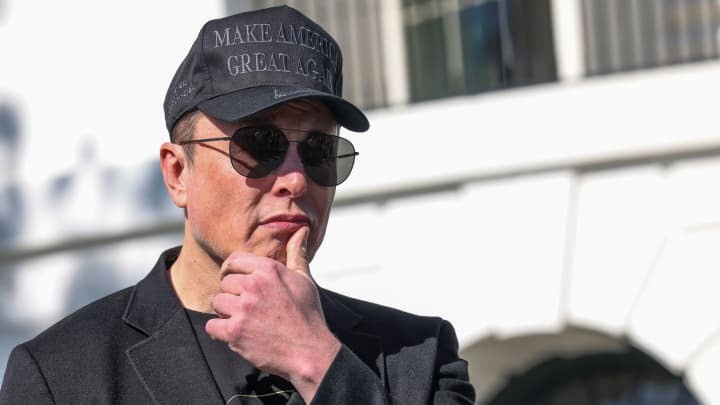
Two companies led by billionaire DOGE chief Elon Musk—SpaceX and Tesla—have submitted formal letters to the U.S. Trade Representative (USTR) Jamieson Greer, urging policy adjustments to the Trump administration’s tariff strategies. Their concerns highlight the economic strain of trade barriers, with Tesla focusing on rising manufacturing costs and export challenges, while SpaceX points to regulatory burdens on its Starlink satellite internet service.
These letters come amid Musk’s leadership in the Department of Government Efficiency (DOGE), an initiative aimed at cutting federal spending and reducing the government workforce under President Donald Trump’s directives. Simultaneously, Trump has imposed tariffs on China, Mexico, and Canada, leading to retaliatory trade measures from these nations, affecting multiple industries, including automotive and aerospace.
Tesla’s letter, submitted by its associate general counsel Miriam Eqab, warns that the U.S. tariffs and resulting retaliatory tariffs from other nations have direct negative effects on its bottom line. The electric vehicle (EV) manufacturer argues that these trade policies make U.S.-made vehicles more expensive both domestically and internationally.
Impact on U.S. Manufacturing
Tesla emphasizes that while it supports fair trade practices, the current tariff framework disproportionately affects American exporters. The company outlines two major consequences:
- Higher Production Costs: The special tariffs on imported parts and materials have increased the cost of manufacturing Tesla vehicles in the U.S., making production more expensive.
- Reduced Competitiveness in Global Markets: Due to retaliatory tariffs from other nations, Tesla faces higher export costs, making its American-made vehicles less attractive in foreign markets.
“U.S. exporters are inherently exposed to disproportionate impacts when other countries respond to U.S. trade actions,” Tesla wrote in its letter.
Request for Policy Adjustments
Tesla has urged USTR to explore alternative strategies that prevent American manufacturers from losing their competitive edge in international markets. The company calls for a reassessment of tariffs and trade policies to ensure that domestic manufacturers do not suffer collateral damage from broader trade disputes.
SpaceX’s Appeal: Leveling the Playing Field for Starlink
Unlike Tesla, SpaceX’s concerns are centered on international trade barriers for its Starlink satellite internet service. The aerospace company argues that foreign competitors face fewer obstacles in the U.S., while SpaceX must navigate complex regulations, pay import duties, and adhere to licensing fees abroad.
Financial Strain Due to Import Duties
SpaceX highlights the significant cost burden imposed by various countries through import taxes on Starlink equipment and spectrum access fees. In its letter, Mat Dunn, SpaceX’s senior director of global business and government affairs, wrote:
“The import duties paid in a handful of countries represent a significant cost increase for Starlink products in those countries, despite the United States having essentially no duties on similar foreign products that are imported into the United States to serve customers here.”
In simpler terms, foreign competitors can sell their services in the U.S. with fewer trade barriers, while SpaceX faces higher costs when entering international markets.
Request for Regulatory Support
SpaceX is asking the U.S. government to work on eliminating these trade imbalances, ensuring that American space and telecommunications companies do not face artificial cost increases abroad. The company argues that removing such restrictions will help the U.S. maintain leadership in the commercial space sector.
Musk’s companies are not the only ones pushing back against tariffs. The Trump administration has imposed strict tariffs on China, Mexico, and Canada, citing concerns over unfair trade practices and national security. In response, these countries have implemented retaliatory tariffs on U.S. goods, impacting industries such as automobiles, agriculture, and consumer electronics.
Tesla’s concerns about higher costs for American-made products abroad reflect a broader issue faced by multiple U.S. exporters. Meanwhile, SpaceX’s struggles with foreign import duties highlight the unfair advantages that non-U.S. companies enjoy when entering the American market.
Tesla and SpaceX’s letters are part of a larger wave of over 700 public comments submitted to the USTR, responding to a call for feedback on global trade imbalances. Various industries, from automotive to technology and agriculture, have expressed concerns about the long-term effects of the trade war on U.S. businesses.
Musk’s Role in Trump’s Government Efficiency Initiative
While lobbying for trade policy changes, Musk is also leading the Department of Government Efficiency (DOGE), an initiative designed to reduce federal spending and streamline government operations. Under Musk’s leadership, the department has been pushing for budget cuts across various agencies, which some critics argue could impact essential public services.
This dual role—advising on government efficiency while lobbying against tariff-related costs—places Musk in a unique position of influence within the Trump administration. His companies’ letters demonstrate that even staunch supporters of government efficiency reforms recognize the downsides of aggressive trade policies.
What’s Next for Tesla and SpaceX?
With the 2025 election cycle approaching, economic policies and trade agreements will remain a key issue for the U.S. government. Tesla and SpaceX will likely continue to advocate for more favorable trade conditions, while also preparing to navigate potential new policies under a second Trump administration or a new leadership.
For Tesla, securing relief from tariff-related costs would mean lower vehicle prices, improved profit margins, and a stronger global competitive position. For SpaceX, addressing regulatory and cost barriers abroad would enhance Starlink’s ability to expand into international markets, making its internet service more accessible worldwide.
The letters from Tesla and SpaceX underscore the real-world impact of tariffs on American companies. While the Trump administration aims to protect U.S. industries through trade restrictions, unintended consequences have increased costs and created hurdles for domestic manufacturers and tech firms.
Elon Musk’s dual role—as a government efficiency advocate and CEO of two major companies affected by trade policies—adds another layer of complexity to the debate. The response from the U.S. Trade Representative and the next steps in trade negotiations will determine how Tesla and SpaceX adapt to the evolving global market.
As the U.S.-China trade tensions continue and retaliatory tariffs escalate, the question remains: Will the government adjust its policies to support American innovators, or will companies like Tesla and SpaceX continue to bear the costs of global trade disputes?