The Dutch parliament is making a big move to fight the growing tide of artificial intelligence-powered deepfakes by weighing new legislation that will make citizens owners of their own faces and voices through copyright.
The development of deepfake technology raises concerns about its exploitation, prompting policymakers to seek robust legal tools to safeguard personal identity and privacy in the digital age.
Deepfakes are artificial images, videos, or audio recordings that impersonate real individuals, frequently so accurately that they are virtually indistinguishable from original content.
Although part of the deepfakes is utilized for entertainment or satire, an increasingly higher percentage are malicious, varying from unwanted explicit content and identity theft to elaborate frauds and political manipulation.
Recent statistics demonstrate deepfake-related bank scams in the Netherlands have increased more than 2,100% over three years, demonstrating the enormity and immediacy of the issue.
Dutch Parties Propose Granting Copyright to Face, Body, and Voice to Combat Deepfakes
Victims of abusive deepfakes currently have piecemeal protection under current Dutch law. Demarcated primarily by portrait rights, the law of privacy, and civil tort law, people are able to prohibit abusive use of their image where that use amounts to libel or pornography.
But this piecemeal approach is incomplete, especially where synthetic images are not technically defamatory or pornographic but nonetheless intrude on personal rights.
Platforms are already subject to liability for hosting and distributing illicit deepfakes, but enforcement and recourse by victims are difficult in reality. Victims then have to go through labyrinthine legal processes against unknown actors or powerful, recalcitrant tech platforms.
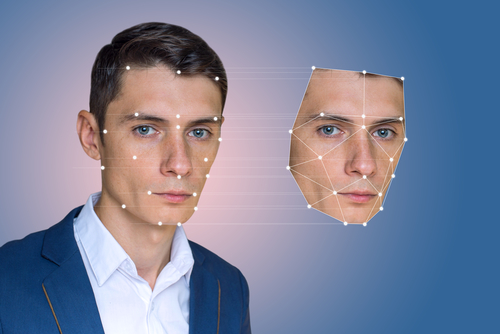
Four large political parties, GroenLinks-PvdA, VVD, NSC, and D6,6 are mobilizing in response to support a revolutionary broadening of Dutch copyright law. Under proposed legislation, following recent Danish action, individuals would be granted express copyright ownership of their face, body, and voice.
The model would give more protection and forbid the use of a person’s image or voice in AI-based content without permission.
Protecting Your Face and Voice
According to Hanneke van der Werf of D66, “Everyone must be able to maintain control over their own face, body, and voice.” Parliamentarians call upon the government to follow Denmark’s trailblazing law and bring in more stringent regulations to make the tech giants take responsibility for spreading injurious deepfakes on their platforms.
Legal professionals highlight the beneficial effect of this action. Extension of copyright to voices and faces would seal key gaps in legislation and provide victims with more readily available legal recourse to compel the deletion of offending content.
It would also compel platforms to actively police and delete non-consensual AI-generated content, relocating the burden from individuals.
Yet, enforcement will pose pragmatic difficulties, particularly against global tech titans or anonymous actors. While the legislation will enhance the rights of Dutch people, it will need international cooperation and industry action to challenge the transnational and distributed character of digital deepfakes.
The Netherlands’ initiative captures a mounting European consensus. Denmark has become the first EU state to accord such rights, declaring that “everybody has the right to their own body, their own voice, and their own facial features”. The action finds resonance with wider debates across the bloc, as the EU’s AI Act deprioritizes deepfakes as a ‘limited risk’ and enforces specific disclosure and transparency requirements.
The draft Dutch bill is a turning point in the battle against deepfakes, interweaving copyright law with emerging digital reality. If implemented, it can be a template for other countries struggling with the social and legal consequences of AI-based synthetic media and identity theft. As society is increasingly remodeled by AI technology, the right to one’s face and voice could next be enshrined as an essential right like the right to one’s name.