In a bold step towards expanding its footprint in the consumer electronics space, Nothing, the smartphone startup founded by Carl Pei, announced that it has successfully closed its Series C funding round of $200 million, led by investment powerhouse Tiger Global. This latest funding boosts Nothing’s valuation to $1.3 billion, cementing its status as a unicorn and giving a strong vote of confidence in its unique vision.
In this article, we will delve into Nothing’s growth strategy, its distinctive product approach, and its ambitious AI-powered vision that aims to disrupt the industry’s status quo.
Credits: Bloomberg
Strong Backing from Industry Leaders
Tiger Global led the Series C round, with participation from existing investors such as GV (Google Ventures), Highland Europe, EQT, Latitude, I2BF, and Tapestry. In addition, new strategic investors, including billionaire Nikhil Kamath and Qualcomm Ventures, joined the round, reflecting widespread faith in the startup’s long-term potential.
Matt Watcher, partner at Tiger Global, praised Nothing’s approach, saying:
“Carl and the team at Nothing are reimagining hardware and software with an AI overlay to position their products for the next era of personal technology.”
This combination of seasoned backers and fresh strategic investment strengthens Nothing’s path to market leadership.
To date, Nothing has raised over $450 million, and the startup plans to launch another community funding round soon—adding to the $11.5 million raised in prior community-backed efforts.
Design Differentiation: Nothing’s Secret Weapon
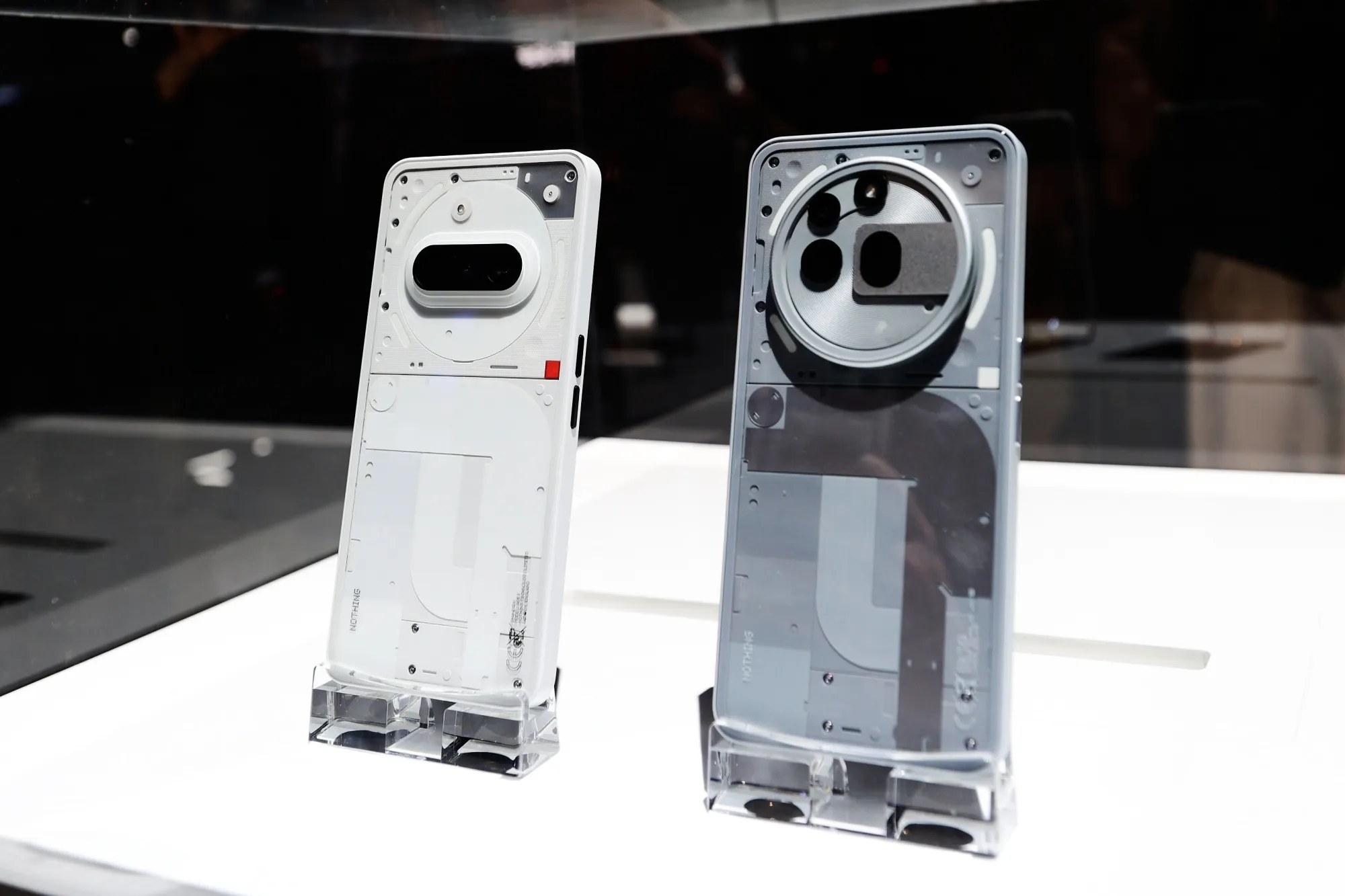
Nothing has carved out a unique space in the crowded smartphone market by betting heavily on design differentiation. Its products stand out for their signature transparent aesthetics and intuitive user interface, both of which reflect a focus on creativity and simplicity.
Carl Pei, a veteran of the smartphone industry, believes that consumers today are seeking more than just specs—they want design and personality. Speaking about the Phone (3) launch in July, he said:
“We’re targeting the next generation. They’re interested in tech, creativity, and design.”
This strategy appears to be paying off. The company claimed over $1 billion in total sales earlier this year, shipping 5.1 million units to date, with over a million units sold in just Q2 2025. In India—Nothing’s biggest market—it holds a 2% market share, outperforming its global average of less than 1%, according to analytics firm IDC.
Building the AI-First Operating System
Looking beyond hardware, Nothing’s next big bet is an AI-first operating system designed to personalize the user experience in a way few competitors have attempted. While existing smartphones dabble in smart assistants or search functions, Nothing’s vision is broader: a seamless, trusted AI layer that anticipates user needs without creating friction.
The startup has hired Sélim Benayat, founder of Bento and ex-Linktree executive, to lead its AI services development. Already, the company offers features like Essential Search, an intelligent device-wide search tool.
Highland Europe partner Tony Zappalà emphasized the challenge ahead:
“Building an effective AI-first experience is not just technical; it’s about customer trust.”
Even tech giants like Apple have struggled to integrate AI meaningfully. But Pei remains confident that smartphones will remain the primary form factor for AI applications over the next 3–5 years.
Credits: The Economic Times
The Road Ahead: AI-First Devices in 2026
With the new $200 million funding, Nothing plans to accelerate development and bring its first AI-first device to market next year. Although the AI hardware space is notoriously difficult—examples like Humane and Rabbit highlight past struggles—the startup believes it has found the right mix of design, technology, and consumer insight to succeed.
As Carl Pei puts it:
“We’re not here to compete on specs. We’re here to reimagine personal tech for the next generation.”
Nothing is positioning itself as more than just a smartphone maker—it’s setting its sights on becoming an AI-native consumer brand, ready to challenge incumbents.