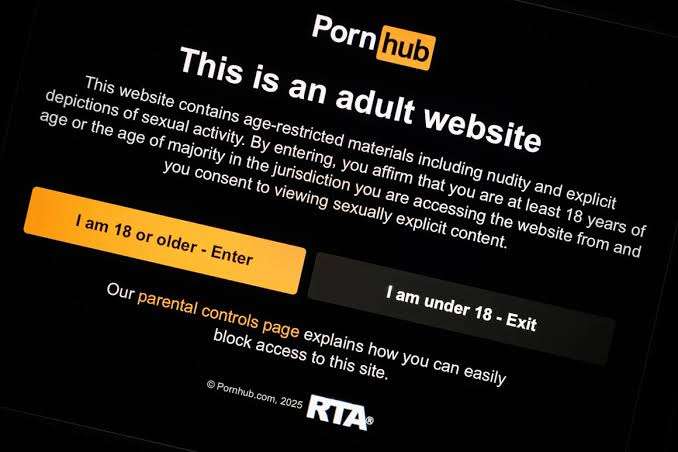
Arizonans seeking access to online adult content will soon face the same type of restrictions as purchasing alcohol, tobacco, or lottery tickets. Beginning Friday, a new state law will require publishers of material deemed “harmful to minors” to implement strict age-verification systems.
Under the law, users will have to prove they are 18 or older through digital identification or commercial verification services before accessing such content. Failure to comply carries severe penalties: publishers could face $10,000 per day in damages if parents take legal action, and courts may impose fines of up to $250,000 if minors gain access because of inadequate safeguards.
Privacy Concerns and Legal Debates
The legislation was passed despite objections over privacy and constitutional rights. Opponents worry that requiring adults to upload government-issued identification and personal photos to access content could expose them to identity theft. While the law requires websites to discard verification data after confirming age, doubts remain about how effectively this will be enforced.
Critics also argue that the measure interferes with adults’ rights to view legal content. Nonetheless, momentum for the law grew after the U.S. Supreme Court permitted Texas to enforce a similar measure, giving Arizona lawmakers confidence in its legality.
Major Platforms Respond
The law has already prompted significant changes in how adult websites plan to operate in Arizona. Pornhub’s parent company, Aylo, announced that it will block access to its site in the state instead of complying with the new requirements.
The company criticized the law, arguing that it forces platforms to collect “highly sensitive personal information,” which could put users at risk if mismanaged.
Why the Law Was Introduced
Supporters of the measure, including its sponsor Rep. Nick Kupper, a Republican from Surprise, argue the current system is ineffective. Most adult websites only ask users to click a box confirming they are over 18.
Kupper pointed out that this honor-based approach does little to prevent children from accessing adult content. He said the law provides a stronger barrier by requiring government-issued IDs, credit card verification, or even facial-recognition tools to confirm a user’s age.
Safeguards on Data Handling
To ease fears about misuse of personal data, the law explicitly bans websites and verification companies from storing or sharing user information. Companies caught transferring data to government agencies could face fines of $10,000.
Even with these assurances, privacy advocates warn that forcing users to submit sensitive documents repeatedly may discourage adults from visiting legal sites and instead drive them toward offshore platforms that ignore U.S. regulations.
Industry Pushback
The adult entertainment industry has strongly opposed the law. The Free Speech Coalition, a trade group for adult businesses, stated that while it supports preventing minors from viewing explicit material, the Arizona law is the wrong solution.
The group highlighted that many foreign websites will not follow state or federal laws, leaving only U.S.-based companies burdened by compliance. As a result, adults may migrate to unregulated international sites, undermining the law’s intent.
Industry representatives suggested that device-level protections, such as parental controls installed on phones and computers, would be a more effective approach. Unlike website-level checks, device verification requires users to authenticate themselves only once and blocks access across platforms, regardless of where a site is hosted.
Split Among Lawmakers
Some lawmakers believe the responsibility lies with parents, not the state. Rep. Lupe Contreras, a Democrat from Avondale, said his family already uses parental controls and regular monitoring to protect their children. He criticized the law as an unnecessary government overreach.
Kupper, however, countered that parental controls cannot cover every situation, such as when children use friends’ devices. He admitted the law has weaknesses — including the fact that minors could bypass restrictions with VPNs — but described it as one important layer of protection.
Defining What Is “Harmful”
Another challenge lies in defining what qualifies as material “harmful to minors.” The statute specifies sexual depictions involving genitals, pubic areas, anuses, female nipples, and various sexual acts. Courts will also apply community standards to determine whether material appeals to “prurient interests” and lacks serious literary, artistic, political, or scientific value for minors.
Civil rights advocates, including the ACLU of Arizona, argue that such vague definitions could unintentionally restrict access to educational resources on sexual health, LGBTQ topics, and domestic violence.
Unlike similar laws in other states, Arizona’s version allows parents — not government agencies — to enforce compliance. If a parent believes their child accessed harmful content, they can sue the publisher directly.
Supporters say this provision empowers families to challenge inappropriate content in court, where a judge will decide whether it falls under the law’s definition of harmful material.