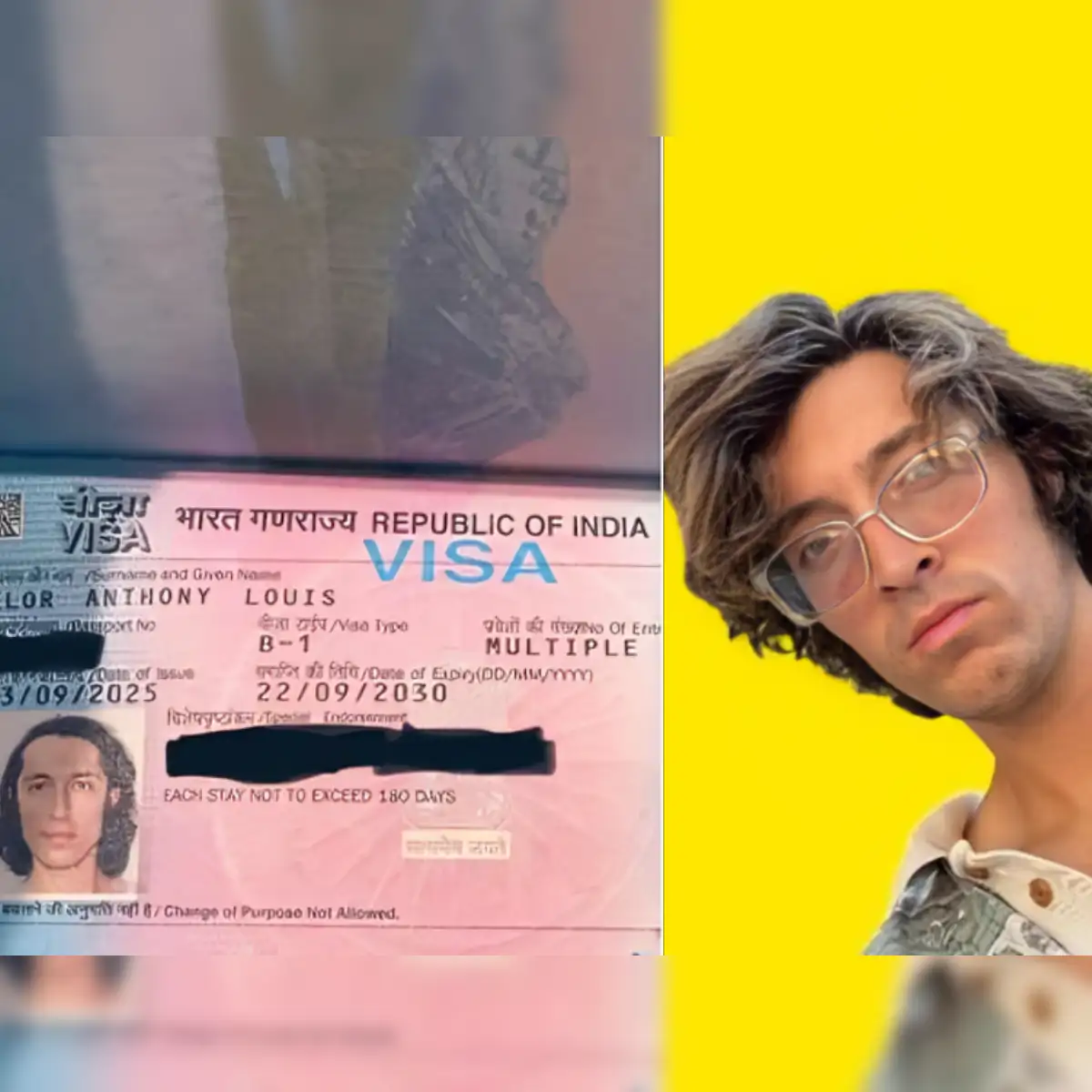
An American tech enthusiast’s lighthearted social media post has captured the attention of thousands across India. Klor Anthony Louis, better known by his online moniker Tony Klor, recently announced that he had been granted a long-term Indian visa. What could have been a simple immigration update turned into a viral moment when Klor chose humor, wit, and a bit of political contrast to deliver the news.
Sharing his excitement on X (formerly Twitter), he wrote: “It’s official! India is opening its doors to foreign blockchain & AI builders. I’ve just been granted a girthy 5-year India visa. Trump says foreigners go kick rocks. Modi says welcome home bhai.”
The post immediately resonated with Indian audiences, not only for its playful tone but also for the underlying message of India’s growing openness to global talent in technology.

Credits: abplive
From Visa Stamp to Viral Fame
Klor’s visa, officially issued on 23 September 2025 and valid until 22 September 2030, is a five-year B-1 multiple-entry visa, allowing him to stay up to 180 days per visit. While B-1 visas are typically associated with business travel, Klor’s framing of the development highlighted India’s broader invitation to innovators in fields like blockchain and artificial intelligence.
By contrasting India’s welcoming stance with what he portrayed as restrictive policies in the United States, Klor struck a chord with young Indians who see their country becoming an emerging hub for cutting-edge technologies. The humorous phrase “welcome home bhai” added a cultural touch that made his post especially relatable.
Reactions Pour In From India and Abroad
The response on social media was swift and enthusiastic. Many Indian users praised both the openness of the Indian government and Klor’s recognition of the country’s tech potential. One X user commented:
“Deeply honest here, as someone who studies and works alongside many brilliant Indians in top U.S. universities: I truly believe India has some of the most intelligent minds in tech, AI, and engineering. If those talents focus on building and innovating within India, I can’t imagine the scale of progress.”
Others applauded Klor’s ability to highlight a serious subject—India’s push to attract international expertise—through humor and wit. Memes, jokes, and even edited images celebrating his “homecoming” quickly began circulating online.
India’s Bid to Be a Global Tech Magnet
Experts argue that Klor’s announcement reflects more than just a quirky post. It ties into India’s broader strategic goal of positioning itself as a global technology hub. Over the past few years, India has increasingly worked to create pathways for international entrepreneurs, engineers, and specialists in fields such as blockchain, artificial intelligence, fintech, and clean tech.
By offering long-term visas, India signals that it not only wants to retain domestic talent but also actively attract foreign professionals who can contribute to its innovation ecosystem. This approach aligns with India’s ambition to lead in the digital economy, where cross-border collaborations and diverse expertise are becoming crucial.
A Symbol of Openness and Opportunity
For many observers, Tony Klor’s story is symbolic. While some developed nations are tightening immigration policies, India is actively showcasing itself as a land of opportunities—especially for builders in emerging technologies. The country’s large talent pool, growing startup ecosystem, and government-backed initiatives in AI and blockchain make it an increasingly attractive destination for global innovators.
As one commentator put it: “Tony Klor may just be one individual, but his post captures the spirit of a larger shift—India opening its doors wide to the future of technology.”
Credits: The Economic Times
Looking Ahead
Whether or not Klor’s stay in India translates into tangible tech projects, his post has already succeeded in sparking conversation about the country’s openness and potential. For Indian netizens, it was a refreshing moment of humor and pride; for policymakers, it was a validation of their efforts to make India a global innovation hub.
In the end, a visa stamp on one American’s passport became a viral celebration of India’s growing role in shaping the future of technology.