Federal Reserve Chair Jerome Powell delivered a sobering assessment of America’s job market this week, revealing that beneath the seemingly healthy 4.3% unemployment rate lies a troubling reality: job creation has essentially ground to a halt.
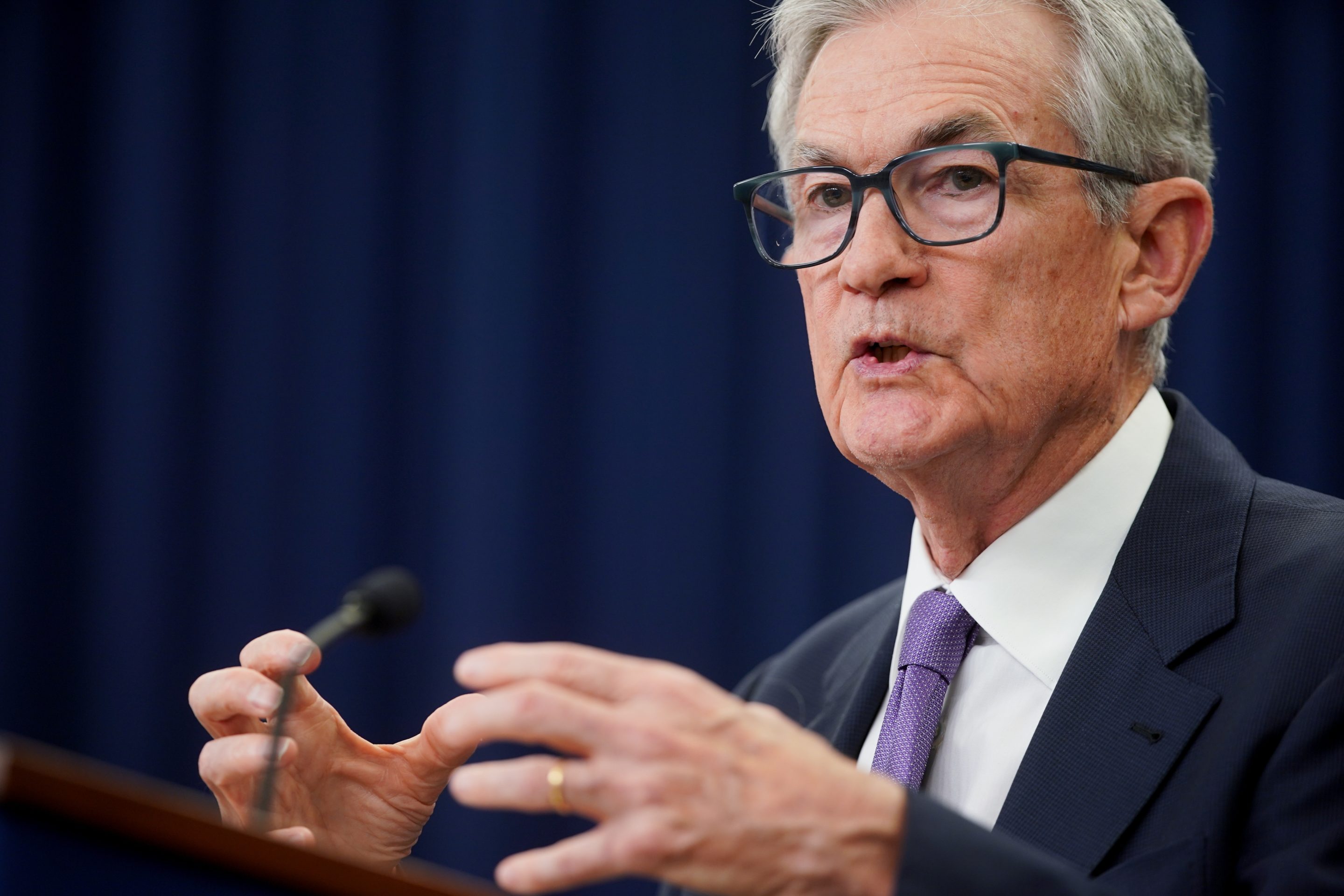
Speaking at a press conference following the Federal Open Market Committee meeting on Wednesday, Powell didn’t mince words. When you strip away statistical noise and overcounting in payroll data, he explained, “job creation is pretty close to zero.” The culprit? Artificial intelligence is fundamentally changing how companies think about hiring.
Powell pointed to a growing chorus of corporate executives who are telling investors the same story: AI lets them accomplish more without adding workers.
“A significant number of companies” have recently announced layoffs or hiring freezes, he noted, and the common thread is unmistakable. “Much of the time they’re talking about AI and what it can do,” Powell said, warning that major employers are signaling they won’t need to expand their workforce for years to come.
Corporate Layoffs Soar Amidst Fed Rate Cut and Rising AI Integration
The Fed responded to these “downside risks to employment” by cutting interest rates a quarter point to 3.75%–4%, even as inflation remains stubbornly elevated. Powell described the current situation as a “low-fire, low-hire” job market, companies aren’t laying off workers en masse, but they’re not bringing new people on board either.
Recent corporate moves validate Powell’s concerns. Amazon just laid off 14,000 middle managers, roughly 4% of its white-collar workforce, citing a need to “remove organizational layers” while simultaneously pouring billions into AI infrastructure. Target, Paramount, and other household names have followed suit with their own cuts.
The numbers tell a grim story. According to Challenger, Gray & Christmas, U.S. employers have announced nearly 946,000 layoffs so far this year, the highest figure since 2020. More than 17,000 of those job cuts were explicitly blamed on AI, with another 20,000 attributed to automation. And those are just the companies willing to say the quiet part out loud.
“Job creation is very low, and the job-finding rate for people who are unemployed is very low,” Powell stated plainly.
Powell’s Paradox, Corporate AI Spending Drives Economy, But Labor Market Chills
The situation has become so dire that economists are calling it the “Great Freeze.” Recent college graduates are feeling the squeeze particularly hard, with unemployment among new grads topping 5%. Facing an AI-powered job market that’s automating entry-level positions, many Gen Z workers are retreating to graduate school, hoping to wait out the storm.
Yet paradoxically, the economy continues growing at what Powell called a “moderate pace,” fueled largely by massive corporate spending on AI infrastructure—data centers, specialized equipment, and the like. Powell pushed back against comparisons to the dot-com bubble, emphasizing that “these companies actually have earnings.” This isn’t speculative frenzy; it’s calculated investment in long-term productivity gains.
That creates a nasty dilemma for the Fed. AI is boosting economic output while simultaneously weakening the labor market.
Powell Acknowledges “Difficult” Path as AI and Inflation Drive a Two-Tier American Economy
As Powell explained, “We have upside risks to inflation, downside risks to employment. This is a very difficult thing for a central bank, because one of those calls for rates to be lower, one calls for rates to be higher.”
Making matters worse, Powell noted the economy increasingly resembles a K-shape, with winners and losers moving in opposite directions. Higher-income households and large corporations are thriving thanks to strong stock markets and AI-driven productivity.
Meanwhile, lower-income consumers are buckling under rising costs, trading down to cheaper products and cutting back on spending.
Powell cited reports from major retailers describing a “bifurcated economy” where wealthy Americans spend freely while those at the bottom struggle. “Consumers at the lower end are struggling and buying less and shifting to lower-cost products,” he said.
The Fed is now walking a tightrope, trying to support employment without letting inflation spiral while technological change reshapes the foundation of the American workplace. “There is no risk-free path for policy,” Powell acknowledged. “We’re navigating the tension between our employment and inflation goals as carefully as we can.”
Translation: buckle up. The AI revolution is here, and nobody, not even the Fed, knows exactly how to manage what comes next.