Kalshi has just pulled off one of the biggest moments in the history of prediction markets. With $1 billion in fresh funding and a skyrocketing valuation of approximately $11 billion, the regulated event-trading platform has cemented itself not just as a fintech success story but as a symbol of how financial markets are evolving. The size of the investment—and the calibre of the investors—signals a shift in how the world is beginning to view real-world event trading: not as a novelty, but as a serious asset class.

Credits: Ascendants
Investor Confidence Reaches New Heights
The mammoth round was led by CapitalG and Sequoia Capital, both long-time believers in Kalshi’s potential. Their return, alongside backing from Andreessen Horowitz, Paradigm, Anthos Capital, and Neo, underscores one thing: investor conviction in Kalshi isn’t episodic—it’s consistent and growing.
These firms aren’t just betting on a platform; they’re betting on the future of how individuals and institutions will navigate uncertainty. With global volatility rising and predictive models losing some of their sheen, investors see Kalshi’s model as a structured, compliant, and scalable alternative that could reshape financial decision-making.
Importantly, this funding round isn’t a sudden spike in interest. It’s part of a broader trend that has been building steadily as prediction markets move from the fringes of finance into the mainstream.
A Regulated Pathway to a New Financial Category
When Tarek Mansour and Luana Lopes Lara founded Kalshi in 2018, their mission was bold: make event trading a regulated, legitimate financial activity in the U.S. And they did just that. Kalshi operates with the approval of the Commodity Futures Trading Commission (CFTC)—a rare feat in the world of prediction markets.
Instead of stocks or crypto, Kalshi users trade Yes/No contracts tied to measurable real-world outcomes. Will inflation rise above 4% this quarter? Will a particular government policy be enacted? Will a specific weather event occur? These markets convert the world’s uncertainties into tradable instruments.
By earning revenue purely through transaction fees, Kalshi structurally mirrors traditional financial exchanges. That familiarity, combined with regulatory oversight, has helped remove the stigma that prediction markets once carried.
Why Event Trading Is Suddenly in Demand
Prediction markets aren’t new—they’ve existed for decades—but they’ve often been dismissed due to unclear regulation, questionable reputation, or limited scope. Kalshi’s biggest breakthrough is changing that perception.
In today’s climate of global unpredictability, from economic fluctuations to geopolitical tensions, people seek more dynamic and real-time tools to understand what may come next. Forecasting by experts alone is no longer enough. Markets that aggregate collective expectations—especially those backed by real money—can often be more accurate than traditional models.
Kalshi taps into this shift. It offers clarity, compliance, and a structured way to capture public sentiment on complex issues. In an age of information overload, event markets act like barometers for emerging trends, helping traders, analysts, and even curious individuals interpret the world more intelligently.
What’s Next: Scaling, Expanding, and Strengthening Infrastructure
With a fresh billion dollars in the bank, Kalshi is gearing up for a sweeping expansion. The company plans to:
-
Upgrade its technological infrastructure
-
Introduce a wider spectrum of markets
-
Support growing user activity
-
Strengthen its product offerings
The scale of the funding suggests investors aren’t just supporting Kalshi’s current model—they’re betting on the long-term rise of regulated prediction markets as a major financial category.
As demand grows, Kalshi’s challenge will be to innovate fast enough while maintaining its regulatory edge, which remains a key differentiator in a space crowded with unregulated or decentralized alternatives.
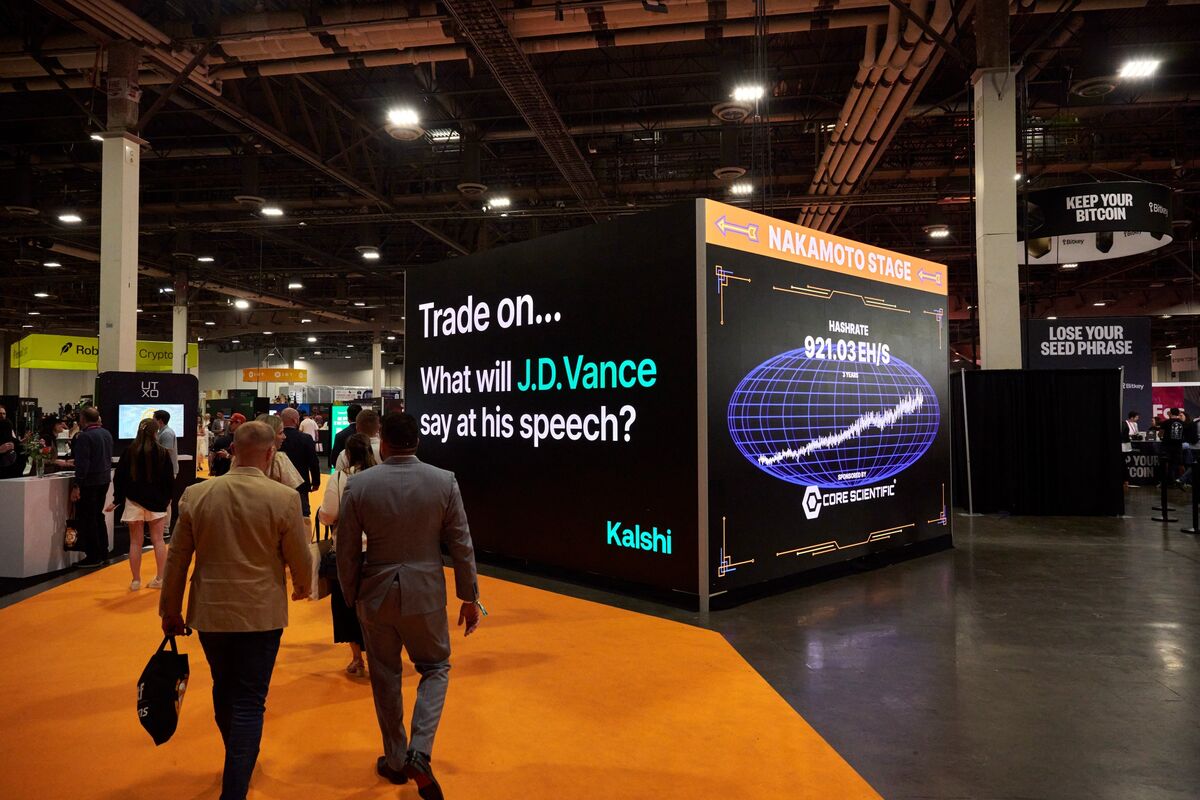
Credits: bloomberg
A Defining Moment for Prediction Markets
Kalshi’s massive funding milestone marks a turning point—not only for the company but for the broader prediction market ecosystem. It represents a future where real-world events become structured financial instruments, where uncertainty becomes tradable, and where collective insight becomes a powerful economic signal.
Whether competitors follow Kalshi’s regulated route or double down on decentralization remains to be seen. For now, one thing is clear: event-based trading is no longer just a conversation—it’s becoming a core part of modern finance.