You might also like
The death of a 25-year-old delivery partner in Hyderabad has once again brought the safety of India’s rapid delivery ecosystem under intense scrutiny. The tragic incident, which occurred on January 5 on the busy Tolichowki–Mehdipatnam road, has reignited concerns over whether aggressive delivery timelines are putting gig workers’ lives at risk.

Credits: News18
What Happened on the Tolichowki–Mehdipatnam Road
According to police officials, the victim, identified as Abhishek, was riding his two-wheeler near Mehdipatnam at around 5:15 PM when he lost control of the vehicle and fell onto the road. Abhishek was employed as a delivery partner with quick-commerce platform Zepto.
Moments after he fell, a private travel bus approaching from behind ran over him. The impact was severe, and Abhishek died on the spot. The incident took place during peak evening traffic hours on one of Hyderabad’s most congested stretches, amplifying the danger faced by two-wheeler riders navigating through heavy vehicles.
CCTV Footage Reveals the Horrifying Sequence
The accident was captured on a nearby CCTV camera, footage of which has since circulated widely. The video shows Abhishek falling from his bike and lying motionless on the road as vehicles continue to move. Seconds later, the bus passes over him, while bystanders can be seen watching the incident unfold in shock and horror.
The footage has sparked outrage on social media, with many questioning whether delivery partners are being pushed to ride faster and take greater risks to meet stringent delivery timelines.
Police Action and Ongoing Investigation
Following the accident, Abhishek’s body was shifted to Osmania General Hospital for a post-mortem examination. Mehdipatnam police have taken the bus driver into custody and registered a case in connection with the incident.
Officials have said that an investigation is underway to determine the exact sequence of events, including whether speeding, negligence, or road conditions played a role, and to establish accountability. Authorities are also examining CCTV footage and eyewitness statements as part of the probe.
Gig Workers’ Union Slams “Reckless” Delivery Targets
The tragedy has drawn a strong reaction from the Telangana Gig and Platform Workers’ Union (TGPWU), which has criticised the “reckless” hyper-fast delivery models adopted by companies such as Zepto and Zomato.
In a sharply worded statement, TGPWU founder president Shaik Salauddin questioned the priorities of platform companies and policymakers. “10-minute food and grocery deliveries start on time. Rs 100-crore speed projects start on time. But when a worker crashes on the road, insurance and compensation never start on time. Why?” he asked.
The union argued that the pressure to meet 10-minute delivery targets creates a high-stress environment that compromises worker safety, forcing delivery partners to take risks on crowded city roads.
‘Workers Are Not Algorithms’
Emphasising the gap between corporate assurances and on-ground realities, the union said, “Boardroom promises do not match ground reality. Workers are not algorithms.” The TGPWU has demanded the immediate removal of what it described as “deadly” delivery targets, warning that such models treat human workers like machines in a race against time.
The union also highlighted that many gig workers lack adequate insurance coverage, timely compensation, and social security, leaving families vulnerable when accidents occur.
Call for Government Intervention
In the wake of the incident, the TGPWU has sought immediate intervention from Telangana’s Minister for Labour, Employment, Training, and Factories, Shri Vivek Venkatswamy. The union has urged the state government to step in to regulate delivery timelines, enforce safety standards, and ensure accountability for platform companies.
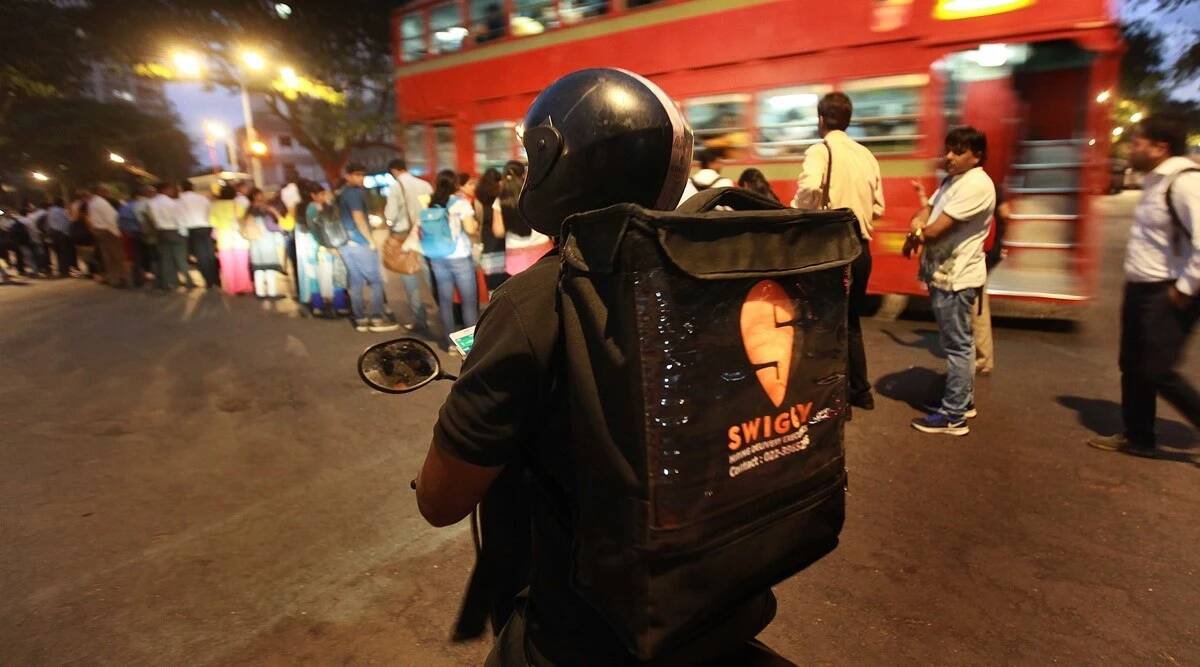
Credits: The Indian Express
A Larger Question for India’s Quick-Commerce Boom
As India’s quick-commerce sector continues to grow rapidly, the death of Abhishek raises uncomfortable questions about the human cost of speed-driven business models. While consumers increasingly expect groceries and food to arrive in minutes, the incident serves as a grim reminder that faster deliveries may come at the expense of worker safety—unless stronger safeguards and regulations are put in place.