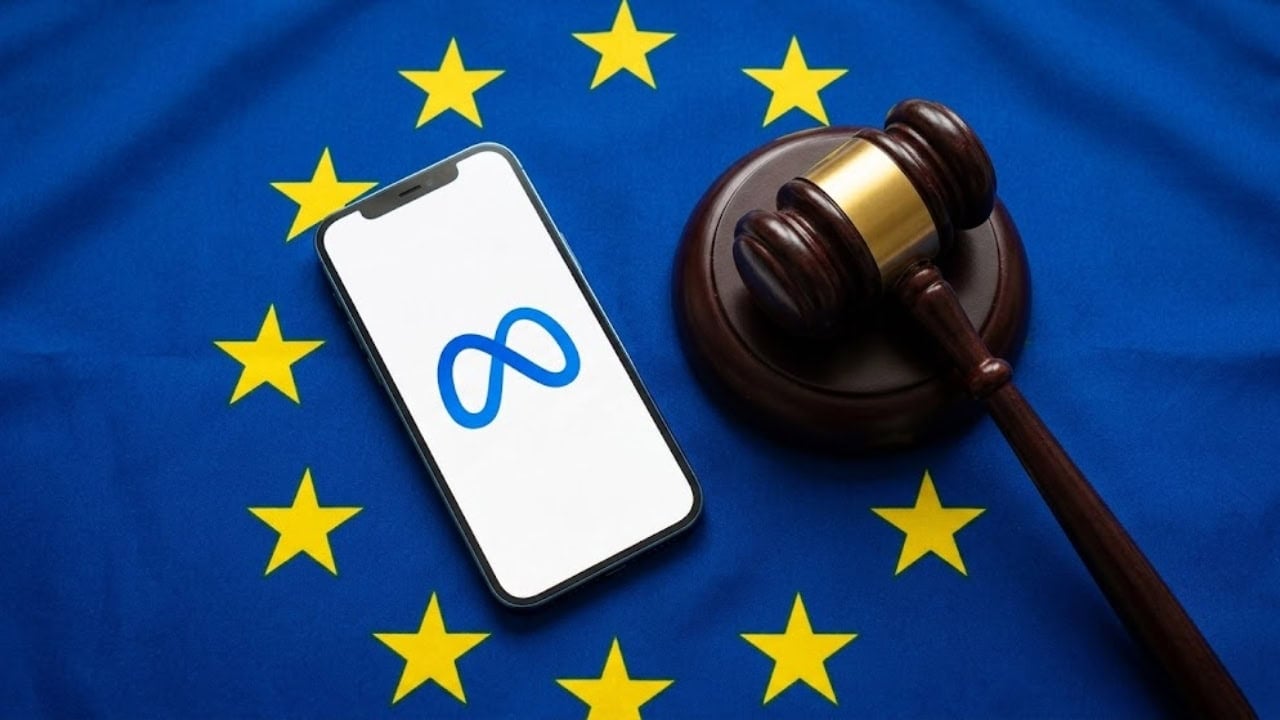
The European Union has intensified its scrutiny of Big Tech’s influence over the rapidly growing artificial intelligence market, ordering Meta Platforms to grant rival AI companies free access to WhatsApp while an antitrust investigation continues.
The interim measure, announced by the European Commission, represents a significant challenge to Meta’s strategy of integrating AI services into its vast ecosystem of products. Regulators argue that Meta may have used its dominant position in messaging to give its own AI assistant an unfair advantage over competitors.
The decision comes at a crucial moment when AI adoption is accelerating across industries and consumers are increasingly relying on AI assistants for everyday tasks.

Credits: Reuters
The Complaints That Sparked the Investigation
The case originated from complaints filed by several AI companies, including California-based The Interaction Company, creator of the Poke.com AI assistant, French startup Agentik, and a Spanish competitor.
According to regulators, these companies raised concerns that Meta was preventing rival AI services from accessing WhatsApp’s Business Application Programming Interface (API), a critical tool that allows businesses and software providers to connect their systems with the messaging platform.
The European Commission launched a formal investigation in December after reviewing the complaints. Just two months later, regulators issued preliminary charges against Meta, alleging potential violations of EU competition rules. Additional concerns emerged in April when Meta introduced fees for access to the platform, which competitors argued made participation economically unviable.
Why WhatsApp Access Matters
WhatsApp is one of the world’s most widely used messaging platforms, with billions of users globally. Access to its business infrastructure can provide AI companies with a powerful channel to interact directly with customers.
For emerging AI startups, access to WhatsApp could mean the difference between reaching millions of potential users or being locked out of a key digital marketplace.
EU Competition Commissioner Teresa Ribera expressed concerns that Meta may be leveraging WhatsApp’s enormous reach to strengthen its own AI products while limiting opportunities for rivals.
“It seems that Meta expects to leverage the vast reach and likely dominance of WhatsApp to benefit its own AI assistant and to foreclose rivals,” Ribera said while announcing the interim order.
Regulators fear that if competitors are excluded during this critical stage of AI development, innovation and consumer choice could suffer in the long term.
Meta Pushes Back Against the Decision
Meta has strongly criticized the Commission’s order and signaled that it intends to appeal.
The company argues that the decision unfairly forces it to provide services to competitors at no cost, potentially benefiting some of the world’s largest AI companies, including OpenAI.
A Meta spokesperson described the ruling as regulatory overreach, claiming that European businesses paying for WhatsApp Business services would effectively be subsidizing rival AI companies.
Meta has previously maintained that consumers can access AI tools through numerous channels, including app stores, websites, operating systems, devices, and partnerships, reducing concerns about competition.
What the Interim Order Requires
Under the Commission’s ruling, Meta must restore access to the WhatsApp Business API for rival AI providers under the same terms and conditions that existed before October, when access restrictions were first imposed.
The company has been given just five working days to comply with the order.
The interim measure will remain in place until the antitrust investigation concludes or until June 2029, whichever comes first. Such interim actions are relatively rare and are typically used only when regulators believe there is a risk of serious and irreversible harm to competition.

Credits: Free Malaysia Today
High Stakes for Meta and the AI Industry
The outcome of the investigation could have major implications not only for Meta but also for the broader AI industry.
If regulators ultimately conclude that Meta violated EU antitrust rules, the company could face fines of up to 10% of its global annual revenue—a potentially massive financial penalty.
More importantly, the case could establish new rules governing how dominant technology platforms interact with AI developers. As AI increasingly becomes a primary gateway for accessing information, services, and digital experiences, regulators worldwide are closely watching whether established tech giants use their existing platforms to shape the future of the industry.
For Europe, the message is clear: the race to dominate artificial intelligence must remain open, competitive, and accessible to newcomers—not just the biggest players.