The automotive industry has been talking about solid-state batteries for years. They have been pitched as the next big leap for electric vehicles, promising more range, quicker charging and better efficiency than today’s lithium-ion packs. Yet despite all the excitement, the technology has remained largely confined to research labs and test facilities.
That may finally be starting to change.
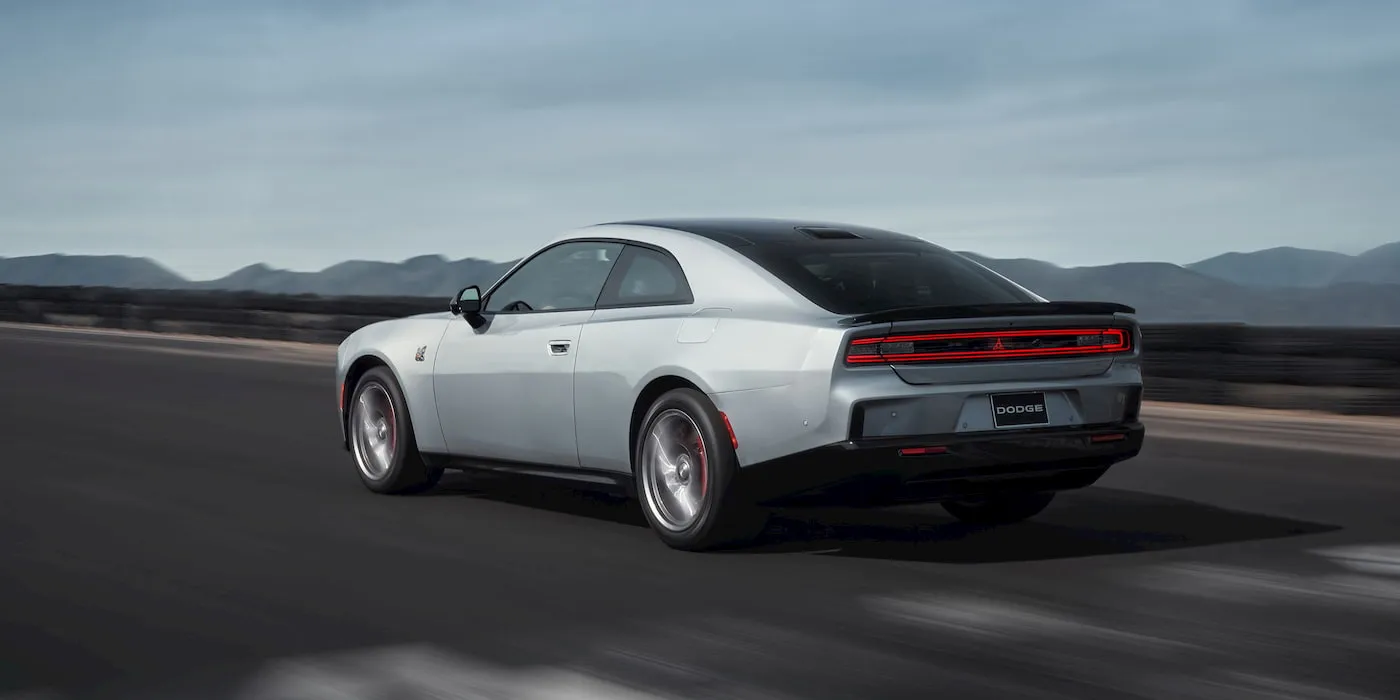
Stellantis has announced that it has begun real-world testing of a Dodge Charger Daytona prototype powered by a solid-state battery developed by Factorial Energy. While the battery won’t be appearing in production vehicles anytime soon, getting the technology onto public roads marks an important milestone.
Moving Beyond the Hype
The latest development builds on a partnership between Stellantis and Factorial that was first announced several years ago. Last year, the two companies revealed plans to launch a fleet of Charger Daytona test vehicles equipped with solid-state batteries in 2026.
Now, that plan is becoming reality.
Industry observers had already suspected testing was close to starting after a specially liveried Charger Daytona was spotted during Stellantis Investor Day at the company’s headquarters in Michigan. The official confirmation now signals that engineers have moved from controlled testing environments to evaluating the battery under everyday driving conditions.
Why Solid-State Batteries Matter
The prototype uses Factorial’s FEST battery, short for Factorial Electrolyte System Technology. Unlike conventional lithium-ion batteries, solid-state designs replace the liquid electrolyte with a solid material, opening the door to higher energy density and potentially safer operation.
Factorial claims its battery technology can achieve an energy density of 375 watt-hours per kilogram. In simple terms, that means more energy can be packed into a smaller and lighter battery.
Charging speeds are equally impressive. The company says the battery can charge from 15 to 90 percent in just 18 minutes under the right conditions. If achieved in production vehicles, that could significantly reduce one of the biggest pain points for EV owners.
The battery has also demonstrated reliable operation in temperatures ranging from -22°F to 113°F, suggesting it can cope with a wide variety of climates.
More Than Just a Battery Swap
Integrating solid-state technology into a vehicle isn’t as straightforward as replacing the battery pack.
According to Stellantis, engineers developed a new mechanical architecture for the Charger Daytona prototype and modified the vehicle’s battery management systems to accommodate the new cells. The challenge is ensuring that performance gains do not come at the expense of safety, durability or long-term reliability.
That’s exactly why real-world testing is so important. Thousands of miles of driving will help engineers understand how the technology behaves outside laboratory conditions.
The Road Ahead
Stellantis has not revealed how long the testing programme will continue, nor has it provided a timeline for introducing solid-state batteries into production vehicles.
Even so, the launch of road testing is a promising sign. Many automakers have targeted the end of the decade for commercial deployment of solid-state batteries, but few have reached this stage of development.
For now, the Dodge Charger Daytona test vehicle offers a glimpse of what could be the next chapter in electric mobility. Solid-state batteries are still a work in progress, but for the first time, they’re being tested where they matter most—on real roads, in real conditions.