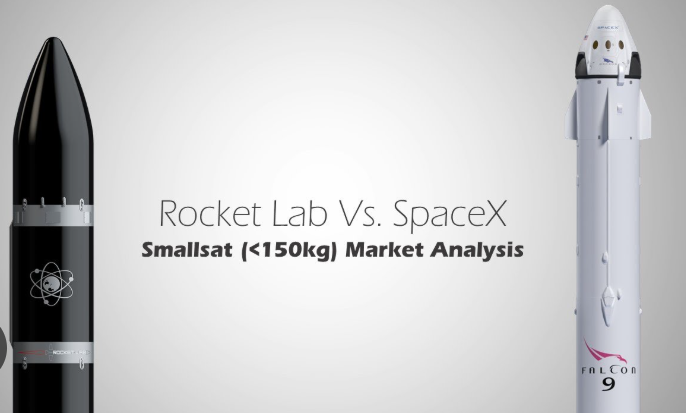
The global space economy has transformed from a heavily subsidized sandbox for national space agencies into a fiercely competitive commercial battleground. For nearly a decade, the primary launch narrative centered on a single undisputed monopoly: Elon Musk’s SpaceX, which systematically crushed legacy rocket builders with its reusable Falcon 9 architecture. However, as the deployment of massive global satellite constellations accelerates, a clear and formidable technological rival has solidified its position on public markets. The ongoing Rocket Lab vs SpaceX competition has officially emerged as the most critical structural dynamic shaping the future of orbital logistics.
This corporate showdown goes far beyond a simple comparison of booster engine thrust or maximum payload weights. It represents a fundamental clash between two completely opposing business philosophies. While SpaceX operates on a philosophy of “absolute vertical scale” massively expanding rocket sizes to drive down the cost per kilogram, Rocket Lab, led by founder Sir Peter Beck, has found immense success by mastering high-precision operational agility. By offering dedicated orbital placement, flexible launch intervals, and a highly reliable space systems component ecosystem, Rocket Lab has positioned itself as the only logical alternative to SpaceX’s dominant launch framework.
1. The Core Portfolios: Electron’s Surgical Precision vs. Falcon 9’s Freight Train Cadence
To accurately assess the structural layers defining the Rocket Lab vs SpaceX ecosystem, one must first analyze the vastly different launch profiles of their primary operational workhorses: Rocket Lab’s Electron and SpaceX’s Falcon 9 Block 5.
Rocket Lab Electron: The Private Chauffeur
Electron is a dedicated, small-lift launch vehicle designed specifically to serve the micro-satellite and small-sat markets. Standing at just 18 meters tall and constructed entirely from advanced, lightweight carbon-composite materials, Electron can deliver up to 300 kilograms of payload to a standard 500-kilometer Sun-Synchronous Orbit (SSO).
The core technological innovation powering Electron is the Rutherford engine. It is the world’s first oxygen-kerosene rocket engine to utilize an electric-pump cycle, relying on high-performance lithium-polymer batteries to drive its propellant pumps rather than complex, heavy gas generators. Rocket Lab targets a baseline price point of roughly $7.5 million to $8.5 million per launch.
SpaceX Falcon 9: The Continental Freight Train
In stark contrast, the Falcon 9 is an absolute industrial leviathan. Standing at over 70 meters tall and powered by nine liquid oxygen and RP-1 kerosene Merlin 1D engines, the vehicle can lift an astronomical 22,800 kilograms to Low-Earth Orbit (LEO) in a fully expendable configuration, or roughly 17,500 kilograms while executing a controlled booster return to a drone ship.
SpaceX sells commercial Falcon 9 flights for a baseline price of approximately $74 million. However, to capture the small-satellite market that would typically purchase dedicated small launchers, SpaceX operates its highly popular Transporter Rideshare Program. This program allows multiple small-satellite operators to pool their hardware onto a single Falcon 9, dropping the entry cost to a highly competitive $275,000 to $300,000 per 50 kilograms.
| Feature / Factor | SpaceX Rideshare Route | Rocket Lab Electron Service |
| Cost Profile | Low entry point (~$300,000 per 50 kg) | Premium dedicated flight (~$8.0 Million) |
| Flight Route | Rigid, predetermined drop-off zones | Custom, precision orbital injection |
| Schedule Flexibility | Dependent on main payload; long system delays | High agility; tailored rapid deployment windows |
| Payload Fuel Preservation | Low (satellites must burn fuel to drift to target orbit) | High (rocket places satellite directly at target location) |
This rideshare setup creates a clear tactical trade-off for satellite operators. While a SpaceX rideshare flight is undeniably cheaper on a pure cost-per-kilogram basis, it forces customers to compromise on orbital placement. The “bus” drops dozens of satellites into a rigid, uniform orbit. If a company’s payload requires a highly specific inclination or a unique altitude to maximize its operational revenue, it must spend months using its own onboard thrusters to drift into position, burning through its limited fuel supply.
Rocket Lab solves this problem by functioning like a premium, private taxi service. By utilizing its specialized Kick Stage a mini-spacecraft powered by a restartable Curie engine—Electron can inject delicate satellites into hyper-specific, customized orbits with surgical precision, saving the payload’s onboard fuel and allowing it to generate revenue from day one.
2. Structural Metrics: Comparing Corporate Financial Profiles
The stark difference in launch sizes between the two space companies translates directly into completely different corporate finance frameworks and addressable market strategies.
Operational and Engineering Benchmarks
| Core Space Sector Indicator | Rocket Lab (Electron / Neutron Framework) | SpaceX (Falcon 9 / Starship Framework) |
| Corporate Listing Status | Publicly Traded (Nasdaq: RKLB) | Private Enterprise (Confidential Filings) |
| Primary Core Vehicle Height | 18 Meters (Electron) / 43 Meters (Neutron) | 70 Meters (Falcon 9) / 121 Meters (Starship) |
| Max LEO Payload Capacity | 300 kg (Electron) / 13,000 kg (Neutron) | 22,800 kg (Falcon 9) / 150,000+ kg (Starship) |
| Propellant Chemistry Base | LOX / RP-1 (Electron) | LOX / Methane (Neutron) | LOX / RP-1 (Falcon) | LOX / Methane (Starship) |
| Annual Launch Volume Rate | ~15 to 25 Launches Annually | 150+ Launches Annually |
| Documented Backlog Value | $2.2 Billion (As of Q1 2026 earnings) | Highly confidential multi-billion institutional log |
3. The Medium-Lift Collision Course: Neutron vs. Falcon 9
While Rocket Lab previously operated comfortably in the small-satellite niche, the company is now headed toward a direct, full-scale collision with SpaceX’s core cash cow. Rocket Lab is aggressively finalizing development on Neutron, a medium-lift, commercial launch vehicle scheduled to make its highly anticipated debut at the Mid-Atlantic Regional Spaceport (MARS) on Wallops Island, Virginia.
Neutron is specifically engineered to challenge the Falcon 9 monopoly by attacking the massive megaconstellation deployment market. Rocket Lab has priced Neutron flights at a highly competitive $50 million to $55 million, directly undercutting the $74 million baseline of a standard Falcon 9.
| Engineering Layer | SpaceX Falcon 9 Structure | Rocket Lab Neutron Architecture |
| Core Hull Material | Traditional aluminum-lithium skin | Advanced, ultra-light carbon-composite |
| Booster Recovery Method | Drone ship or down-range sea landings | Return-to-base direct land tracking |
| Payload Fairing Handling | Expended in space or fished out of the ocean | Captured securely via the attached “Hungry Hippo” nose |
| Engine Refurbishment Cycle | High (soot-heavy RP-1 kerosene requires deep cleaning) | Low (clean-burning liquid methane allows rapid turnaround) |
To achieve these extreme cost savings, Rocket Lab abandoned traditional aerospace design concepts, introducing several massive engineering modifications that set Neutron apart from the Falcon 9:
- The Carbon-Composite Breakthrough: Unlike the Falcon 9’s heavier aluminum-lithium skin, Neutron is built from a proprietary carbon-composite material. This makes the rocket incredibly light, allowing it to utilize a wide, squat structural shape that handles the extreme thermal stresses of atmospheric re-entry without requiring heavy, expensive thermal protection tiles.
- The “Hungry Hippo” Fairing: Standard fairings (the protective nosecone shells that house satellites) are cast off in space, forcing companies to execute expensive sea-recovery missions to fish them out of the ocean. Neutron features a unique, permanently attached “Hungry Hippo” fairing system. The nosecone opens wide to release the second stage and its payload, and then snaps shut before the first-booster stage guides itself back to Earth, completely eliminating the risk of maritime hardware corruption.
- The Archimedes Propellant Engine: Neutron’s first stage will be powered by nine newly developed Archimedes engines. Utilizing a highly efficient liquid methane and liquid oxygen gas-generator cycle, Archimedes provides 1.5 million pounds of liftoff thrust. Because methane burns much cleaner than the Falcon 9’s soot-heavy RP-1 kerosene, the Archimedes engines require virtually zero overhaul cleaning between flights, enabling true, rapid-turnaround reuse.
4. The Hidden Fortress: Rocket Lab’s Space Systems Ecosystem
One of the most profound, yet frequently overlooked, differences in the Rocket Lab vs SpaceX dynamic is that Rocket Lab has quietly evolved into a massive, multi-tiered aerospace merchant supplier. While SpaceX allocates the vast majority of its internal engineering power toward building its own captive internet business (Starlink) and advancing its Martian ambitions, Rocket Lab has systematically acquired elite space component manufacturing companies.
Today, nearly 60% to 70% of Rocket Lab’s total corporate revenue actually comes from its massive “Space Systems” business division, rather than raw rocket launches. Through the strategic acquisition of industry pillars like Sinclair Interplanetary, ASI, and SolAero, Rocket Lab has transformed into a one-stop-shop for satellite construction.
| Acquired Component Pillar | Role in Aerospace Manufacturing | Global Satellite Penetration |
| SolAero Solar Cells | High-efficiency space power generation | Powers NASA’s deep-space exploratory probes |
| Sinclair Interplanetary | High-precision reaction wheels & star trackers | Embedded natively in elite commercial satellite fleets |
| Advanced Solutions (ASI) | Flight command and tactical simulation software | Present on roughly 40% of all global space flights |
Because Rocket Lab manufactures everything from high-efficiency solar arrays and reaction wheels to star trackers and flight software, the company has managed to embed its hardware into approximately 40% of all global space missions.
Remarkably, this diverse component business means that Rocket Lab actually generates steady profit margins from its competitors’ projects. When a commercial tech giant or national government books a heavy-lift launch on a SpaceX Falcon 9 or a United Launch Alliance (ULA) Vulcan rocket, there is a very high probability that the satellites sitting inside those nosecones are powered by solar cells and navigated by flight hardware manufactured inside Rocket Lab’s domestic cleanroom facilities.
5. The Ultimate Scale Horizon: Starship and the Monopoly Trap
Despite Rocket Lab’s impressive progress, any comprehensive space sector analysis must confront the reality of SpaceX’s ultimate scaling engine: the fully reusable Starship super-heavy lift system.
Standing as the largest and most powerful flying structure ever built by human hands, Starship is designed to carry a staggering 150,000 kilograms to low-Earth orbit in a fully reusable configuration. By executing simultaneous vertical landings of both the massive Super Heavy booster and the primary Starship upper stage directly back onto the launch tower’s mechanical “Mechazilla” arms, SpaceX aims to slash marginal launch costs down to an unprecedented $10 million to $15 million per flight.
| Operational Focus | Rocket Lab Cadence Focus | SpaceX Volumetric Monopoly |
| Small-Lift Presence | Electron dominates with hyper-precise, premium slots | Offers budget rideshare alternatives |
| Medium-Lift Entry | Neutron targets high-growth megaconstellation contracts | Falcon 9 handles massive, constant weekly drops |
| Heavy-Lift Horizon | Intentionally bypasses super-heavy infrastructure | Starship targets full reusability and a $10M cost floor |
| Revenue Diversification | Heavily backed by merchant components & system sales | Driven by internal Starlink internet expansion |
If SpaceX successfully achieves regular, operational reusability with Starship over the next few years, it will establish a volumetric launch monopoly that could fundamentally collapse traditional launch pricing structures. A single Starship flight could deploy an entire satellite fleet that would otherwise require dozens of dedicated small- or medium-lift launches.
However, this potential monopoly creates a massive strategic opportunity for Rocket Lab. National defense networks, global intelligence groups, and commercial telecom giants are deeply terrified of a world where SpaceX controls the only viable gateway to orbit. To mitigate this catastrophic single-point-of-failure risk, institutional customers are actively funneling billions of dollars in “backup insurance” launch contracts to Rocket Lab to ensure a secondary, completely independent launch infrastructure remains robust and active.
The Verdict: Coexistence, Not Annihilation
Ultimately, evaluating the Rocket Lab vs SpaceX race reveals that the future of the commercial space industry will not be a winner-take-all monopoly. The space economy is scaling fast enough to support two distinct operating models.
SpaceX will continue to function as the industry’s heavy-lift civil engineer, using Starship and Falcon Heavy to move massive amounts of raw mass into orbit, build out global communications infrastructure, and establish deep-space logistics lines to the Moon and Mars.
Simultaneously, Rocket Lab is perfectly positioned to serve as the agile, high-precision partner for specialized corporate and national security operators. By pairing its nimble Electron launcher and upcoming Neutron rocket with its massive, high-margin space systems component business, Rocket Lab has constructed an incredibly resilient, diversified aerospace engine. As the orbital frontier matures, Rocket Lab’s ability to provide tailored, precision placement and custom satellite components ensures it will remain a highly profitable, independent powerhouse capable of standing tall against the massive weight of the SpaceX launch machine.