

• Send Us A Tip
  • Calling all Tech Writers
  • Advertise
Saturday, October 24, 2026
  • Login
TechStory
  • News
  • Crypto
  • Gadgets
  • Memes
  • Gaming
  • Cars
  • AI
  • Startups
  • Markets
  • How to
No Result
View All Result
  • News
  • Crypto
  • Gadgets
  • Memes
  • Gaming
  • Cars
  • AI
  • Startups
  • Markets
  • How to
No Result
View All Result
TechStory
No Result
View All Result
Home Tech

The 45°C Breakthrough NVIDIA’s Liquid Cooling Architecture Solves Data Center Water Crisis

The Rubin-Generation DSX Reference Design Eliminates Fans and Cuts Multi-Million Dollar Resource Costs with Closed-Loop Thermodynamics

by Anochie Esther
June 25, 2026
in Tech
Reading Time: 4 mins read
0
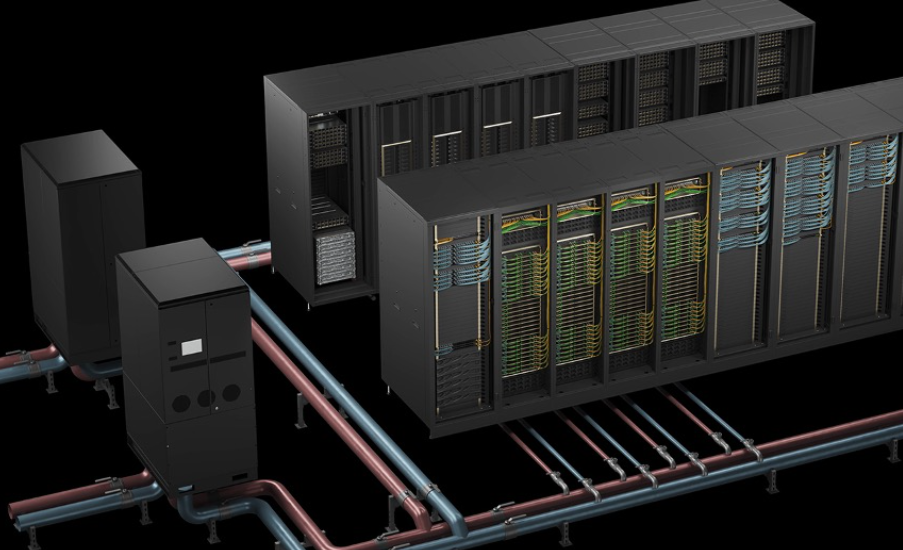
NVIDIA liquid cooling design

Image Credit: NVIDIA Blog

TwitterWhatsappLinkedin

The rapid growth of artificial intelligence has moved from a software race to a massive hardware infrastructure challenge. As hyperscale operators deploy thousands of high-density accelerators to train next-generation models, legacy facility designs are hitting a strict physical wall. Air cooling can no longer keep pace with the thermal intensity of modern processors, forcing data centers to allocate up to 40% of their total power exclusively to cooling loops and evaporative water towers. To solve this crisis, tech giant NVIDIA has unveiled its NVIDIA liquid cooling design, a fully closed-loop architecture for its upcoming Rubin-generation infrastructure that operates at temperatures hotter than a residential hot tub to slash environmental overhead.

You might also like

Weekly Technology News

How to Download YouTube Music to MP3: A Simple Guide

How Accurate Captions Make Short Mobile Videos More Accessible and Easier to Understand

Presented at London Climate Week, the newly formalized DSX AI factory reference design marks a major shift in data center thermodynamics. By capturing heat directly at the chip and networking components through sealed cold plates, this system completely removes internal server fans and high-volume air handlers. Instead of relying on energy-intensive mechanical refrigeration, the architecture operates at a coolant input temperature of 45°C (113°F). This higher base temperature allows facilities to exhaust heat straight into the outside environment via dry coolers, driving on-site water consumption down to near-zero levels while providing millions of dollars in annual resource savings.

1. The Physics of 45°C: Why Running Hotter Saves Power

To understand the core innovation behind the NVIDIA liquid cooling design, one must look at basic thermodynamic properties. Traditional data centers expend massive amounts of electricity running chillers to drop internal cooling fluid down to a crisp 21°C to 30°C. NVIDIA reverses this strategy by allowing its coolant a specialized mixture of 75% water and 25% propylene glycol to run safely at 45°C.
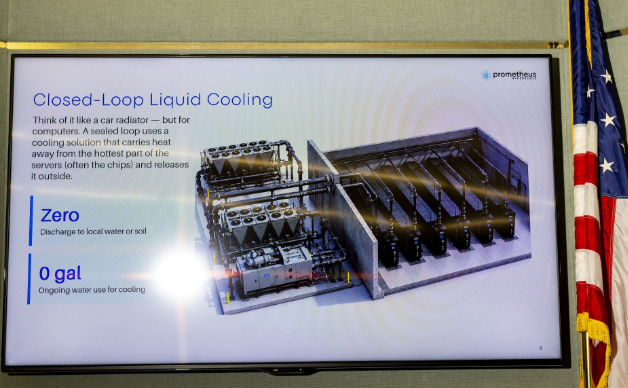
NVIDIA’s Closed-Loop Architecture Reference. Source: Natalie Behring / Getty Images

Because heat naturally flows “downhill” from a hotter source to a cooler environment, maintaining a high 45°C fluid baseline makes it incredibly easy to vent thermal energy outside. As long as the outdoor ambient air is below 45°C, the facility can use simple outdoor radiators (dry coolers) to expel the heat. By eliminating energy-guzzling HVAC compressors and air conditioners for up to 99% of the year, operators can dramatically boost their power usage effectiveness (PUE).

2. Eliminating the Evaporative Drain: Achieving Near-Zero Water Use

The environmental footprint of the AI boom has sparked intense public pushback, with recent disclosures revealing that hyperscale cloud operations draw billions of gallons of local water annually to maintain evaporative cooling towers. The Rubin DSX reference architecture directly addresses this ecological strain by operating as a sealed system.

Because the water-glycol mixture is filled once and continuously recirculated throughout the life of the facility, there is zero evaporative loss. In standard climates, the system cuts cooling water usage from 2.6 million gallons per megawatt a year down to near zero. According to engineering projections, making the switch to this fully liquid-cooled architecture allows a typical 50-megawatt hyperscale facility to save more than $4 million annually in combined water and electricity utility costs.

3. Tray-Level Engineering: Doubling Rack Density

Beyond its clear environmental benefits, this thermal overhaul completely alters physical server layouts. Air-cooled servers require massive, finned aluminum heat sinks and high-decibel fans to pull air across internal components, frequently generating noise pollution at or above 85 decibels.

Architectural Component and Deployment Shifts

Engineering Layer Component Legacy Air-Cooled Datahall Liquid-Cooled Rubin DSX Standard
Acoustic Noise Footprint ≥ 85 Decibels (Constant fan scream) Near Silent (Fanless operation)
Compute Tray Form Factor 6 Rack Units (6U) per node 2 Rack Units (2U) (High-density design)
Coolant Plumbing Layout Complex multi-point internal tubes Single unified inlet/outlet front plate
Chiller Infrastructure Needs Continuous mechanical refrigeration Chillerless dry coolers in most climates

By removing interior fans and shrinking components down into a unified, tray-level fluid framework, NVIDIA allows a compute module that previously required six rack units (6U) of vertical space to fit cleanly into a compact two-rack-unit (2U) slot. This space optimization lets operators triple the computational density of their existing data halls, allowing them to scale AI processing capabilities without needing to expand the physical square footage of their buildings.

The Path to Wide-Scale Adoption

As silicon power limits break past the cooling capacity of moving air, the industry is embracing liquid infrastructure as an absolute operational requirement. Supply chains are aligning rapidly, with major manufacturing partners like Supermicro and Motivair (a division of Schneider Electric) deploying fully integrated, liquid-ready racks.

While retrofitting legacy facilities involves clear upfront capital costs, the long-term economic benefits are undeniable. By decoupling server performance from ambient environmental temperatures and clearing the path for municipal waste heat recovery, the NVIDIA liquid cooling design offers a highly sustainable roadmap for the future of enterprise computation, proving that the industrial scaling of global intelligence does not have to come at the cost of the planet’s vital natural resources.


Tags: #GreenTech#LiquidCooling#NVIDIALiquidCoolingDesign#RubinGPU#TechNews2026datacenter
Tweet57SendShare16
Previous Post

Slate Auto Sets $24,950 Price for Bare-Bones Electric Truck

Next Post

Broken Promises Outside the Stadium The Systemic Collapse of World Cup Resale Tickets

Anochie Esther

Recommended For You

Weekly Technology News

by Shailja Jha
October 24, 2026
0

Why AI Data Centers Are Powering a Boom in Fuel-Cell Demand The rapid growth of artificial intelligence is driving demand for reliable electricity, creating new opportunities for fuel-cell...

Read more

How to Download YouTube Music to MP3: A Simple Guide

by Rohan Mathawan
October 24, 2026
0
How to Download YouTube Music to MP3: A Simple Guide

YouTube Music is a convenient place to discover new songs, revisit old favorites, and explore playlists for almost any mood. However, streaming isn't always the most practical option....

Read more

How Accurate Captions Make Short Mobile Videos More Accessible and Easier to Understand

by Rohan Mathawan
October 24, 2026
0
Short videos have become a daily habit for mobile users. People watch clips on buses, in waiting rooms, during breaks, and late at night with the volume turned down. Gaming highlights, creator tutorials, reaction clips, and quick product reviews all compete for a few seconds of attention. In that setting, captions are no longer a bonus feature. They are a core part of how a video communicates. When captions are accurate, they help more people follow along, understand the message, and enjoy the content as the creator intended. When they are careless, they can confuse viewers or leave them out entirely. Why Captions Matter for Mobile Viewers Many creators now rely on a caption generator to turn spoken audio into on screen text quickly, which saves time when they publish several clips each week. The real value of that text, however, depends on how closely it matches what is actually said and heard. For viewers who are deaf or hard of hearing, captions are the main way to access speech, tone, and important sound cues. For other viewers, captions support situations where audio is not practical, such as noisy streets, shared spaces, or quiet environments. A clip with clear and correct text works for all of these people without requiring any extra effort from them. Accessibility Starts with Accuracy Accessibility is about giving every viewer a fair chance to understand the content. Captions that skip words, change meanings, or misspell names can make that difficult. A viewer who relies on text cannot compare it against the audio, so any error becomes part of the message they receive. Accurate captions should include the spoken words, the speaker when it is not obvious, and meaningful sounds such as music cues, laughter, or alerts. For example, in a cooking clip, a caption that reads "add two teaspoons of salt" instead of "add two tablespoons of salt" changes the result of the recipe. Accuracy protects the viewer from small mistakes with real consequences. Comprehension in Fast Moving Gaming Clips Gaming clips move quickly. Players speak fast, use abbreviations, call out locations, and react to events that happen in a split second. Team callouts such as map positions, weapon names, and character abilities often sound similar when heard quickly, which makes accurate text especially useful. A viewer who is new to a game may not recognize a term by ear, but seeing it written correctly helps them learn it. Captions also help when the in game audio, music, and voice chat overlap. Clear text separates the commentary from the background noise, so the viewer can follow what the player is saying without replaying the clip several times. Creator Clips and Clear Communication Creators share advice, tutorials, opinions, and stories in short formats where every second counts. Captions give them a way to reinforce key points without adding extra length. A beauty creator can display product names exactly as spoken, a fitness creator can show the number of repetitions, and a tech reviewer can spell out model names that are easy to mishear. Captions also help viewers whose first language is not the language of the video. Reading along while listening can make unfamiliar accents or fast speech easier to follow. This does not replace translation, but it supports comprehension for people who are still building their listening skills. Common Caption Errors and Their Effects Some caption mistakes appear again and again in short videos. Understanding them helps creators know what to check before publishing. Homophones, such as "their" and "there," or "to" and "two," can change the meaning of a sentence. Proper nouns, including usernames, game titles, brand names, and place names, are often misspelled. Missing punctuation can make a sentence read as a different statement or question. Lines that appear too early or too late can confuse the viewer about who is speaking. Technical terms and slang may be replaced with common words that sound similar but mean something else. Each of these errors is small on its own, but in a clip that lasts under a minute, even a few of them can reduce clarity. Reviewing the text once before posting is a simple habit that keeps these problems from reaching the audience. Practical Tips for Better Captions Creators do not need advanced skills to improve caption quality. A few steady habits can make a visible difference. Record audio as clearly as possible, because clean speech gives any captioning method a better starting point. Read through the full text while listening to the clip, and correct names, numbers, and terms that are specific to the topic. Keep each line short, so viewers can read it comfortably without missing the picture. Add brief descriptions for important sounds, such as "applause" or "game alert," when they affect understanding. Watch the final video on a phone, since that is where most viewers will see it. These steps are practical rather than technical. They focus on the viewer experience and not on any promise of a specific result. Timing, Placement, and Design on Small Screens On a small mobile screen, the look of captions matters almost as much as their wording. Text should appear at a size that is easy to read, with enough contrast against the background. White text with a dark outline or a soft background box is a common choice because it stays readable over changing scenes. Captions should also avoid covering important parts of the video, such as the game interface, a product being demonstrated, or a speaker's face. Timing is equally important. Text that appears just as the words are spoken feels natural, while text that lags behind can make the video feel out of sync. Careful placement and timing help viewers read and watch at the same time without effort. Conclusion Accurate captions make short mobile videos more accessible, easier to follow, and more useful to a wider audience. They support viewers who cannot rely on sound, help new players understand fast gaming clips, and give creators a reliable way to share clear messages in a few seconds. A caption generator can speed up the first step by producing text from speech, but the best results come when creators review the output, correct names and terms, and check timing and readability on a phone. By treating captions as a real part of the video and not an afterthought, creators can make their content welcoming and understandable for more people, one short clip at a time.

Short videos have become a daily habit for mobile users. People watch clips on buses, in waiting rooms, during breaks, and late at night with the volume turned...

Read more
Next Post
World Cup resale tickets

Broken Promises Outside the Stadium The Systemic Collapse of World Cup Resale Tickets

Please login to join discussion

Techstory

Tech and Business News from around the world. Follow along for latest in the world of Tech, AI, Crypto, EVs, Business Personalities and more.
reach us at info@techstory.in

Advertise With Us

Reach out at - info@techstory.in

Aviator Game India 2026

BROWSE BY TAG

#Crypto #howto 2024 acquisition AI amazon Apple Artificial Intelligence bitcoin Business China cryptocurrency e-commerce electric vehicles Elon Musk Ethereum facebook funding Gaming Google India Instagram Investment iPhone IPO Market Markets Meta Microsoft News OpenAI samsung Social Media SpaceX startup startups tech Tech news technology Tesla TikTok trend trending twitter US

© 2025 Techstory.in

No Result
View All Result
  • News
  • Crypto
  • Gadgets
  • Memes
  • Gaming
  • Cars
  • AI
  • Startups
  • Markets
  • How to

© 2025 Techstory.in

Welcome Back!

Login to your account below

Forgotten Password?

Retrieve your password

Please enter your username or email address to reset your password.

Log In
Are you sure want to unlock this post?
Unlock left : 0
Are you sure want to cancel subscription?