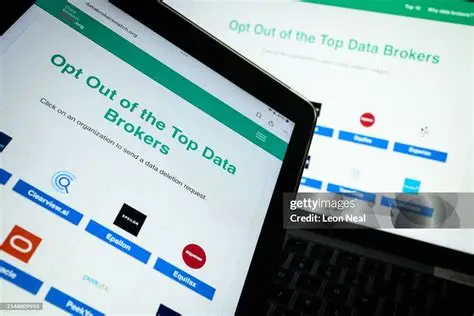
Want to remove yourself from a data broker site? It is your choice, and you can make it happen in a few simple steps. Let’s understand how these sites work and how you can remove yourself from them. So, let’s get started.
What are Data Broker Sites?
Data broker sites are companies that make a business out of pulling out, aggregating, and selling your personal information. They work like the ones standing between you and the internet, observing your digital footprints. They operate entirely in the background, collecting digital footprints you leave behind while browsing the web, shopping online, or filling out forms, etc.
These companies gather data from a massive variety of sources, which are easily trackable. These include public records like voter registrations, property deeds, and marriage certificates, as well as commercial sources. They track your web browsing history, social media activity, and app usage to build highly detailed, individual profiles, which is good data to understand a person and what they may like or want at a particular time.
A typical profile might include your full name, current and past addresses, phone numbers, email addresses, and employment history, which is almost everything about you. It can also delve into highly specific personal details, such as your estimated income, political affiliations, medical conditions, religious beliefs, and even your spending habits.
Data brokers bring all this information together and sell it to anyone willing to pay. Their buyers include advertisers looking to target you with hyper-specific ads, insurance companies evaluating your risk, background check services, and financial institutions assessing your creditworthiness for their own reasons. Basically, this helps them in marketing on a personal level rather than on a high level. Unfortunately, scammers and identity thieves also use these sites to find targets. While it is legal for them to operate, many people find the lack of transparency alarming, leading to a growing interest in privacy services that help remove their personal information from their databases. You can do it too!
Steps to remove yourself from data broker sites
If you want to get yourself off data broker sites, then these are the steps that you need to follow.
- The first thing is to audit the web to see where you appear. Start by searching your name in quotation marks alongside your city, state, or phone number on a regular search engine. This gives you an initial map of which specific people-search sites, like Whitepages, Spokeo, or BeenVerified, are prominently displaying your home address, relatives, and contact details. This is crucial data, and you ought to be careful about it.
- Then target the largest aggregators first. Data brokers buy and sell information from each other, but a few massive companies handle the brunt of it, which one may not initially think of. So, focus your initial energy on major players like LexisNexis, Acxiom, and even Epsilon for that matter. Removing your data from these core databases cuts off the supply line to many smaller websites and keeps it safer.
- You also have to find the opt-out pages on individual sites. Every legitimate data broker is legally required to provide a way for consumers to request data removal, though they often hide these links. So, scroll to the very bottom of a broker’s homepage and look for tiny text links labeled Privacy Policy, Opt-Out, Do Not Sell My Personal Information, or Your Privacy Choices. It helps you take care of that well, but it may be hard to follow.
- Finally, submit formal opt-out requests. Follow the specific instructions on each opt-out page as it asks. Some sites will ask you to paste the URL of your specific profile, while others have their own ways. Try to always use a secondary email address for this step so you do not accidentally hand them your primary email.
- At the end, just finalize this and complete the verification steps. To prevent people from deleting other citizens’ data maliciously, most brokers require verification. They might send a confirmation link to your disposable email or require you to answer an automated phone call or text message. Complete these steps immediately, or the removal request will expire if you don’t act quickly.
- You can also consider using an automated removal service. If doing this manually for dozens of sites feels like a huge task that you would skip any day, you can pay for a subscription service. These services use automated systems and legal teams to continuously scan hundreds of broker sites and submit removal requests on your behalf.
- As a precautionary method for the future, you can also tighten your source privacy settings. To stop your data from leaking right back onto these sites, change your settings elsewhere. Make all your social media accounts private, ask your state DMV if you can restrict your registration data, and opt out of data sharing on your insurance portals and financial apps.
- Do regular maintenance. Data deletion is not a permanent, one-time fix. Data brokers are constantly active, and thus you will have to be too.
- Most popular data broker sites
The data broker industry is massive, but a few prominent names dominate the market, which you may have come across. They generally fall into three main categories based on how they use your information. First are the financial and credit giants like Experian, Equifax, and TransUnion. While known for credit scores, they also bundle and sell consumer demographic profiles for marketing and risk assessment. Although this is usually harmless, we can never tell with scary internet things becoming so common.
Second are the marketing and analytics heavyweights like Epsilon and LexisNexis. Acxiom alone holds data on over two billion people, tracking consumer habits and lifestyle traits, thus keeping all data. And finally, there are people-search sites like Whitepages, too. These are the public-facing platforms where anyone can search for your name to find your phone number, address history, and relatives.