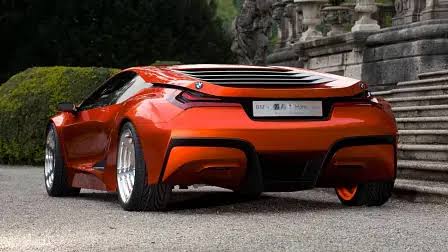
For decades, the BMW M1 has occupied a special place in automotive history. It was bold, rare and unlike anything else BMW had built. Although production ended in the early 1980s, the idea of a true successor has never completely disappeared. Now, fresh comments from BMW’s top M executives suggest that the dream may be closer to reality than many expected.
A Dream That Refuses to Fade
Speaking during the 24 Hours of Le Mans, BMW M CEO Frank van Meel admitted that creating a modern M1 remains one of his biggest ambitions. Calling the original M1 one of his favorite cars, he said he would love to see a new version wearing the iconic blue-and-white roundel.
His enthusiasm was echoed by BMW M Head of Design Oliver Heilmer, who revealed that the company continues to explore ideas for a future flagship sports car. While no production model has been confirmed, Heilmer explained that designers regularly revisit the concept, waiting for the right combination of timing, resources and corporate approval.
Those comments indicate that the project is far more than a passing conversation inside BMW. The desire to build a halo sports car continues to exist at the highest levels of the M division.
Why BMW Hasn’t Built One Yet
Despite growing enthusiasm, bringing a mid-engine supercar to market remains a significant challenge. Such vehicles require massive investment, lengthy development cycles and strong business justification.
BMW has already experienced this firsthand. The Vision M Next concept, unveiled as a futuristic plug-in hybrid supercar, was reportedly close to becoming a production model before the project was shelved during the uncertainty surrounding the COVID-19 pandemic.
The company was also linked to an all-electric performance flagship capable of producing well over 1,000 horsepower. However, the limited commercial success of ultra-expensive electric hypercars across the industry appears to have encouraged a more cautious approach.
Instead of rushing into production, BMW seems determined to wait until market conditions make sense.
Collector Models Could Open the Door
BMW has recently enjoyed strong demand for exclusive, low-volume vehicles aimed at collectors. Limited-production models such as the 3.0 CSL demonstrated that enthusiasts are willing to pay a premium for highly exclusive M cars.
Senior executives have previously hinted that another special collector-focused BMW M model has already received internal approval. While details remain under wraps, many enthusiasts believe such a project could serve as a stepping stone toward a full-fledged M1 successor.
A successful limited-run flagship would help justify the investment needed for a dedicated supercar program.
Performance Technology Is Already in Place
From a technical perspective, BMW appears well prepared. Its latest performance platforms are capable of supporting enormous power outputs, while the updated S58 inline-six engine continues to evolve to meet future emissions regulations without sacrificing performance.
That combination gives BMW multiple options, whether it chooses a high-performance combustion engine, a hybrid system or an advanced electric drivetrain.
Enthusiasts Have Reason to Stay Hopeful
BMW has stopped short of confirming a production timeline, but one thing is becoming increasingly clear: the vision for a new M1 is alive inside the company.
For now, enthusiasts will have to wait for the right moment when engineering ambition, market demand and executive approval finally align. If that happens, the legendary M1 name could once again return to BMW showrooms, this time as a modern supercar built for a new generation.