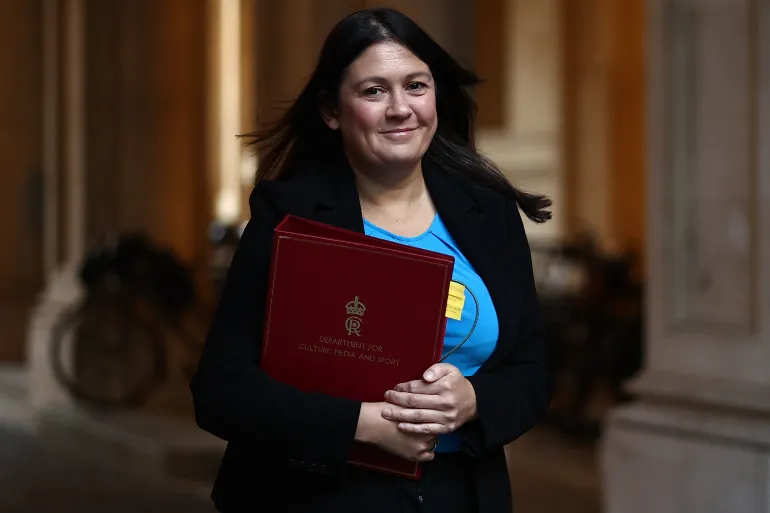
The debate over social media’s role in modern society has taken another dramatic turn. UK Culture Secretary Lisa Nandy has announced that she is leaving X (formerly Twitter), accusing the Elon Musk-owned platform of promoting “abuse and misinformation over meaningful debate.” The decision is more than a personal exit—it also marks the departure of the Department for Culture, Media and Sport (DCMS) from the platform, making it the second UK government department to step away from X in recent weeks.
The move highlights growing tensions between governments and social media companies over issues such as misinformation, online abuse, artificial intelligence, and user safety.
Credits: BBC
Why Lisa Nandy Decided to Leave X
Announcing her decision on Thursday, Nandy said X no longer serves as a healthy space for democratic conversations. According to her, the platform has become increasingly dominated by abusive interactions and misleading information, making meaningful public engagement difficult.
She stated that both she and the Department for Culture, Media and Sport would stop using X because it “isn’t healthy for our democracy or our communities.” While ending her presence on the platform, Nandy clarified that she will continue communicating with the public through Facebook, Instagram, and LinkedIn.
Her comments reflect wider concerns among policymakers who believe that online platforms should encourage informed discussion rather than amplify hostility and false narratives.
Growing Government Distance from X
The DCMS is now the second UK government department to leave X. Earlier, the Attorney General’s Office also stopped posting on the platform, with officials citing concerns over the nature of discussions taking place there.
The Attorney General defended the decision by saying conversations on X had frequently descended into racism and misogyny, making it an unsuitable platform for official government communication.
Although X has not immediately responded to Nandy’s latest announcement, the departure of multiple government departments signals increasing unease within the UK administration about the platform’s direction.
Criticism of X Under Elon Musk’s Leadership
Since Elon Musk acquired Twitter in 2022 and later rebranded it as X, the platform has undergone sweeping changes to its moderation policies and content rules.
Critics in the UK, the United States, and several other countries argue that these changes have weakened safeguards designed to combat misinformation, hate speech, discrimination, and online harassment. Many believe the platform has become more permissive toward controversial and extremist content, creating a more toxic online environment.
These concerns have prompted several advertisers, media organisations, celebrities, and public institutions to either reduce their activity or leave the platform entirely. Supporters of Musk, however, argue that the changes are intended to protect free speech and reduce unnecessary censorship, highlighting the ongoing global debate over where the balance between free expression and content moderation should lie.
Regulatory Pressure Continues to Mount
Nandy’s departure comes at a time when X is facing increasing regulatory scrutiny in the UK and beyond.
In January, UK media regulator Ofcom launched an investigation into X after concerns emerged that its Grok AI chatbot was allegedly being used to generate and distribute illegal non-consensual intimate images, including material involving minors. The investigation intensified discussions around the responsibilities of AI developers and social media companies in preventing harmful content from spreading online.
The case has become one of several examples illustrating how governments are paying closer attention to artificial intelligence tools integrated into social media platforms.
UK Tightens Its Focus on Online Safety
The UK government has been taking a more aggressive approach to regulating digital platforms. Prime Minister Keir Starmer described some of the AI-generated images under investigation as “disgusting” and “unlawful,” stressing that technology companies have a duty to protect users from harmful content.
Last month, Starmer also announced plans to introduce a social media ban for children under the age of 16, arguing that the measure would help young people reclaim their childhood and reduce exposure to harmful online experiences.
Meanwhile, Elon Musk has repeatedly criticised the UK’s regulatory approach, particularly the Online Safety Act, arguing that stricter rules risk limiting freedom of expression and encouraging excessive censorship.

Credits: Variety
A Wider Debate Over the Future of Social Media
Lisa Nandy’s decision to leave X reflects a broader global conversation about the responsibilities of social media platforms in the digital age. Governments increasingly want stronger safeguards against misinformation, abuse, and AI-generated harmful content, while technology companies continue to argue for greater protection of free speech.
As regulatory pressure intensifies and more public institutions reconsider their presence on X, the platform finds itself at the centre of an ongoing battle over how online spaces should be governed. Whether these developments lead to significant policy changes or further deepen the divide between governments and social media companies remains one of the biggest questions facing the digital world today.