Every day, billions of people shop online, log into bank accounts, send emails, join video meetings, and access cloud services. While these activities feel almost instantaneous, there’s a sophisticated security system working behind the scenes to ensure your data doesn’t fall into the wrong hands.
Imagine entering your online banking password only to discover that someone intercepted it before it reached the bank. Or downloading a software update that was secretly modified by hackers. Fortunately, these scenarios are largely prevented by Public Key Infrastructure (PKI)—one of the most important yet least understood technologies powering the modern internet.
From securing websites with the familiar padlock icon to encrypting business emails and authenticating connected devices, PKI plays a vital role in protecting digital communications. In this article, we’ll explore what PKI is, how it works, why it’s essential, and where it’s used in everyday technology.
.webp)
Credits: Oloid AI
What Is Public Key Infrastructure (PKI)?
Public Key Infrastructure (PKI) is a framework of technologies, policies, hardware, software, and procedures that enables secure digital communication through encryption and identity verification.
Rather than simply encrypting data, PKI also confirms that the people, websites, applications, or devices you’re communicating with are actually who they claim to be.
At its core, PKI manages digital certificates and cryptographic keys, which work together to establish secure and trustworthy connections over the internet.
Without PKI, online banking, e-commerce, secure messaging, software downloads, and countless cloud services would be significantly more vulnerable to cyberattacks.
Why Is PKI So Important?
The internet is an open network where information travels through multiple servers before reaching its destination. Without encryption, anyone intercepting that data could potentially read or alter it.
PKI protects against this by ensuring:
- Data remains encrypted while being transmitted.
- Users can verify the identity of websites and services.
- Devices communicate only with trusted systems.
- Sensitive information remains confidential.
- Digital signatures prove files haven’t been modified.
For businesses, PKI helps secure corporate networks, cloud infrastructure, employee devices, Internet of Things (IoT) deployments, and remote work environments.
For consumers, it’s what allows you to safely browse HTTPS websites, shop online, and access secure applications every day.
How Does PKI Work?
PKI relies on two fundamental components:
- Cryptographic keys
- Digital certificates
Together, these establish secure communication between two parties.
Public and Private Keys
Unlike traditional encryption that uses a single key, PKI uses asymmetric encryption, which involves two mathematically related keys.
Public Key
The public key is openly shared. Anyone can use it to encrypt information intended for the owner.
Private Key
The private key remains secret and is known only to its owner. It decrypts messages encrypted with the matching public key.
Although the keys are mathematically linked, deriving the private key from the public key is computationally impractical using today’s technology.
Think of the public key as a mailbox slot anyone can drop a letter into, while the private key is the only key capable of opening that mailbox.
Understanding Digital Certificates
Encryption alone isn’t enough.
You also need to know you’re communicating with the correct person or website.
That’s where digital certificates come into play.
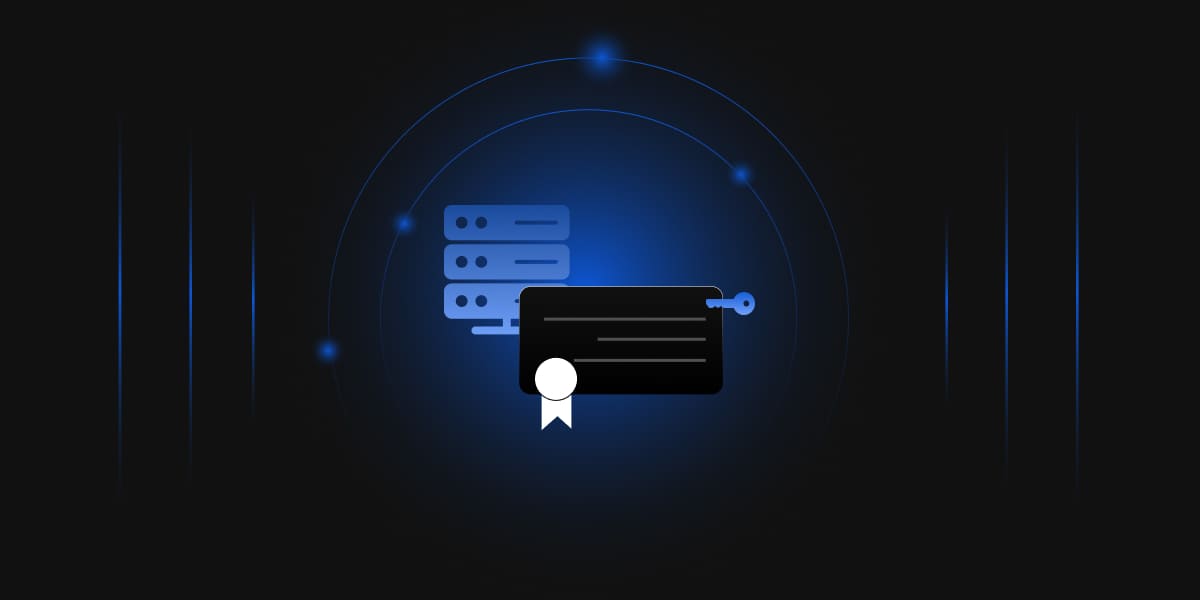
A digital certificate functions much like a passport in the digital world. It verifies the identity of a website, organization, application, or device.
Each certificate contains information such as:
- The owner’s identity
- The public key
- Certificate validity period
- Issuing authority
- Digital signature
When your browser visits a secure website, it checks the site’s certificate before establishing an encrypted connection.
If the certificate is valid, communication proceeds securely.
If it isn’t, you’ll usually receive a security warning.

Credits: Kamind it
The Role of Certificate Authorities (CAs)
Digital certificates don’t create themselves.
They are issued by trusted organizations known as Certificate Authorities (CAs).
A Certificate Authority verifies the identity of applicants before issuing certificates.
Popular browsers and operating systems already trust hundreds of recognized Certificate Authorities.
When your browser encounters a certificate signed by one of these trusted authorities, it knows the website has been verified.
This trust system forms the backbone of secure web browsing.
Registration Authorities and Certificate Management
In larger PKI deployments, another component called a Registration Authority (RA) assists the Certificate Authority.
The RA verifies identity information submitted by applicants before forwarding requests to the CA for certificate issuance.
Organizations also maintain certificate databases that store, renew, revoke, and manage certificates throughout their lifecycle.
Proper certificate management is essential because expired or compromised certificates can disrupt secure communications.
Symmetric vs. Asymmetric Encryption
PKI primarily relies on asymmetric encryption, but both encryption methods play important roles in cybersecurity.
Symmetric Encryption
Symmetric encryption uses one secret key for both encryption and decryption.
Its main advantages include:
- Extremely fast performance
- Efficient handling of large amounts of data
- Lower computational overhead
However, securely sharing the encryption key remains a challenge.
If someone intercepts the key, the encrypted communication becomes compromised.
Asymmetric Encryption
Asymmetric encryption solves this problem by separating encryption and decryption keys.
Benefits include:
- Secure key exchange
- Identity verification
- Digital signatures
- Better scalability for internet communications
Although computationally slower than symmetric encryption, it’s ideal for establishing secure connections.
In practice, modern internet protocols often combine both methods—using asymmetric encryption to exchange a symmetric session key, which then encrypts the actual data.
Where Is PKI Used?
Most internet users interact with PKI every single day without realizing it.
HTTPS Websites
Whenever you see the padlock icon beside a website’s URL, PKI is working in the background.
HTTPS uses SSL/TLS certificates to:
- Encrypt web traffic
- Authenticate websites
- Prevent eavesdropping
- Protect login credentials
- Secure online payments
Without PKI, online banking and e-commerce would be far less secure.
Secure Email
Businesses often use PKI to encrypt emails containing confidential information.
PKI also enables digital signatures that prove an email genuinely came from the claimed sender and hasn’t been modified during transmission.
This greatly reduces phishing and email spoofing risks.
Secure Shell (SSH)
System administrators use Secure Shell (SSH) to remotely manage servers.
PKI helps authenticate both users and systems, ensuring only authorized individuals gain administrative access.
Software Signing
Whenever you install software from trusted developers, digital signatures verify that the application hasn’t been altered by malicious actors.
Operating systems check these signatures before allowing installations.
Internet of Things (IoT)
Modern IoT devices—from smart home appliances to industrial sensors—use PKI to authenticate themselves before connecting to networks.
This prevents unauthorized devices from joining secure environments.
Credits: Encryption Consulting
Common Cyber Threats PKI Helps Prevent
PKI plays a major role in defending against several common cyberattacks.
Man-in-the-Middle (MITM) Attacks
In a MITM attack, a hacker secretly intercepts communication between two parties.
Without encryption, attackers may read or modify transmitted data.
PKI encrypts communications and authenticates participants, making interception significantly more difficult.
Identity Spoofing
Cybercriminals often create fake websites or impersonate legitimate services.
Digital certificates help browsers distinguish authentic websites from fraudulent ones.
If a certificate cannot be verified, browsers warn users before continuing.
Data Theft
Sensitive information such as passwords, financial details, and personal records remains protected while traveling across the internet.
Even if attackers capture encrypted traffic, they cannot read its contents without the corresponding private key.
Challenges of Managing PKI
Although PKI provides exceptional security, implementing it properly isn’t always simple.
Organizations must carefully manage:
- Certificate renewals
- Certificate revocation
- Private key protection
- Hardware Security Modules (HSMs)
- User authentication
- Compliance requirements
A single expired certificate can unexpectedly disrupt websites, applications, or enterprise systems.
Poor management practices may also expose organizations to security risks despite using strong encryption.
What Happens If PKI Is Poorly Implemented?
An improperly managed PKI infrastructure can create serious problems.
Common issues include:
- Expired certificates causing website outages
- Stolen private keys enabling impersonation
- Weak encryption algorithms becoming vulnerable
- Poor certificate management creating security gaps
- Failed identity verification allowing unauthorized access
Because of these risks, many organizations dedicate specialized security teams to managing their PKI infrastructure.
The Future of PKI
As cybersecurity threats continue evolving, PKI is becoming even more important.
Emerging technologies such as cloud computing, artificial intelligence, autonomous vehicles, smart cities, and billions of connected IoT devices all require reliable identity verification and encrypted communication.
At the same time, researchers are preparing for the arrival of quantum computers, which could eventually break many current encryption algorithms.
This has accelerated work on post-quantum cryptography, where new cryptographic methods are being developed to ensure PKI remains secure in the decades ahead.
Future PKI systems are also expected to become more automated, making certificate management easier while reducing the risk of human error.
Credits: GlobalSign
Final Thoughts
Public Key Infrastructure is one of the invisible technologies that make the digital world possible. Every secure website you visit, every encrypted email you send, every verified software download, and every protected online transaction relies on PKI working quietly in the background.
By combining asymmetric encryption, digital certificates, and trusted Certificate Authorities, PKI establishes secure communication and authenticates identities across the internet. It protects sensitive information from cybercriminals, enables trust between users and online services, and forms the backbone of modern cybersecurity.
While managing PKI requires careful planning and ongoing maintenance, its benefits far outweigh the challenges. As our world becomes increasingly connected through cloud computing, AI, IoT, and emerging digital services, PKI will continue to serve as one of the most critical foundations of secure online communication, ensuring that the internet remains a place where users can exchange information with confidence.