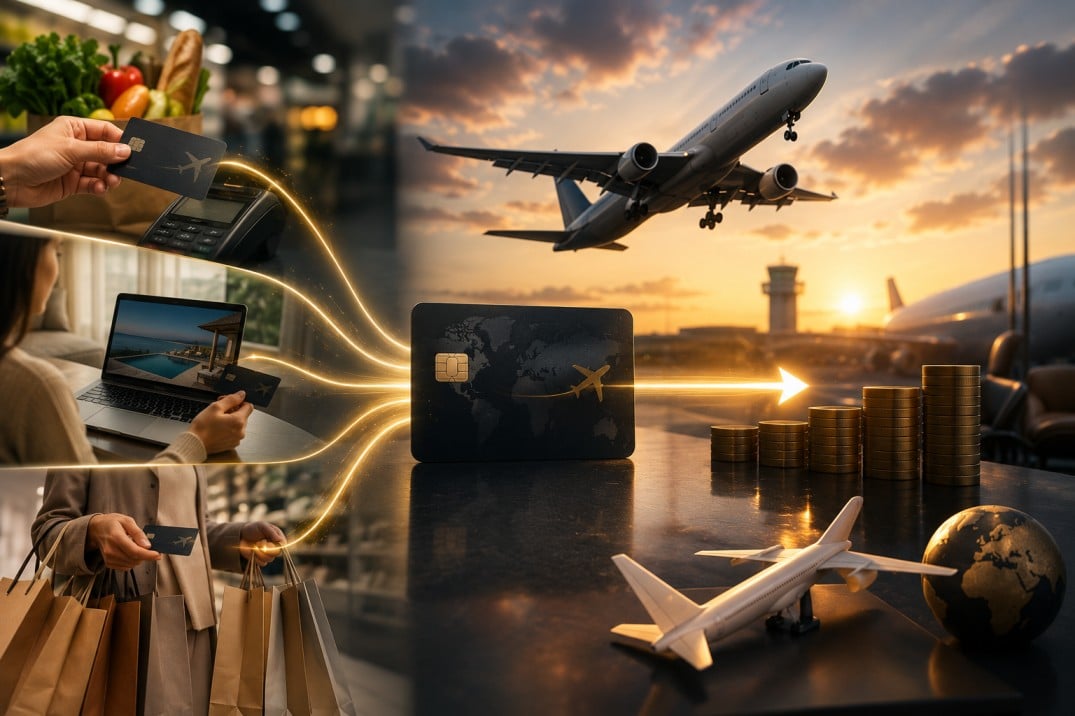
Buying an airline ticket is only one way consumers generate income for an airline. Every time someone pays for groceries with a co-branded credit card, books a hotel through a travel partner or shops with a rewards card linked to an airline, money begins flowing to the carrier long before the traveller even thinks about boarding a flight.
That steady stream of income has changed the financial structure of many major airlines. Frequent flyer programmes were once created to reward repeat customers and encourage them to stay loyal to one carrier. Today, they have become large commercial businesses that sell billions of airline miles each year to banks and other partners. In many cases, those programmes produce stronger profit margins than the airline’s passenger business, which faces constant pressure from fuel prices, labour costs and intense competition.
The result is that loyalty programmes now play a much larger role than simply filling aircraft. They generate recurring revenue from financial institutions, retailers and travel companies while strengthening customer relationships that often last for many years.
Banks Drive Loyalty Revenue
The largest source of income comes from agreements between airlines and financial institutions.
Banks issue millions of co-branded credit cards carrying airline names, while transferable rewards programmes also allow customers to convert points into airline miles. Before those miles reach consumers, banks purchase them directly from the airline.
Each time a customer earns miles through card spending, the issuing bank pays the airline for those rewards. This happens whether the purchase is an airline ticket, a supermarket transaction or an online order. Since millions of cardholders use these cards every day, airlines receive a continuous flow of cash from banks throughout the year.
The arrangement benefits both sides. Banks use airline rewards to attract customers and encourage regular card spending, while airlines receive immediate income without adding another aircraft or opening another route.
For several large United States carriers, these agreements generate billions of dollars annually, making financial institutions among their most important commercial partners.
Redemption Costs Stay Low
Although airlines promise free travel in return for collected miles, the cost of honouring many of those rewards is often much lower than the cash price displayed to travellers.
When an aircraft has empty seats that are unlikely to be sold before departure, allowing a loyalty member to occupy one of those seats creates relatively limited extra expense. Catering, airport handling and a small amount of extra fuel represent much of the additional cost, while larger expenses such as aircraft ownership, airport charges and crew salaries have already been committed whether the seat remains empty or not.
Airlines also decide exactly how many reward seats become available on each flight. Popular routes during holiday periods may receive only limited award inventory, while quieter departures can accommodate more reward passengers without reducing ticket sales.
Another contributor is unused rewards. Some customers never redeem their miles because balances expire, accounts become inactive or there are too few miles for a booking. Since the airline has already been paid when those miles were sold to a bank, unused balances reduce future redemption costs.
This combination of controlled inventory and unused rewards allows loyalty programmes to produce healthy financial returns while maintaining the appearance of generous customer benefits.
Revenue Extends Further
Selling airline miles represents only part of the loyalty business.
Hotels, car rental companies, online retailers and travel booking services also purchase miles or participate in airline reward programmes. Customers earn airline miles while booking accommodation, renting vehicles or shopping through participating merchants, creating another source of income for airlines without requiring additional flights.
Loyalty members frequently spend more on optional travel services as well. Checked baggage, seat selection, priority boarding and onboard purchases often contribute extra revenue because customers who regularly fly with one airline are more likely to remain within the same programme.
Frequent travellers seeking elite status also tend to concentrate more of their travel with a single carrier. That behaviour increases ticket purchases while also encouraging continued use of co-branded credit cards, producing another cycle of revenue for both banks and airlines.
Customer information collected through loyalty programmes also carries commercial importance. Spending habits, travel frequency and purchasing behaviour allow airlines and their partners to deliver more targeted offers, strengthening relationships with customers who actively participate in the programme.
During periods when passenger demand weakens, this wider business often provides greater financial stability than ticket sales alone. Economic slowdowns, rising fuel prices and industry disruptions may reduce travel demand, yet everyday credit card spending usually continues, allowing banks to keep purchasing airline miles throughout the year.