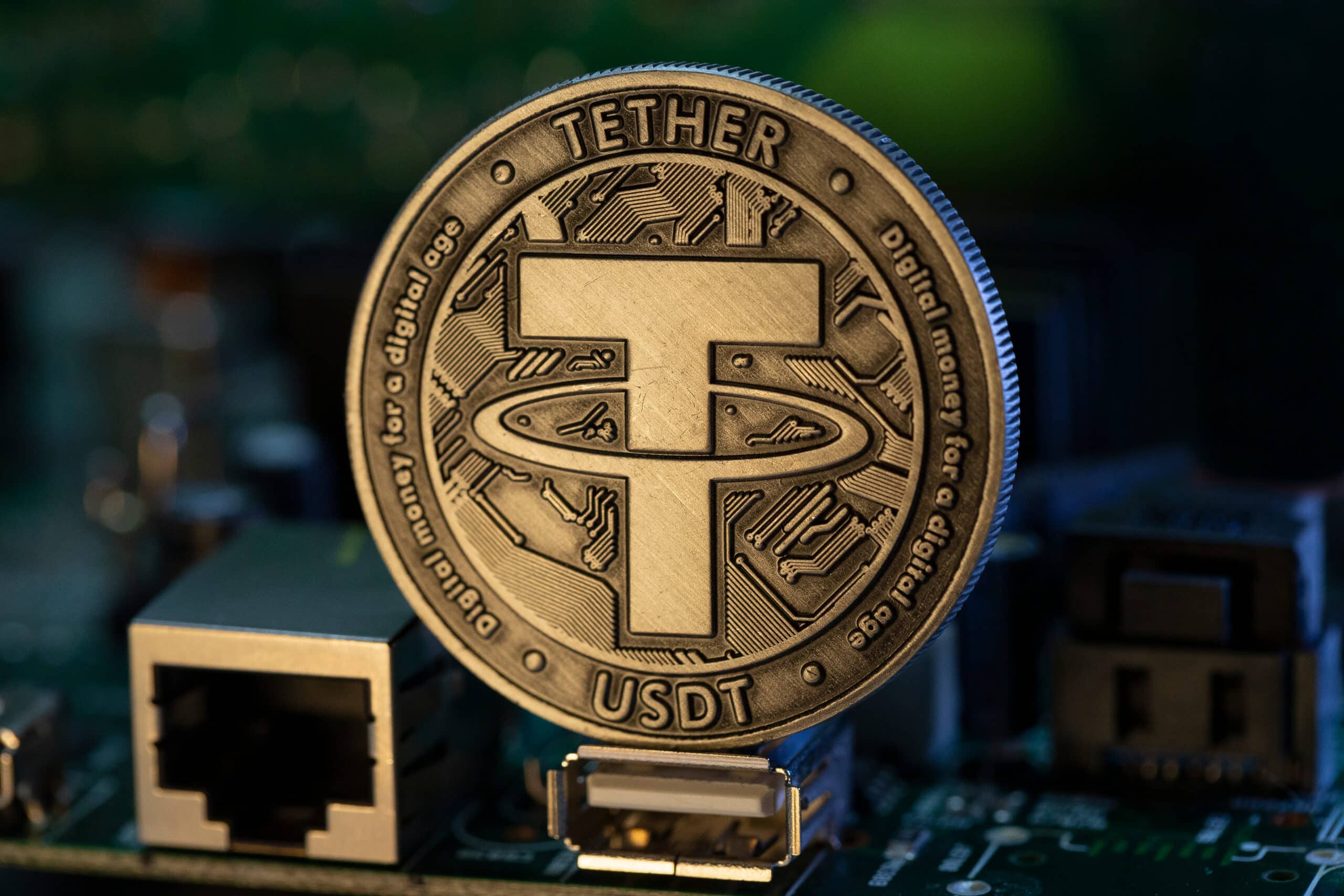
When you think of the world’s most profitable companies per employee, tech giants like Apple or Nvidia usually come to mind, or perhaps Wall Street trading firms like Citadel. Yet operating quietly in the background of global capital markets is Tether, the company behind USDT, the world’s most widely used stablecoin. Operating with a lean team of under two hundred people, Tether generates net profits that rival or exceed traditional banking juggernauts like Goldman Sachs. It is an extraordinary financial machine, generating billions in annual profits while serving as the primary digital currency for crypto traders and developing nations alike.
To the uninitiated, Tether looks like a simple tech startup that created a digital dollar. But underneath its digital exterior lies a business model that is brilliantly simple, extraordinarily high-margin, and deeply integrated into traditional financial infrastructure. Understanding the business behind Tether requires peeling back the mechanics of its reserves, its rapid expansion into emerging markets, its aggressive venture investments, and its evolution into a global infrastructure powerhouse.
The Mechanics of the Ultimate Cash Cow
At its core, Tether’s primary business model is simple. When a cryptocurrency exchange, market maker, or institutional investor wants newly minted USDT, they deposit physical US dollars into Tether’s corporate bank accounts. In return, Tether mints an equivalent amount of digital tokens and transfers them to the client’s digital wallet.
The magic happens in what Tether does with those physical dollars. Rather than leaving hundreds of billions sitting idle in non-interest-bearing checking accounts, Tether deploys the vast majority of those funds into short-term, yield-bearing traditional financial assets—primarily United States Treasury bills, cash equivalents, and money market funds.
When global interest rates hovered near zero, this model was modestly profitable. But when central banks aggressively raised rates, Tether’s revenue engine transformed into a multi-billion-dollar cash machine. Tether earns yield on a massive portfolio of government debt, while token holders receive zero interest, simply holding USDT for its instant settlement speed and global liquidity. This spread between earning high yields on reserves while paying zero yield to users creates an exceptionally lucrative, high-margin revenue model.
Scaling the Empire: A Lean, Multi-Billion Dollar Balance Sheet
What sets Tether apart from almost every other financial giant in history is its astonishing operational efficiency. Traditional multinational banks employ tens or hundreds of thousands of workers, maintaining massive corporate campuses, retail branch networks, and compliance departments across the globe. Tether, by contrast, operates with an exceptionally small staff.
This ultra-lean operational structure means that nearly every dollar of interest earned on its Treasury holdings drops straight to the bottom line as pure net profit. Tether has reported multi-billion-dollar quarterly profits, frequently outperforming traditional financial institutions that hold vastly more total assets.
To safeguard its stablecoin peg and protect against systemic market shocks, Tether channels a significant portion of these profits into an excess reserve buffer. Sitting on billions of dollars in excess equity beyond its 1:1 reserve backing, Tether has built one of the most heavily capitalized balance sheets relative to its corporate headcount in modern economic history.
The Real-World Driver: The Dollar Engine of Emerging Markets
While USDT was initially created to provide liquidity for high-frequency crypto traders, the real engine driving Tether’s continuous growth is far removed from Wall Street order books. In developing nations across Latin America, Africa, and Southeast Asia, millions of citizens face severe inflation, failing local banking systems, and strict currency controls.
For people living in these volatile economic environments, obtaining physical US dollars is often legally restricted or prohibitively expensive. Tether’s digital dollar offers an accessible alternative. Anyone with a basic smartphone can download a digital wallet and hold USDT, effectively using it as a synthetic bank account to store wealth, receive international remittances, and pay for everyday goods.
This deep demand in emerging markets creates a steady influx of capital into Tether’s reserves. Users in developing nations rarely redeem their USDT back into physical dollars; they circulate it within local grey-market economies. This keeps the circulating supply of USDT high, allowing Tether to permanently park those underlying fiat reserves into yield-bearing U.S. Treasuries.
Reinvesting the Profits: Bitcoin, Gold, and Energy Infrastructure
Rather than simply hoarding its billions in net profits, Tether’s leadership team has systematically deployed capital into strategic, forward-looking industries. Tether has aggressively built a massive corporate treasury of physical gold and Bitcoin, acquiring thousands of coins to further bolster its equity cushion.
Beyond raw asset purchases, Tether has reorganized its corporate strategy into distinct business divisions, directing venture capital into the underlying infrastructure of the future digital economy:
- Tether Power: Investing heavily in sustainable energy production and large-scale Bitcoin mining operations across Latin America and Central Asia.
- Tether Data: Funding peer-to-peer communication tools, open-source artificial intelligence models, and decentralized media platforms.
- Tether Edu: Supporting educational initiatives and digital literacy programs across emerging markets to drive Web3 adoption.
By converting short-term interest profits into long-term infrastructure, energy, and digital assets, Tether is transforming itself from a simple stablecoin issuer into a diversified technological conglomerate.
Navigating Controversies, Audits, and Wall Street Partnerships
Tether’s meteoric rise has not occurred without intense scrutiny. For years, skeptics, media outlets, and financial regulators questioned whether Tether actually held the physical reserves required to back its circulating supply. Critics pointed to the company’s offshore roots and historical reluctance to publish traditional audits as potential systemic risks to the broader crypto ecosystem.
To counter these concerns and legitimize its operations, Tether overhauled its reserve transparency protocols. The company now publishes quarterly attestations verified by BDO, a major global accounting firm, detailing the exact breakdown of its backing assets. Furthermore, Tether formed strategic relationships with legacy Wall Street institutions, utilizing firms like Cantor Fitzgerald to manage its massive U.S. Treasury portfolio. These institutional partnerships provided a layer of traditional credibility, assuring nervous market participants that the physical dollars backing USDT were real, liquid, and safely custodied.
The Invisible Giant of Global Commerce
Tether’s business model is a masterclass in modern financial arbitrage. By capturing the global demand for a borderless, digital US dollar and investing those fiat deposits into high-yielding government debt, Tether built a multi-billion-dollar profit engine with a fraction of the headcount required by legacy institutions.
As it reinvests its massive earnings into energy grids, artificial intelligence, and digital infrastructure, Tether has evolved far beyond its cypherpunk origins. It is no longer just a trading pair on digital exchanges; it is a vital, highly profitable financial backbone for millions of unbanked citizens and a dominant force in global debt markets, proving that the future of international money movement is already being rewritten on the blockchain.