The global automotive industry is entering another period of transformation, with manufacturers adjusting product plans, business strategies, and long-term investments to keep pace with changing consumer demand. From Honda reconsidering an unconventional vehicle segment to Porsche restructuring its workforce and Audi revising financial expectations, the latest developments highlight how quickly the industry continues to evolve.
Here’s a closer look at the biggest announcements shaping the automotive world.
Honda explores a new Accord-based crossover
Honda is reportedly evaluating an all-new crossover derived from the Accord sedan, marking a possible return to a concept that was once ahead of its time.
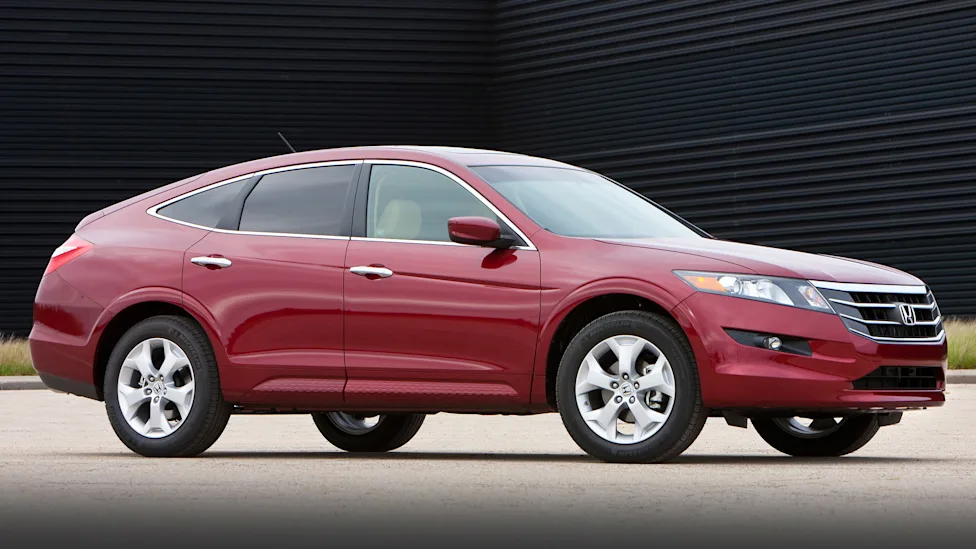
According to industry reports, the vehicle is internally being considered as an “Accord SUV” and could enter production around the middle of 2029. Unlike a traditional SUV, the model would combine the driving characteristics of a sedan with increased ride height, a hatchback-style rear, and greater cargo flexibility.
The strategy reflects today’s market, where buyers increasingly prefer vehicles that blend passenger-car comfort with SUV practicality. Crossovers continue to dominate global sales, while conventional sedans have steadily lost market share over the past decade.
The idea also draws comparisons to the discontinued Honda Crosstour, which struggled commercially during its production run despite offering many of the features buyers now actively seek. If Honda proceeds with the project, the new model is expected to debut alongside the next-generation Accord sedan and feature the company’s latest hybrid powertrain.
For Honda, it could represent an opportunity to revive a familiar formula at a time when customer preferences have shifted dramatically.
Porsche chooses gradual workforce reduction
Luxury sports car maker Porsche has confirmed plans to reduce approximately 5,000 jobs by 2035, but without resorting to large-scale layoffs.
Instead, the company plans to achieve the reduction through employee retirements, voluntary separation packages, and natural attrition. This approach allows Porsche to gradually resize its workforce while minimizing disruption to employees.
The move comes as automakers across Europe face rising development costs, expensive electrification programs, and increasing competition from Chinese manufacturers.
Although Porsche remains one of the automotive industry’s strongest premium brands, it is also preparing for a future where profitability depends on greater operational efficiency alongside continued investment in new technologies.
Waymo seeks greater control over robotaxi services
Autonomous driving company Waymo is preparing for a significant shift in how customers access its driverless taxi services.
The company currently operates autonomous ride-hailing services through Uber in Austin and Atlanta. However, Waymo intends to introduce its own ride-hailing application in both cities beginning in 2028 while continuing to honor its existing partnership agreement.
Operating its own platform would allow Waymo to manage customer relationships directly, collect more operational data, and strengthen its brand identity rather than relying exclusively on third-party partners.
Uber has indicated that existing agreements will remain in place through at least May 2028, after which it plans to expand collaborations with additional autonomous vehicle providers.
The development illustrates the growing competition within the robotaxi sector, where software platforms are becoming just as important as autonomous driving technology itself.
Audi lowers financial outlook for 2026
Audi has revised its financial expectations for the remainder of 2026 as several global challenges continue to affect its business.
The German luxury automaker lowered both its projected operating margin and expected annual revenue, citing weaker demand in China, continued U.S. tariffs, and broader geopolitical uncertainty.
China, once the largest growth engine for many European premium brands, has become increasingly competitive as domestic manufacturers expand their offerings in both electric and luxury vehicle segments. At the same time, higher import costs in the United States continue to pressure profitability.
The revised outlook reflects a broader trend affecting much of the global automotive industry, where manufacturers are balancing slowing sales growth with significant investments in electrification, software development, and next-generation mobility.
An industry adapting to new realities
While each announcement reflects a different challenge, they all point toward the same conclusion: automakers are adapting to a rapidly changing marketplace.
Honda is exploring new vehicle formats that better match evolving consumer preferences. Porsche is reshaping its workforce for long-term sustainability. Waymo is positioning itself to build stronger direct relationships with riders, while Audi is adjusting expectations in response to shifting economic conditions.
Together, these developments demonstrate that success in today’s automotive industry is no longer determined solely by building great vehicles. Companies must also respond quickly to changing consumer behavior, technological disruption, and an increasingly complex global business environment.