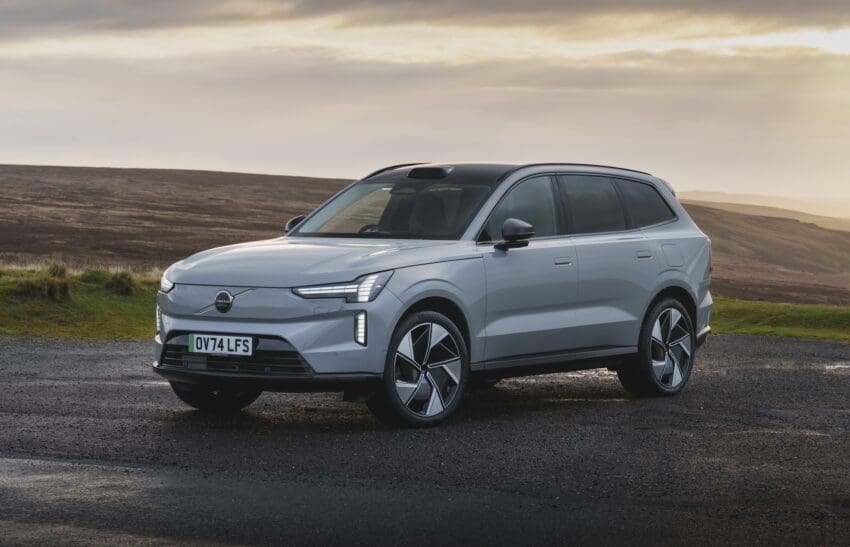
Volvo has officially abandoned plans to introduce lidar-based driver assistance features for its flagship electric models, the EX90 and ES90, marking a major shift in the company’s technology roadmap. The decision brings an end to months of uncertainty surrounding the advanced safety capabilities that had been promoted when both vehicles were introduced.
The Swedish automaker has confirmed that the promised lidar-powered functions will no longer be developed, and customers who expected those features will instead receive financial compensation.
Volvo Ends Development of Lidar Functions
Volvo Cars has confirmed that it has ended its collaboration with its lidar technology supplier, effectively halting further development of lidar-based features for the EX90 and ES90.
As a result, the driver assistance systems in both electric models will no longer rely on lidar technology. The company also plans to discontinue the collection of data through the roof-mounted lidar sensor.
The move represents a significant change from Volvo’s original strategy, where lidar was presented as a cornerstone of the brand’s future safety architecture and autonomous driving ambitions.
While the hardware remains visible on early vehicles, the advanced software capabilities that were expected to unlock its full potential will not be introduced.
Safety Remains a Priority, Says Volvo
Despite removing lidar from its long-term technology plans, Volvo insists that the EX90 and ES90 continue to meet the company’s high safety standards.
According to Volvo, the vehicles rely on a comprehensive network of cameras, radar units, ultrasonic sensors and other technologies that work together to support collision avoidance and driver assistance systems.
The company says these systems are designed to function as an integrated safety platform rather than depending on any single sensor. Volvo maintains that both electric models continue to offer one of the most advanced safety packages available in its lineup.
The automaker stressed that the decision does not compromise the vehicles’ overall safety performance.
Customers to Receive Compensation
Volvo will compensate customers who purchased affected vehicles expecting the promised lidar functionality.
Owners in Norway will receive NOK 18,000, an amount that reflects the value previously assigned to the missing lidar functionality. Volvo said the compensation matches the price reduction already applied to Model Year 2026 vehicles that no longer include the promised feature set.
Customers with questions regarding the refund have been advised to contact their local Volvo dealership for further assistance.
Whether similar compensation packages will be introduced in other markets has not yet been confirmed.
Luminar’s Financial Troubles Add to the Situation
The announcement comes as Luminar, the American company responsible for developing Volvo’s lidar technology, has entered bankruptcy protection proceedings.
Luminar has also reportedly indicated that it intends to pursue legal action against Volvo, adding another layer of complexity to the partnership’s collapse.
The financial difficulties faced by the lidar supplier appear to have played a major role in Volvo’s decision to discontinue development of the technology for its production vehicles.
The end of the collaboration also raises broader questions about how quickly the automotive industry can commercialize expensive lidar systems for mass-market vehicles.
A Shift in Volvo’s Technology Strategy
When the EX90 was unveiled, Volvo positioned lidar as one of its biggest technological breakthroughs, describing it as a key element in achieving safer driving and preparing for future autonomous capabilities.
The sensor, mounted prominently above the windshield, was designed to detect objects hundreds of meters ahead, even in poor lighting conditions, complementing cameras and radar systems.
However, integrating sophisticated hardware into production vehicles is only part of the challenge. Delivering reliable software that meets safety regulations has proven to be significantly more complex than initially anticipated.
By stepping away from lidar-based functionality, Volvo appears to be shifting its focus toward maximizing the performance of its existing sensor suite rather than relying on a technology whose commercial future has become uncertain.
For customers, the decision closes the chapter on a feature that generated considerable excitement during the vehicles’ launch. While the promised lidar capabilities will never arrive, Volvo is betting that its existing safety technologies, combined with customer compensation, will help maintain confidence in its flagship electric SUVs and sedans.