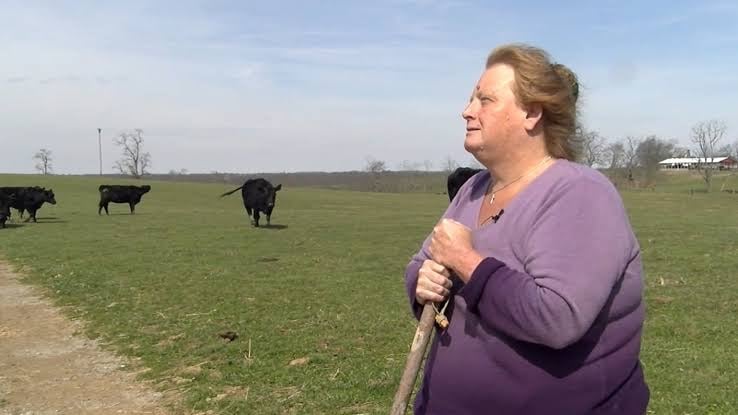
A Kentucky woman has turned down a staggering $26 million offer to sell her family’s farm for a proposed data center, choosing instead to preserve land that has been in her family for generations. Ida Huddleston, whose family has farmed the property in northern Kentucky for decades, said no amount of money could replace the history, memories, and legacy tied to the land.
Her decision comes at a time when technology companies are aggressively expanding their digital infrastructure to meet the growing demand for artificial intelligence, cloud computing, and online services. As data centers become an increasingly important part of the global economy, developers have been seeking large tracts of land across the United States, often making lucrative offers to rural landowners. Yet Huddleston’s refusal highlights the growing tension between technological progress and the preservation of America’s agricultural heritage.
The offer would have transformed the family farm into a major data center campus, replacing fields that have long been used for agriculture with buildings housing thousands of computer servers. Such facilities have become essential to powering everything from streaming platforms and online shopping to AI applications and financial services. Their rapid expansion has fueled a nationwide search for locations with sufficient land, reliable electricity, and access to high-speed fiber-optic networks.
For Huddleston, however, the proposal represented more than a business transaction. The farm is part of her family’s identity, carrying generations of stories, traditions, and hard work. Family members have lived and worked on the property for years, cultivating the land through changing seasons, economic downturns, and shifts in the agricultural industry.

While many property owners might view a $26 million offer as an opportunity to secure financial stability, Huddleston saw the decision through a different lens. She believed selling the land would permanently erase a legacy built over generations. Once the farm was developed, she reasoned, it could never return to the agricultural landscape that had shaped her family’s history.
The case reflects a broader trend unfolding across rural America. As the demand for data centers continues to rise, farmland is increasingly becoming a target for developers. Technology companies require vast amounts of space to construct facilities capable of supporting modern digital infrastructure, and rural communities often offer the land and utility access necessary for these projects.
Supporters of data center developments argue that such projects can bring substantial economic benefits to local communities. Construction projects create temporary employment opportunities, while completed facilities contribute to local tax revenues that can help fund schools, roads, and public services. Technology investments may also attract additional businesses and strengthen regional economies.
However, critics question whether those benefits outweigh the long-term costs of converting productive farmland into industrial sites. Modern data centers typically employ far fewer permanent workers than manufacturing facilities despite occupying significant acreage. Environmental groups have also expressed concerns about their substantial electricity consumption and water usage for cooling systems, particularly in areas where natural resources are already under pressure.
Agricultural advocates warn that the steady loss of farmland could have lasting consequences for food production and rural communities. Family farms play an important role in preserving open spaces, supporting local economies, and maintaining traditions that have defined many regions for generations. Once agricultural land is converted to industrial use, restoring it to farming is often difficult, if not impossible.
Northern Kentucky has become an attractive destination for large-scale technology investments due to its strategic location, transportation infrastructure, and access to reliable power supplies. As companies race to expand artificial intelligence capabilities and cloud computing services, interest in acquiring land throughout the region has continued to grow.
Huddleston’s decision has resonated with many residents who view family farms as more than economic assets. For generations of farming families, land represents sacrifice, resilience, and continuity. Parents pass farms down to children not simply as property but as symbols of family history and responsibility. The emotional value attached to such land frequently exceeds its market price, regardless of how generous financial offers may be.
Experts note that similar decisions are becoming increasingly common as rural communities face competing visions for their future. Some landowners choose to sell, believing development offers economic opportunities that farming can no longer provide. Others remain committed to preserving agricultural land despite mounting financial incentives.
The debate also raises questions about balancing technological advancement with environmental stewardship and cultural preservation. As artificial intelligence continues to reshape industries worldwide, demand for computing infrastructure is expected to increase significantly over the coming years. Developers will likely continue searching for suitable locations, placing additional pressure on farming communities situated near expanding metropolitan areas.
:max_bytes(150000):strip_icc():focal(749x0:751x2)/Family-Who-Turned-Down-26M-to-Sell-Farm-Hits-Back-at-Claims-Data-Center-Will-Help-Community-032526-90c98976c07b429e89a5b6760567d978.jpg)
For policymakers, the challenge lies in encouraging economic growth without accelerating the disappearance of farmland that supports local food production and rural livelihoods. Communities across the country are increasingly weighing whether industrial development aligns with their long-term priorities, particularly as data center construction becomes more widespread.
Huddleston remains steadfast in her belief that keeping the farm intact is the right choice. While the financial offer was extraordinary, she says the land’s true worth cannot be measured in dollars. Every field, fence, and tree reflects decades of family dedication and memories that cannot be recreated elsewhere.
Her decision serves as a reminder that not every valuable asset is defined by its market price. In an era of rapid technological expansion, her choice underscores the enduring importance of heritage, community, and the deep connections many families share with the land they have cared for across generations.
As data centers continue to spread across the United States, stories like Huddleston’s illustrate the complex decisions facing rural landowners. The outcome is not always determined by the highest bid. For some families, preserving a legacy is worth far more than any multimillion-dollar offer, even as the digital economy continues its relentless expansion.