Data Center Firm Switch Confidentially Files for U.S. IPO, Bloomberg Reports
Data center operator Switch has confidentially filed for an initial public offering in the United States, Bloomberg News reported, according to people familiar with the matter, in a move that could position the company to capitalize on surging demand for infrastructure supporting artificial intelligence.
The reported filing comes as data center companies attract growing investor interest amid the rapid expansion of AI applications. Technology companies are spending heavily on computing capacity, driving demand for facilities equipped to support increasingly powerful and energy-intensive workloads.
Switch operates large-scale data center campuses designed to serve hyperscale customers, enterprises and technology companies. Its infrastructure provides the power, cooling, security and connectivity required to operate high-performance computing systems.
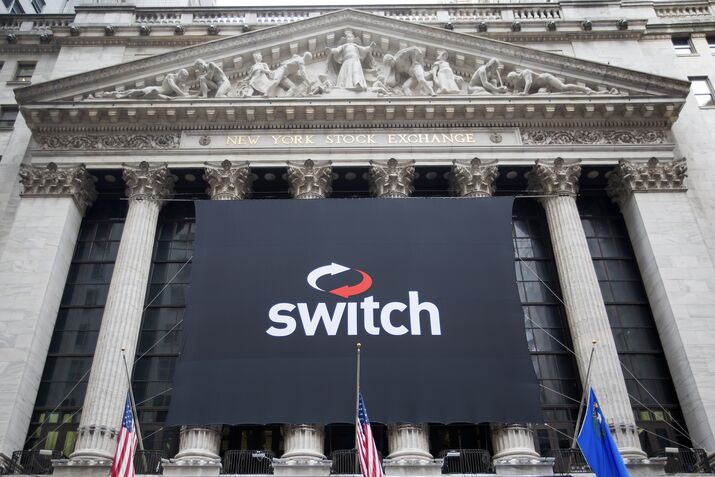
The company’s potential listing could become one of the most closely watched U.S. IPOs involving digital infrastructure. Earlier reports have indicated that Switch could seek to raise billions of dollars through the offering and potentially command a valuation of tens of billions of dollars, although the size and timing of the deal could change.
A confidential filing allows Switch to work with regulators and prepare for a public offering without immediately disclosing detailed financial information. Companies often use the process to assess market conditions and investor demand before deciding whether to proceed with a listing.
The potential IPO comes at a time when investors are increasingly looking beyond chipmakers and software companies to businesses providing the physical infrastructure needed for the AI boom. Data centers have become strategically important as AI models require vast amounts of computing power, electricity and specialized cooling systems.
If Switch proceeds with the offering, its IPO could provide a significant test of public-market appetite for data center operators and help establish valuation benchmarks for the broader digital infrastructure sector.
The company has not publicly confirmed the reported filing. Details including the offering size, valuation and timing are expected to emerge as the listing process advances.
OpenAI Flags Possible Critical Cybersecurity Risk in Upcoming Model, Tightens Controls
OpenAI has raised concerns over a potentially critical cybersecurity risk linked to one of its upcoming artificial intelligence models, prompting the company to strengthen safeguards before the system is made more widely available.
The warning highlights the growing challenge AI companies face as increasingly capable models become better at performing complex technical tasks, including activities related to cybersecurity. While advanced AI can help defenders identify vulnerabilities and strengthen digital infrastructure, the same capabilities could potentially be misused to discover or exploit weaknesses.
OpenAI has reportedly classified the risk as serious enough to require additional controls around the model’s development and deployment. The company is expected to introduce tighter monitoring, access restrictions and additional security measures designed to prevent the system from being used for harmful cyber activities.
The move reflects a broader shift in how leading AI companies assess powerful models. Rather than evaluating systems solely on their ability to generate text, code or images, developers are increasingly examining whether models could independently carry out sophisticated tasks that previously required significant human expertise.
Cybersecurity has emerged as one of the most sensitive areas. AI models can analyze large amounts of code, identify potential vulnerabilities and assist with debugging and security research. However, similar capabilities could also lower the technical barrier for malicious actors attempting to exploit vulnerable systems.

OpenAI’s decision to tighten controls before the model’s broader release suggests the company is taking a more cautious approach as AI capabilities advance. Restrictions could include limiting access to certain capabilities, increasing automated monitoring and requiring additional safeguards for high-risk applications.
The development also underscores the difficulty of balancing innovation with safety. As AI models become more capable, companies must determine not only what these systems can accomplish but also what could happen if those capabilities are misused.
For OpenAI, the latest warning demonstrates that cybersecurity risks are becoming an increasingly important part of the company’s model-development process. It also signals that future AI releases may come with stronger restrictions when their capabilities create potentially significant real-world risks.
Nvidia to Invest Up to $3 Billion in Stargate Data Center Developer Lancium
Nvidia is reportedly preparing to invest up to $3 billion in Lancium, a Texas-based company developing large-scale data centers for artificial intelligence workloads. The investment would further strengthen Nvidia’s position in the rapidly expanding AI infrastructure market.
Lancium is involved in Stargate, a major AI infrastructure initiative designed to build massive computing facilities capable of supporting next-generation artificial intelligence systems. The project requires enormous amounts of computing power, electricity and specialized infrastructure as demand for advanced AI services continues to grow.
For Nvidia, the potential investment represents a move beyond its traditional role as a supplier of AI chips. The company has become one of the most important players in the AI industry through its graphics processing units and data center technologies. By investing directly in infrastructure developers, Nvidia could gain greater influence over how and where its hardware is deployed.

The reported deal also highlights the increasing importance of data centers in the global AI race. Training and running advanced AI models requires massive computing clusters containing thousands of specialized processors. These facilities also need reliable electricity, sophisticated cooling systems and high-speed networking equipment.
Lancium has been developing infrastructure specifically suited to energy-intensive computing operations. Its involvement with Stargate makes it a potentially important partner as technology companies seek to rapidly expand AI capacity across the United States.
The proposed investment comes at a time when Nvidia is benefiting from unprecedented demand for AI computing hardware. Technology companies are spending billions of dollars building infrastructure to support increasingly powerful AI models and applications.
If completed, Nvidia’s investment of up to $3 billion could give the chipmaker a deeper role in the development of Stargate’s physical infrastructure. It would also signal how semiconductor companies are increasingly moving toward partnerships and investments that cover the entire AI computing ecosystem, from processors to the massive facilities required to operate them.
Apple Says Mac Users in China Can Connect to Alibaba’s Qwen AI Service
Apple has said that Mac users in China can connect to Alibaba’s Qwen artificial intelligence service, marking a significant development in the company’s approach to AI in the Chinese market.
The move gives Mac users access to Alibaba’s Qwen AI capabilities, which can assist with tasks such as generating and processing text, answering questions, coding and handling other AI-powered functions. Qwen has become one of China’s leading artificial intelligence platforms as domestic technology companies compete to develop increasingly advanced AI models.
For Apple, the development is particularly important because China remains one of its largest and most important markets. The company has been expanding its artificial intelligence strategy globally, but bringing some AI features to Chinese users has presented additional challenges because of local regulations and requirements surrounding generative AI services.

Working with a Chinese technology company such as Alibaba could allow Apple to provide AI-powered experiences while adapting its services to the regulatory environment in the country. Rather than relying entirely on its own AI models, Apple can use partnerships with local providers to expand the functionality available to customers.
The development also highlights the growing importance of Chinese AI companies in the global technology industry. Alibaba has invested heavily in Qwen, developing models capable of handling a wide range of tasks and competing with other major AI systems.
For Mac users, the availability of Qwen could provide a convenient way to access advanced AI tools directly through their devices. It could also increase the usefulness of Macs for users who rely on AI for work, research, programming and content creation.
Apple’s approach demonstrates that its AI strategy may vary significantly across different regions. Regulatory requirements, local partnerships and market conditions can influence which AI technologies are available to users.
As competition in artificial intelligence intensifies, Apple’s collaboration with Chinese AI providers could become an increasingly important part of its strategy for maintaining its presence in China while expanding access to new AI-powered experiences.