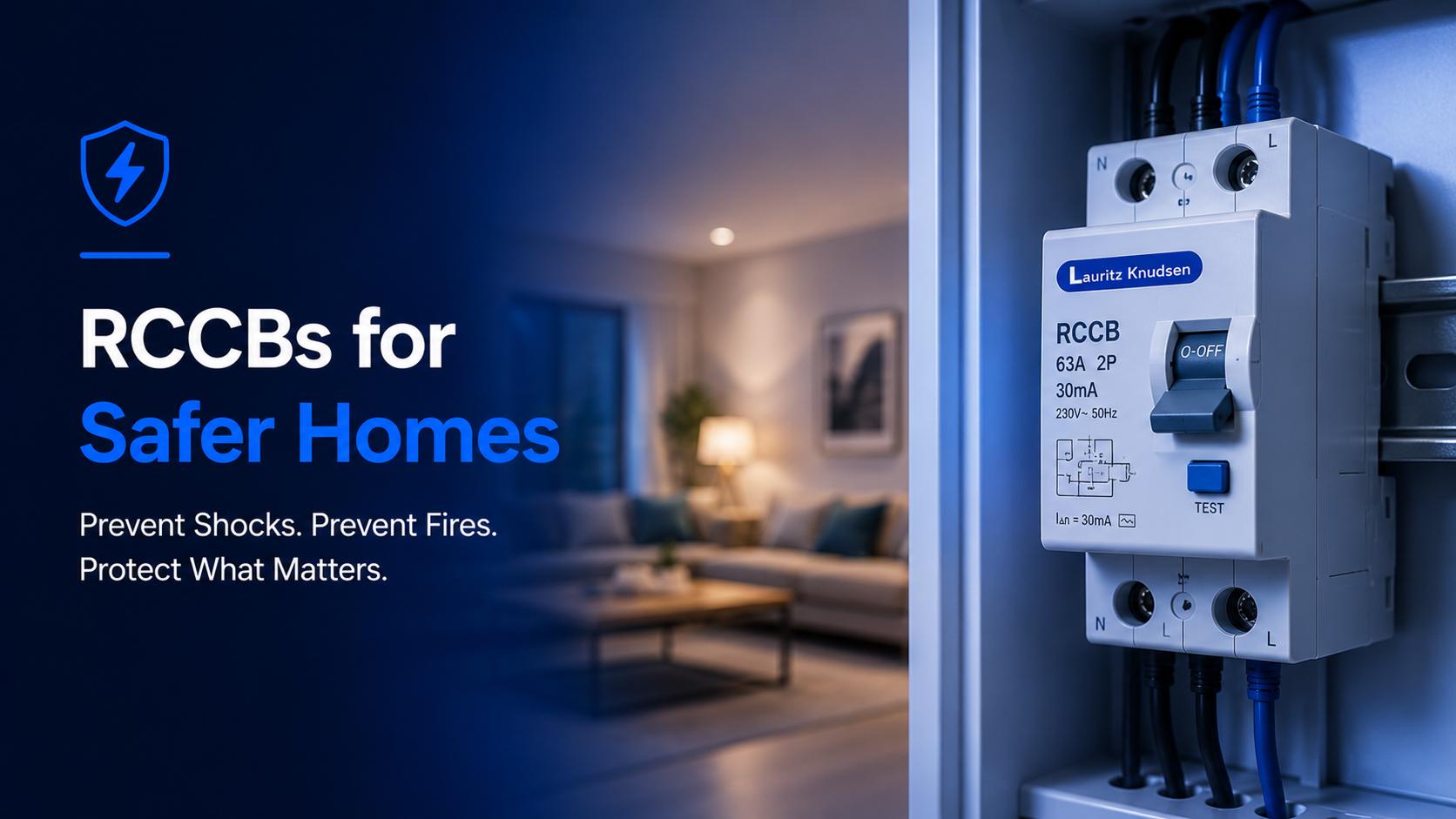
Electrical safety in a modern home is not just about codes and labels. It comes down to speed. What happens in that split second before a fault turns dangerous? That is exactly where a residual current circuit breaker does its job. Most homeowners have heard the term RCCB from an electrician at some point. But few actually understand what the device does behind the scenes. Or why it matters so much for home electrical safety. This article breaks it down. What an RCCB is. How it works. And why it plays such a central role in preventing electrical accidents in today’s homes.
What are RCCBs
An RCCB stands for residual current circuit breaker. It is a protective device. Its job is simple: compare the current flowing through the live conductor with the current returning through the neutral conductor. Under normal operating conditions, these currents are equal. If an imbalance caused by earth leakage is detected, the RCCB disconnects the supply.
A standard MCB reacts to overloads and short circuits. An RCCB is different. It is built to catch earth leakage, the kind of fault an MCB often misses completely.
How Does an RCCB Work
So how does an RCCB actually work? The idea is simpler than most people expect. It relies on magnetic balance, not complicated electronics. Still, the engineering behind a dependable RCCB for home use is more refined than it looks from the outside. Let us break it down step by step.
The Current Balance Principle
Inside an RCCB sits a small transformer. Both the live and neutral wires pass through it. Under normal conditions, the magnetic fields from these two wires cancel each other out. Simple physics. The moment current leaks to earth, even a tiny amount, that balance breaks. The transformer picks up on this imbalance right away. It sends a small signal to a sensing coil. That signal starts the shutdown process. The detection and tripping process occurs rapidly, significantly reducing the risk of injury from earth-leakage faults.
Tripping Mechanism and Response Time
Once the sensing coil picks up an imbalance, it triggers the trip mechanism. This connects to the main contacts inside the breaker. For a working residual current circuit breaker, the whole process, from detecting the fault to cutting the circuit, takes a fraction of a second. Most 30 mA RCCBs intended for personal protection operate within the limits specified by applicable standards, typically disconnecting the supply within milliseconds under earth-leakage fault conditions. Actual operating time depends on the magnitude of the leakage current and the product’s characteristics. That speed is what sets an RCCB apart from ordinary breakers. And it is exactly why response time matters so much when a real fault happens.
Testing and Verifying RCCB Function
Every RCCB has a test button on the front panel. Homeowners should test the RCCB periodically according to the manufacturer’s instructions, typically every few months. Regular testing helps verify that the tripping mechanism continues to operate correctly.
Quality RCCBs from reputable manufacturers are designed to maintain reliable performance throughout their service life when properly installed, periodically tested, and maintained in accordance with the manufacturer’s recommendations.
Role of RCCBs in Preventing Electrical Accidents
What does all this actually mean for daily life? Choosing the right RCCB for home use is not just a box to tick for compliance. It is real protection against electric shock, fire risk, and damaged equipment. These are the kinds of everyday hazards most people never think about, until something goes wrong.
Protection Against Electric Shock
Electric shock is one of the most common home electrical accidents. It often starts small: damaged insulation, a faulty appliance, exposed wiring behind a wall. Nobody notices until it is too late. An RCCB is designed to disconnect the supply rapidly when earth leakage occurs, significantly reducing the risk of serious electric shock. While it provides an important layer of protection, safe electrical installation and proper earthing remain essential. For households with children, elderly family members, or older wiring, this one device can be the difference between a scare and a real tragedy.
Reducing Fire Risk from Earth Faults
Earth leakage is not just a shock hazard. It also produces heat right at the point of the fault, often inside damaged cabling or a loose connection behind a wall. Left alone, that heat can smoulder for hours, sometimes days, before it ignites something nearby. An RCCB shuts off the supply the moment it detects leakage. That removes the heat source early. It is an important layer of protection against fire risks associated with earth leakage faults. However, RCCBs do not detect every electrical fire hazard, such as overloads, loose connections, or arcing faults, which require other protective measures.
Peace of Mind in Everyday Household Use
For most households, the real benefit of an RCCB is quiet, not dramatic. It is knowing that a hidden fault will not go unnoticed. Using an RCCB together with appropriately selected overcurrent protective devices such as MCB provides complementary protection against different types of electrical faults. One device handles overcurrent faults. The other catches leakage faults. Together, they cover far more ground than relying on a single type of protection for the whole home.
Conclusion
RCCBs are widely recommended and are mandatory in many residential installations under modern electrical regulations. Their specific requirements depend on the applicable electrical standards and local regulations. They are a core part of how modern homes keep people safe. Understanding what this device actually does, and why it reacts the way it does, helps homeowners make better decisions during installation or renovation. If you are choosing an RCCB for home use, look for devices tested to recognised safety standards. Have them installed by a qualified electrician who knows your existing wiring. When selecting an RCCB for home use, choose products from reputable manufacturers that comply with recognised safety standards and have them installed in accordance with the manufacturer’s instructions and local electrical regulations.
Lauritz Knudsen Electrical & Automation has built a strong reputation for exactly this kind of dependable equipment. Investing in proper home electrical safety today prevents costly and sometimes irreversible problems tomorrow.