Data centers are supposed to be the future of the digital economy. They power cloud computing, artificial intelligence and the online services people use every day.
But around Chicago’s O’Hare International Airport, that future is creating an increasingly familiar problem: who pays for it?
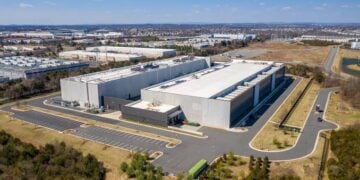
More than a dozen data centers in the northwest suburbs are receiving tens of millions of dollars in property tax breaks this year. While local officials promote the facilities as economic engines, an analysis by the Illinois Answers Project and the Chicago Tribune found that the savings are effectively shifting more of the tax burden onto homeowners and other businesses.
Credits: Illinois Answers Project
Homeowners Could Be Paying Thousands More
The impact is particularly significant in suburbs where a relatively small number of major businesses make up a large portion of the tax base.
In Northlake, for example, the average homeowner could save more than $2,000 a year, or nearly 30% of their property tax bill, if local data centers did not receive their valuation reductions and other incentives.
That illustrates the basic problem with commercial tax breaks: when one property is assessed at a lower value, the money doesn’t simply disappear.
Local governments still need to fund schools, libraries, infrastructure and other public services. The difference has to come from somewhere — often from other taxpayers.
Nearly $2 Billion Wiped From Taxable Value
At least 18 data centers across the northwest suburbs received multimillion-dollar reductions in their taxable values from Cook County officials.
Eleven of those facilities already had special local tax incentives that significantly reduced their tax bills for more than a decade. Twelve also benefit from a separate Illinois tax break on sales and use taxes.
Together, the assessment reductions and incentives removed nearly $2 billion from the taxable value of data centers across Elk Grove Village, Northlake and Franklin Park.
According to the analysis, that represents almost $100 million in potential tax savings that could otherwise have supported local governments or reduced the bills of neighboring property owners.
The 18 facilities still paid nearly $71 million in property taxes for the 2025 tax year, showing that these are hardly insignificant taxpayers. But in Northlake, three data centers alone accounted for roughly 28% of the city’s tax base.
Why Data Center Owners Want the Breaks
The data center industry argues that tax incentives are necessary to compete with other states.
Developers have plenty of choices when deciding where to build enormous facilities, and taxes can influence those decisions. Industry representatives argue that without incentives, companies could simply take their investment elsewhere or leave properties vacant.
Brad Tietz of the Data Center Coalition said Illinois has already begun slipping in the rankings of states competing for data center projects.
The industry’s argument is straightforward: a smaller slice of a massive tax base is better than getting no tax revenue at all.
Critics Say the Companies Can Afford to Pay
Critics aren’t convinced.
Data centers are being built amid an enormous global investment boom in computing infrastructure. Kasia Tarczynska of Good Jobs First argues that companies spending hundreds of billions of dollars on data centers have the resources to pay their full share of local taxes.
The concern is particularly strong for schools, libraries and municipalities, where losing several million dollars can have a meaningful impact on basic services.
Critics also question whether prime locations around Chicago really require such generous incentives. The region offers access to major power infrastructure, fiber-optic networks, water and a huge metropolitan market — advantages that make it naturally attractive to data center developers.
The Fight Over What a Data Center Is Worth
The controversy isn’t only about tax incentives. Cook County is also locked in a battle over how data centers should be valued for property tax purposes.
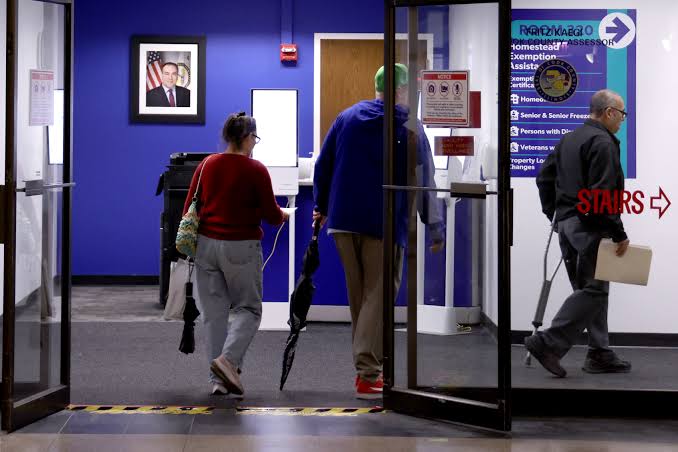
Outgoing Cook County Assessor Fritz Kaegi has argued that commercial properties have historically been undervalued. His office has increasingly challenged the appraisals submitted by data center owners during property tax appeals.
The differences can be enormous.
Microsoft’s Azure data center in Northlake provides a striking example. Microsoft presented an appraisal valuing the facility at almost $250 million, while Kaegi’s office estimated its value at nearly $900 million.
That massive gap demonstrates why data center assessments have become such a contentious issue.

Credits: Chicago Tribune
The Bigger Data Center Problem
The tax dispute is happening as communities across the country wrestle with the rapid expansion of data centers.
Residents are increasingly concerned about their impact on electricity demand, water consumption, air quality and infrastructure. At the same time, governments see billions of dollars in investment and the possibility of new tax revenue.
The Chicago-area debate highlights the difficult question at the center of the boom: how much should taxpayers give up to attract the companies building the infrastructure behind the AI revolution?
Data centers may be powering the future, but local communities are now deciding whether that future is worth the price.