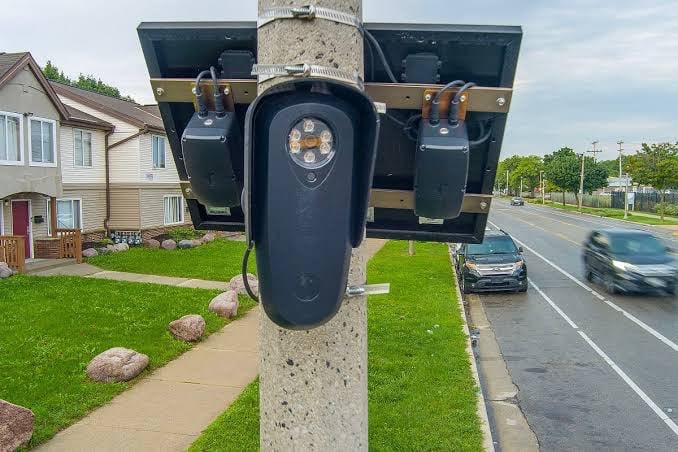
Florida has ordered the removal of automated license plate readers, including cameras operated by Flock Safety, from roads within the state highway system, escalating a growing national debate over law enforcement surveillance, privacy and the use of artificial intelligence.
The Florida Department of Transportation (FDOT) announced on August 31 that it was revoking existing permits for automated license plate recognition systems installed within the rights of way of roads belonging to the State Highway System. Local law enforcement agencies operating the cameras have been given 30 days to remove them. If the devices are not taken down within that period, FDOT says it can remove them itself.
The directive applies to Flock cameras as well as other automated license plate readers installed under existing permits. FDOT has also indicated that it will no longer approve new permits for such systems on state highway property.
The decision represents a significant setback for Flock Safety, whose cameras have rapidly expanded across the United States as police departments increasingly turn to automated surveillance tools. The technology uses cameras and software to capture information about passing vehicles, including license plate numbers, vehicle characteristics and the time and location of sightings.
Law enforcement agencies have argued that these systems are valuable investigative tools. Officers can use camera data to help locate stolen vehicles, identify vehicles connected to crimes, find missing people and reconstruct the movements of vehicles during investigations.
However, the rapid growth of the technology has also generated concerns about how much information is collected, how long it is retained and who can access it.
FDOT cited the “exponential increase” in deployments, along with reports of misuse, data privacy concerns and surveillance schemes, as reasons for taking immediate action. The department said the move was intended to protect Floridians’ privacy and quality of life.
The decision follows several controversies involving the use of Flock cameras in Florida and elsewhere. Concerns have intensified after incidents in which law enforcement personnel were accused of using automated license plate reader systems for purposes unrelated to legitimate police investigations.
One recent case involved a Florida sheriff’s deputy who was accused of using Flock technology to monitor a former romantic partner. The incident became a focal point in the broader discussion over whether safeguards surrounding automated surveillance are strong enough to prevent individual officers from abusing access to sensitive information.
Florida Governor Ron DeSantis has also expressed concern over the expansion of the technology. The governor has argued that while law enforcement should have access to tools that help prevent and investigate crime, surveillance systems should not be allowed to expand without adequate limits and oversight.
The new order is expected to affect cameras installed along major state-controlled roads and highways, including portions of the interstate system. However, it does not amount to a complete statewide ban on Flock cameras.
A large number of cameras are installed on roads controlled by counties and municipalities rather than the state. Those systems are generally outside the direct scope of the FDOT order unless local governments separately decide to remove them.
Still, the state action has already prompted several law enforcement agencies to reconsider their own use of the technology. Some sheriff’s offices have announced plans to disconnect or remove their cameras, while others have indicated that they will review their existing programs.
The response highlights the growing tension between the investigative benefits of automated license plate readers and concerns over mass surveillance.
Supporters of Flock cameras maintain that the systems do not simply provide police with a live feed of people’s movements. Instead, they argue, the technology allows investigators to search for vehicles associated with specific cases and can significantly reduce the time required to identify suspects.
Critics counter that the technology can create a detailed record of where ordinary people travel, even when they have done nothing wrong. Because license plate readers can capture information from thousands of vehicles that are not connected to criminal investigations, privacy advocates argue that the systems effectively turn public roads into large-scale surveillance networks.
Accuracy is another concern. Automated systems depend on cameras and artificial intelligence to identify license plates and vehicle characteristics. Misreads or incorrect matches can potentially send investigators toward the wrong vehicle or person.
The Florida decision therefore goes beyond the removal of individual cameras. It raises broader questions about how governments should regulate technologies capable of collecting and analyzing information about millions of motorists.
The move also comes as other jurisdictions across the country reassess their relationships with Flock Safety. Some cities and law enforcement agencies have ended contracts or restricted the use of automated license plate readers following pressure from residents and privacy advocates.
For Florida, the immediate task will be removing the affected devices from state-controlled roadways within the 30-day deadline. Agencies that fail to comply could see FDOT take action to remove the equipment.
The longer-term question is whether Florida will pursue broader legislation governing automated license plate readers. The current order limits their presence on state highway property, but cameras can continue operating on many locally controlled roads.

As the technology becomes more sophisticated and widespread, Florida’s decision could add momentum to a nationwide debate over the boundaries of law enforcement surveillance. The central challenge for policymakers will be finding a balance between using technology to make communities safer and ensuring that the same technology does not create an unchecked system for tracking ordinary citizens.
For now, Florida has chosen to draw a line on its state highway system. Whether that line eventually expands to cover local roads and other forms of automated surveillance remains an open question.