
LG Electronics has rejected allegations that its smart televisions continuously record users and collect information about their surroundings without their knowledge. The company has reaffirmed its commitment to privacy, describing user privacy as a “fundamental principle” of its products.
The statement comes after a report raised concerns about the data collection practices of LG smart TVs, including their use of microphones, content-recognition technology and connectivity features. The allegations have sparked renewed debate about privacy, surveillance and the growing amount of personal information collected by internet-connected devices.
Allegations Raise Privacy Concerns
The controversy follows an investigation by technology channel Gamers Nexus, which examined the data collection capabilities of LG smart televisions. The report alleged that certain devices could capture audio while in standby mode and gather information about their surrounding digital environment.
According to the allegations, the information potentially collected included audio, IP addresses, geographic details, nearby Wi-Fi networks and connected devices. These claims raised questions about whether smart TVs could monitor aspects of users’ private lives even when they were not actively watching television.
The report prompted concerns among consumers and technology observers, particularly regarding the distinction between collecting information for legitimate product functions and recording conversations without users’ awareness.
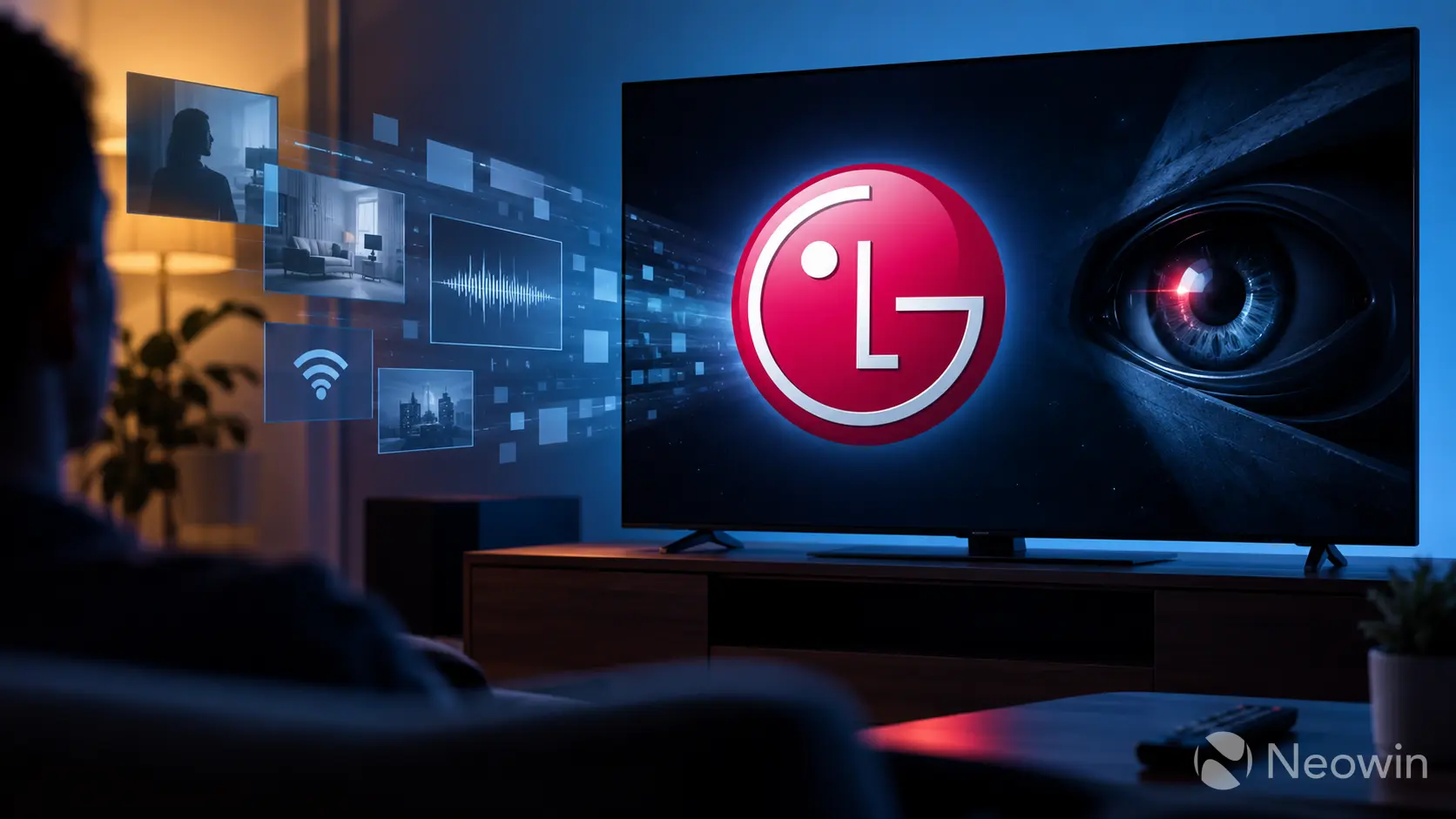
LG has denied the central accusation that its televisions continuously record users. The company’s response seeks to distinguish its actual data-processing practices from what it considers inaccurate interpretations of its technology.
LG Reaffirms Its Commitment to Privacy
In its response, LG emphasized that privacy is a fundamental principle guiding the development of its products. The company rejected the suggestion that its smart TVs operate as devices that constantly record and transmit conversations.
LG’s position focuses on clarifying how its voice-related functions and content-recognition systems work. The company has indicated that its voice features are designed to respond to user activation rather than continuously transmit private conversations.
The clarification is significant because smart TVs increasingly include microphones, voice assistants and internet-connected services. While these features provide convenience, they also create uncertainty for consumers who may not fully understand when their devices are listening, what information is processed and whether data leaves the television.
The company’s denial, however, has not eliminated broader questions about transparency. Consumers and privacy advocates continue to examine whether manufacturers clearly explain their data practices and provide accessible controls for disabling optional features.
The Role of Automatic Content Recognition
A major part of the discussion involves Automatic Content Recognition, commonly known as ACR. The technology allows smart TVs to identify the content being displayed or played on the screen. It can support personalized recommendations, viewing analytics and targeted advertising.
ACR has become increasingly common across the smart television industry. Although the technology can improve the viewing experience, it has raised concerns about the amount of information manufacturers may collect about users’ entertainment habits.
LG has maintained that its content-recognition features are optional and operate with user consent. The company has also explained that its system uses audio fingerprinting to identify content rather than recording conversations for that purpose.
The distinction between audio fingerprinting and conversational recording is central to understanding the controversy. Audio fingerprinting analyzes characteristics of media content to identify a program, while recording a private conversation would involve capturing and processing speech unrelated to the content being watched.
Nevertheless, the allegations have encouraged consumers to question whether privacy settings are sufficiently clear and whether consent is genuinely informed. The debate reflects a wider concern about the balance between personalization and privacy in connected devices.
Smart TVs and the Expansion of Data Collection
Modern smart televisions are no longer limited to displaying broadcast channels or connecting to external media players. They function as internet-connected platforms with access to streaming services, applications, voice controls, advertising systems and smart-home integrations.
These capabilities require software and data-processing systems that can collect information about device usage and user preferences. Companies use such information to improve services, personalize recommendations and support commercial activities.
However, the expansion of connected features has also increased public concern about surveillance in the home. Unlike smartphones and computers, televisions are often placed in living rooms and bedrooms, where private conversations and activities take place. The possibility that a device could collect sensitive information in these spaces can create significant anxiety among users.
The LG controversy highlights the importance of distinguishing between different forms of data collection. Identifying television content, processing a voice command and recording ambient conversations are separate activities with different privacy implications.
What Consumers Should Know
The allegations serve as a reminder that consumers should review the privacy settings of their smart TVs and understand the functions enabled on their devices. Voice assistants, personalized advertising and automatic content recognition may have separate controls, depending on the model and software version.
Users who are uncomfortable with data collection can examine available settings, disable optional features where possible and review the manufacturer’s privacy policies. They should also remain aware that turning off one feature may not necessarily disable every form of data collection.
For manufacturers, the controversy reinforces the need for clear communication. Privacy policies should explain what information is collected, why it is collected, how long it is retained and whether it is shared with third parties. Easy-to-understand settings can help users make informed decisions without requiring extensive technical knowledge.

A Wider Industry Debate
LG’s denial comes amid growing scrutiny of privacy practices across the technology industry. Smart speakers, smartphones, connected cameras and televisions all raise questions about the relationship between convenience and personal privacy.
The issue is not limited to whether a device continuously records conversations. It also involves the broader question of how much information a connected product can gather about its users and whether individuals have meaningful control over that information.
As smart TVs become more sophisticated, manufacturers are likely to face increasing pressure from consumers, regulators and privacy advocates to provide greater transparency.
For now, LG maintains that its smart TVs do not continuously record users’ conversations and that privacy remains a fundamental principle of its products. The controversy nevertheless underscores the need for consumers to understand the technologies in their homes and for manufacturers to communicate their data practices with greater clarity.