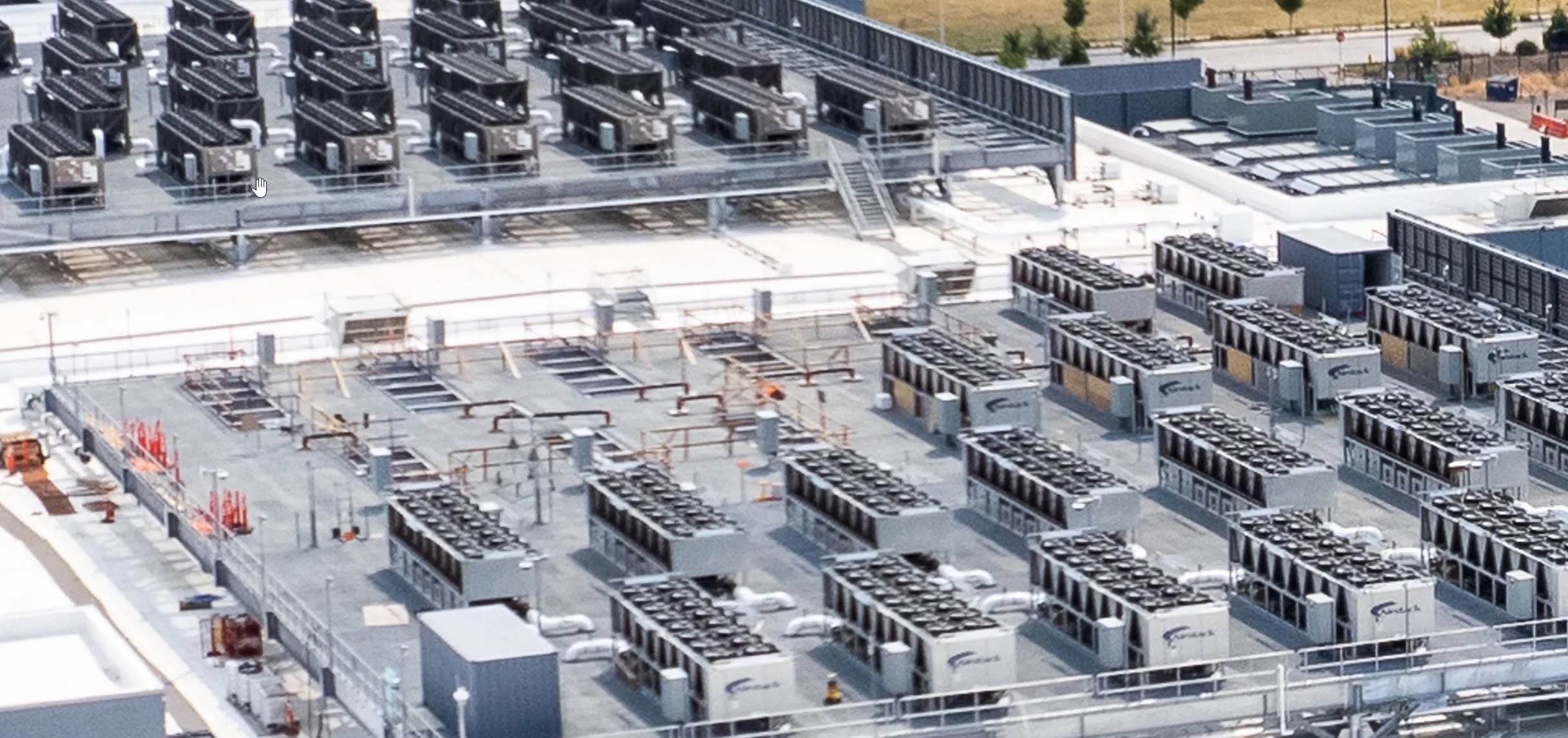
Oregon’s data centers are consuming nearly a quarter of the state’s electricity, according to a new report, underscoring the growing impact of the technology industry on the region’s power system. As companies continue expanding cloud computing, artificial intelligence and other data-intensive services, electricity demand from these facilities is expected to keep rising.
The rapid growth of data centers has transformed Oregon into an important hub for large-scale computing infrastructure. The state has attracted technology companies because of its access to electricity, relatively favorable energy costs, existing infrastructure and availability of renewable power. However, the expansion is now creating a significant new source of electricity demand.
Data centers require enormous amounts of electricity because their servers operate continuously. Beyond the computing equipment itself, facilities also need substantial power for cooling systems, networking equipment, backup systems and other infrastructure. Unlike many commercial buildings, data centers can operate around the clock, creating a constant demand for electricity.
The growing use of artificial intelligence is adding another layer to that demand. AI models require powerful processors and large computing clusters to train and operate. As businesses increasingly integrate generative AI into search, software, customer service, advertising, research and other applications, companies are investing heavily in new computing capacity.
This expansion is contributing to a broader increase in electricity demand across the United States. For years, improvements in energy efficiency and changes in the economy kept electricity consumption relatively stable in many regions. The rapid construction of data centers is now reversing that trend in several states.
In Oregon, the scale of the sector has become particularly significant. With data centers already accounting for close to 25% of electricity use, further expansion could substantially alter the state’s energy requirements.
The increase presents both economic opportunities and challenges. Data center construction can bring investment, construction jobs and demand for local services. Large technology facilities can also contribute to local and regional economic activity through taxes, infrastructure investment and employment.
However, the electricity needed to support these facilities must come from somewhere. As more data centers connect to the grid, utilities may need to expand generation capacity and strengthen transmission and distribution infrastructure. New substations, transmission lines and other grid upgrades may also be required to accommodate larger loads.
The issue becomes more complicated when multiple large facilities are planned in the same region. Electricity infrastructure is designed to serve a wide range of customers, from households and small businesses to industrial facilities. A concentration of data centers can create unusually large electricity loads in specific locations, requiring utilities to plan infrastructure well in advance.

Oregon’s reliance on hydropower also plays an important role in the discussion. The state has access to significant amounts of electricity generated from renewable sources, particularly hydropower. This has helped make Oregon an attractive destination for companies seeking electricity with relatively low carbon intensity.
But renewable electricity availability does not eliminate the challenge of meeting rising demand. If electricity consumption increases faster than generation capacity, utilities may need to secure additional power from new projects or other sources. Transmission capacity can also become a limiting factor even when sufficient generation exists elsewhere.
The growth of data centers has therefore raised questions about how Oregon should manage its energy future. Policymakers and regulators must consider how much additional infrastructure will be required and how the associated costs should be allocated.
One major concern is whether investments needed to serve large technology customers could eventually affect electricity costs for other consumers. Utilities generally recover infrastructure costs through electricity rates, making the structure of new agreements with major customers an important part of the debate.
Data center operators, meanwhile, have an incentive to secure reliable electricity because even brief disruptions can affect computing operations. Facilities often use backup power systems and other technologies to protect against outages, but these measures do not eliminate the need for a stable grid.
The situation also demonstrates how the artificial intelligence boom is becoming an energy issue rather than simply a technology story. AI services may be accessed through a smartphone or laptop, but the computing required to operate them takes place in massive facilities that consume significant quantities of electricity.
As AI companies develop increasingly powerful systems, demand for computing infrastructure is expected to remain strong. Companies are competing to build facilities capable of handling larger workloads, creating pressure for additional data center capacity.
Oregon is therefore facing a difficult energy-planning challenge. The state must accommodate an expanding technology sector while maintaining electricity reliability and managing its environmental objectives.
The nearly 25% share already attributed to data centers provides an indication of how dramatically the state’s electricity landscape has changed. If new facilities continue to be built, their electricity consumption could become an even larger portion of overall demand.
The consequences could extend beyond the data center industry itself. More electricity demand could influence decisions about new power projects, transmission infrastructure, utility investments and energy policy. It could also shape where future technology companies choose to locate their facilities.
For Oregon, the rapid growth of data centers represents a significant shift in the relationship between technology and energy. The state’s ability to support the next wave of digital infrastructure will depend not only on available land and technology infrastructure but also on whether it can provide enough reliable electricity.
With data centers already consuming nearly one-quarter of the state’s power, the trend is becoming increasingly difficult to overlook. And as artificial intelligence and cloud computing continue to expand, Oregon’s electricity demand is likely to grow alongside them.