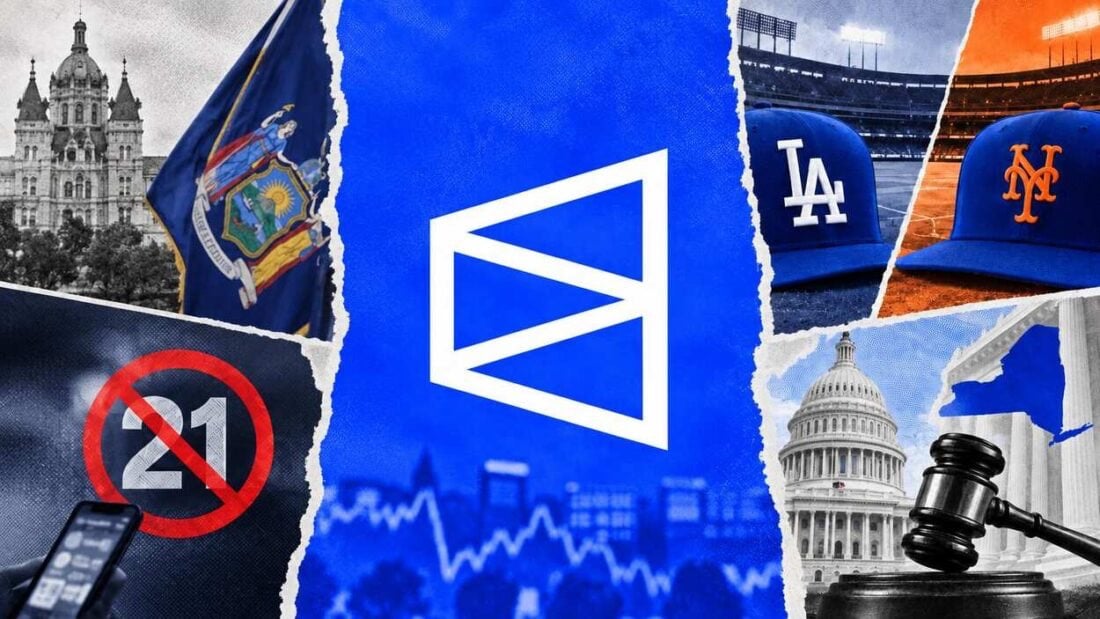
New York has filed a lawsuit against prediction market platform Polymarket, accusing the company of operating an unlicensed gambling business in the state. The legal action adds to a growing regulatory battle in the United States over prediction markets and whether contracts tied to real-world events should be treated as financial products or gambling.
The lawsuit targets QCX LLC, the company behind Polymarket’s US operations. New York officials argue that the platform allows residents to place wagers on the outcomes of sporting events and other uncertain events without obtaining the licenses required under state gambling laws.
Polymarket, however, disputes the characterization of its platform as a gambling operation. The company maintains that its event contracts belong within the financial markets framework rather than traditional gambling regulations. The disagreement highlights a complicated legal question that has emerged as prediction markets have rapidly expanded across the country.
New York Accuses Polymarket of Illegal Gambling
At the heart of the lawsuit is Polymarket’s system of event contracts. Users can buy and sell contracts based on whether a particular event will occur. The value of a contract can change as expectations about the outcome shift, while users can potentially receive a payout if their prediction is correct.
New York officials argue that these transactions effectively function as bets. Because users risk money on uncertain outcomes, the state says the activity falls within its definition of gambling.
According to the state’s position, Polymarket should therefore be subject to the same licensing requirements and consumer protections that apply to other gambling operators. The company allegedly operated without the necessary authorization, prompting New York to seek legal action.
The state is also seeking financial penalties and other remedies as part of the lawsuit.

Age Restrictions Become Part of the Dispute
New York’s complaint also raises concerns about the age of people who can participate in prediction markets.
Traditional gambling activities in the state are subject to age restrictions, particularly mobile sports betting. New York officials argue that prediction markets involving sports and other events can expose younger users to gambling-like activities without the same safeguards that apply to licensed operators.
The issue is particularly significant because prediction markets can resemble financial trading platforms. Their presentation may make them appear different from conventional sportsbooks, even though users can risk money based on the outcome of events.
New York officials argue that this distinction should not allow companies to avoid state gambling regulations.
The dispute could ultimately force courts to examine how existing gambling laws apply to newer forms of digital event-based trading.
Polymarket Rejects the Gambling Label
Polymarket has pushed back against the allegations and maintains that its products are legally distinct from traditional sports betting.
The company has argued that prediction markets provide contracts based on measurable events rather than conventional wagers. Under this interpretation, the platform operates within a financial regulatory structure rather than a state gambling framework.
This distinction has become increasingly important as prediction markets have grown in popularity.
Companies operating in the sector argue that their platforms can provide information about expectations surrounding future events. Users essentially take positions based on their assessment of what will happen, while the market price reflects the collective expectations of participants.
Critics and state regulators, however, argue that the financial terminology does not change the underlying activity when users are risking money on uncertain outcomes.
Prediction Markets Are Expanding
Polymarket’s legal dispute with New York comes during a period of rapid growth for prediction markets in the United States.
These platforms have moved beyond relatively specialized markets and increasingly offer contracts related to sports, politics, economic developments, entertainment and other events.
Their expansion has brought them into increasingly close competition with traditional sportsbooks. The difference is that sportsbooks are generally regulated under state gambling laws, while prediction market companies have sought to operate under a financial-market framework.
That regulatory divide has created conflicts between companies and state governments.
Polymarket is not the only prediction market operator facing scrutiny. Other companies in the sector have also encountered legal challenges from states seeking to regulate event contracts as gambling.
The growing number of disputes suggests that the legal status of prediction markets remains unsettled.
The Federal-State Question
Another important element of the controversy is the question of regulatory authority.
Prediction market companies have argued that federally regulated financial markets should not be subject to conflicting state gambling rules. If courts accept that argument, prediction market operators could gain greater protection from state-level restrictions.
States, meanwhile, maintain that gambling is traditionally regulated at the state level and that companies offering betting-like products should comply with local laws.
The disagreement could eventually require courts to determine where the boundary between financial trading and gambling lies.
That question could have consequences for the entire prediction market industry. A ruling that favors state regulation could require platforms to change how they operate in different states. A ruling that strengthens federal oversight could make it more difficult for individual states to restrict prediction markets under existing gambling laws.

What Happens Next
The lawsuit against Polymarket is likely to become part of a wider legal debate over the future of prediction markets in the United States.
The industry has developed faster than many existing laws were designed to accommodate. Digital platforms can now allow users to trade contracts on events almost instantly, creating products that combine elements of financial markets, forecasting and gambling.
For regulators, the central concern is whether users receive adequate protections when they participate in these markets. For prediction market companies, the central issue is whether their contracts should be treated as financial instruments rather than gambling products.
The New York lawsuit places those competing interpretations directly before the courts.
The case will now determine whether Polymarket’s operations fall under New York’s gambling laws and whether the company can continue offering its prediction markets to residents under its current model. Whatever the outcome, the legal battle could become an important test for an industry that is rapidly becoming a larger part of America’s digital financial and wagering landscape.