Gucci has started selling new luxury sneaker models labelled “Made in China”, marking a notable departure from the Italian manufacturing tradition closely associated with the brand. The move comes as the fashion house attempts to revive sales, attract price-conscious luxury shoppers and navigate a broader turnaround under designer Demna.
The decision has already sparked debate among luxury analysts over whether sourcing certain products from China could affect Gucci’s premium positioning.
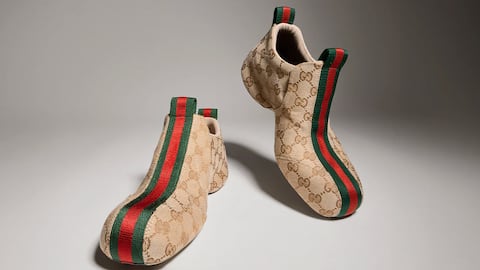
Credits: The Business of Fashion
Gucci Turns to China for New Sneaker Designs
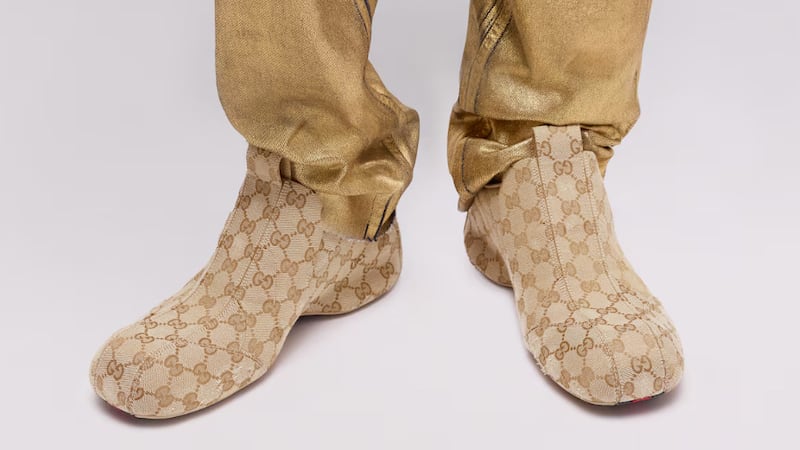
The sneakers in question are part of Gucci’s Primavera collection and include the futuristic Drip model, described by the brand as Demna’s first sneaker for Gucci. The laceless shoe is available in materials including nylon, canvas and suede and sells for around €800 in Europe and $1,000 in the United States.
A second leather slip-on sneaker from the same collection is also labelled “Made in China”.
Gucci said Italy would remain central to its manufacturing model and identity. However, the company explained that it selected a Chinese manufacturing partner because of its technological expertise and ability to meet the specific performance and quality standards required for the new designs.
The company also stressed that there are no broader plans to shift Gucci’s production away from Italy.
China has become a major global centre for footwear manufacturing, with factories supplying mass-market as well as premium brands. For Gucci, however, the issue is less about manufacturing capability and more about what the country-of-origin label represents to consumers.
Demna Faces Pressure to Revive Gucci
The move comes at a critical point for Gucci and its new creative direction. Demna, who previously served as creative director of Balenciaga, is expected to bring a more experimental and contemporary aesthetic to Gucci.
The Drip sneaker reflects that approach. Its sock-like silhouette and laceless construction are significantly different from Gucci’s traditional leather Ace sneakers, while also recalling the chunky footwear styles that became closely associated with Demna’s work at Balenciaga.
The designer’s latest collection is particularly important for Gucci’s parent company Kering. Gucci has experienced a sharp decline in sales over the past three years, with revenue falling by roughly half during the period. The downturn has put pressure on margins and resulted in the closure of dozens of stores.
Kering CEO Luca de Meo is attempting to steer the group through a wider turnaround, making Gucci’s recovery a major priority.
For Demna, the challenge is therefore not simply to introduce new designs. Gucci needs products that can appeal to aspirational luxury consumers while maintaining the exclusivity and pricing power associated with the brand.
Credits: CP24
‘Made in Italy’ Becomes Part of the Debate
The biggest question surrounding the Chinese-made sneakers is whether their origin could conflict with Gucci’s luxury identity.
“Made in Italy” has long been closely connected with Italian fashion, craftsmanship and luxury. Although Gucci has previously worked with suppliers in countries such as Switzerland and Japan for categories including watches and eyewear, footwear carries a particularly strong connection with Italian craftsmanship.
Analysts at Berenberg said the decision creates a potential tension between product provenance and the luxury positioning Gucci is attempting to rebuild.
Other industry observers have also questioned how shoppers might react when a Gucci product carrying a luxury price tag is labelled as being made in China.
The issue could become more significant as Gucci experiments with pricing. According to two Kering sources, the company has begun reducing prices on selected products, including some items in China, as it seeks to regain market share.
Barclays analyst Carole Madjo said the price reductions surprised some investors and could prompt consumers to reconsider Gucci’s price-value proposition.
The combination of lower prices and Chinese-made products could therefore create a new challenge for the brand: convincing shoppers that Gucci remains a luxury purchase even as it attempts to become more accessible.
For now, Gucci maintains that Italy remains at the heart of its manufacturing strategy. But as the company seeks to rebuild its sales and redefine its product offering under Demna, the reception to its new sneakers could offer an early indication of how consumers respond to a more unconventional Gucci.