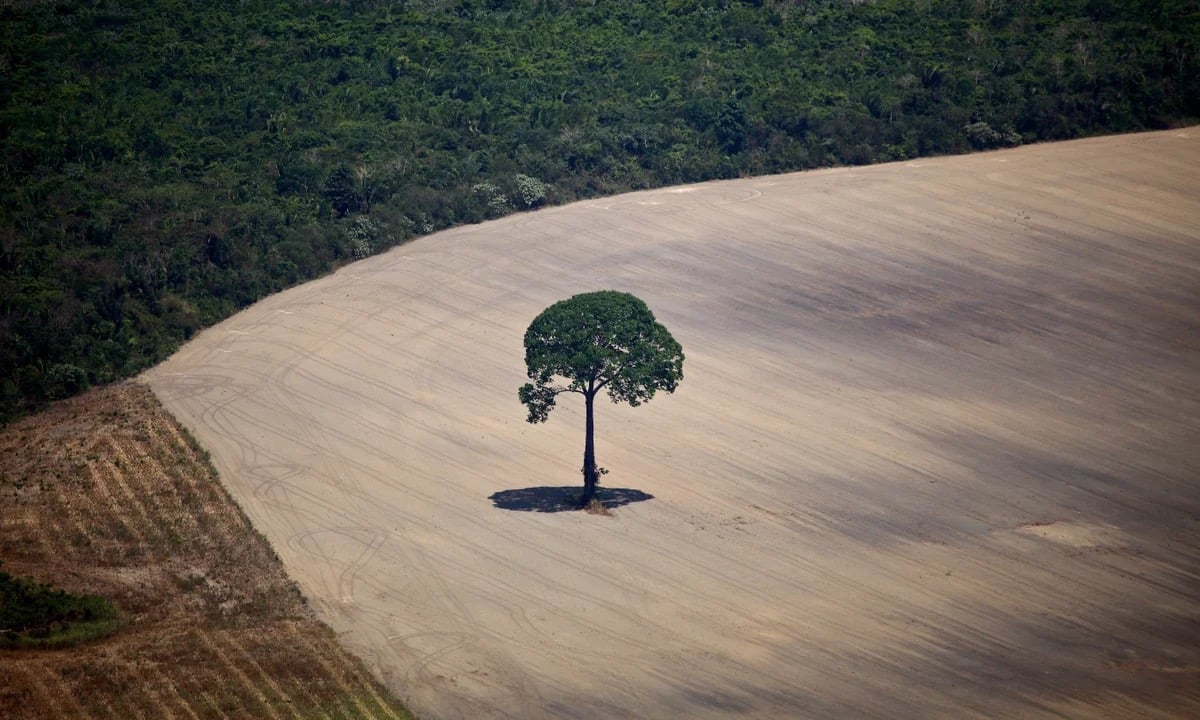
Google is facing regulatory scrutiny in Finland over allegations that the company cleared around 300 hectares of forest near the town of Muhos for a planned data center project before a required environmental review had been completed. The area involved is roughly equivalent to nearly 500 football fields, highlighting the significant environmental footprint associated with the rapid expansion of digital infrastructure.
Finland’s regulator LVV is examining whether Google’s local unit complied with the country’s environmental requirements when it cleared the land. The investigation is focused on whether the forest was removed before the necessary environmental assessment process had been completed.
The allegations come as Google and other major technology companies are rapidly expanding their data center networks to support cloud computing, artificial intelligence and other digital services. The increasing demand for computing power has prompted technology companies to invest billions of dollars in new facilities, but the construction of these sites is also generating growing concerns about land use and environmental impact.
Data centers may appear to be primarily digital facilities, but their construction requires substantial physical infrastructure. Large sites can contain server buildings, electrical substations, backup power systems, cooling equipment, roads and other supporting facilities. Before construction can begin, developers may need to assess how these projects could affect forests, wildlife, water resources and surrounding communities.
The Muhos project has brought those concerns into focus because of the scale of the forested area reportedly cleared. Approximately 300 hectares represents a substantial stretch of land, particularly in a country where forests cover a large portion of the landscape.

Environmental assessments are intended to provide authorities with information about the potential consequences of major development projects. They can examine issues such as biodiversity, habitat loss, changes to local ecosystems, water use, noise, emissions and other environmental effects.
The central question in the Finnish investigation is therefore not simply how much land was cleared, but whether the clearing took place at a stage when the required environmental review had not yet been completed.
The case comes as demand for data center capacity is accelerating because of the rapid development of artificial intelligence. Modern AI systems require enormous amounts of computing power for training and operation. Companies are consequently building larger facilities equipped with increasingly powerful processors and specialized computing systems.
Google has been among the technology companies investing heavily in this infrastructure. Its data centers support a wide range of services, including cloud computing, online products and AI technologies. As demand for these services grows, the company has been expanding its infrastructure in multiple countries.
Finland has become an attractive destination for data center operators because of its climate, energy infrastructure and access to relatively low-carbon electricity. Google’s existing presence in the country includes a major data center in Hamina, and the company has made significant investments in Finnish digital infrastructure.
The country’s cool climate can also help reduce the energy required for cooling large computing facilities. Data centers generate considerable heat because of the large number of servers operating continuously, making cooling one of their major infrastructure requirements.
However, lower operational emissions do not necessarily eliminate environmental concerns associated with building new facilities. The construction of a data center can require clearing vegetation, changing land use and building roads and power infrastructure. Forest removal can also affect habitats and reduce the amount of carbon stored in vegetation and soil.
This creates a complicated environmental equation for technology companies. Data centers may be powered by renewable or low-carbon electricity, helping reduce their operational carbon footprint, while the construction of the facilities can still have significant effects on local ecosystems.
The Muhos case demonstrates the tension between these competing priorities. Governments want to attract investment in technology infrastructure and benefit from the economic activity that large projects can generate. At the same time, regulators must ensure that companies follow environmental rules and that potentially significant impacts are assessed before development proceeds.
For Google, the investigation comes during a period of extraordinary expansion in AI infrastructure. The company is competing with other major technology firms to develop increasingly powerful AI systems, which require access to large amounts of computing capacity.
The growth of AI has consequently transformed data centers from relatively obscure pieces of technology infrastructure into major development projects with significant land and energy requirements.
The environmental questions surrounding such facilities are expected to become more important as the number and size of data centers increase. Communities and regulators are increasingly examining how much land is required, where facilities are located, how much electricity they consume and what happens to local ecosystems during construction.
For Finland, the issue could also influence discussions about how future data center projects should be developed. Clear environmental procedures can provide both regulators and companies with a framework for balancing infrastructure expansion with environmental protection.
The economic benefits of large data center projects can be significant. Construction can generate employment and business activity, while new facilities can contribute to local infrastructure and strengthen a region’s position as a technology hub. But these benefits must be considered alongside the potential environmental costs of large-scale construction.
The LVV examination will determine whether Google’s local operations followed the required procedures and whether the forest clearing was carried out before the appropriate environmental review was completed. The findings could determine whether additional measures are required in connection with the project.
The controversy highlights a broader issue facing the technology industry: the physical cost of the digital economy. Cloud computing, streaming, online services and artificial intelligence may operate through digital platforms, but they depend on enormous physical facilities.
As companies continue building data centers to support the AI boom, the industry will increasingly face questions about land, energy, water and environmental responsibility. Google’s project near Muhos is one example of how those concerns are becoming part of the debate surrounding the next generation of technology infrastructure.
The case ultimately illustrates the challenge of expanding digital capacity while protecting natural resources. As demand for computing power continues to grow, technology companies and regulators will have to navigate that balance more carefully, particularly when large infrastructure projects involve extensive forested areas and other environmentally sensitive land.