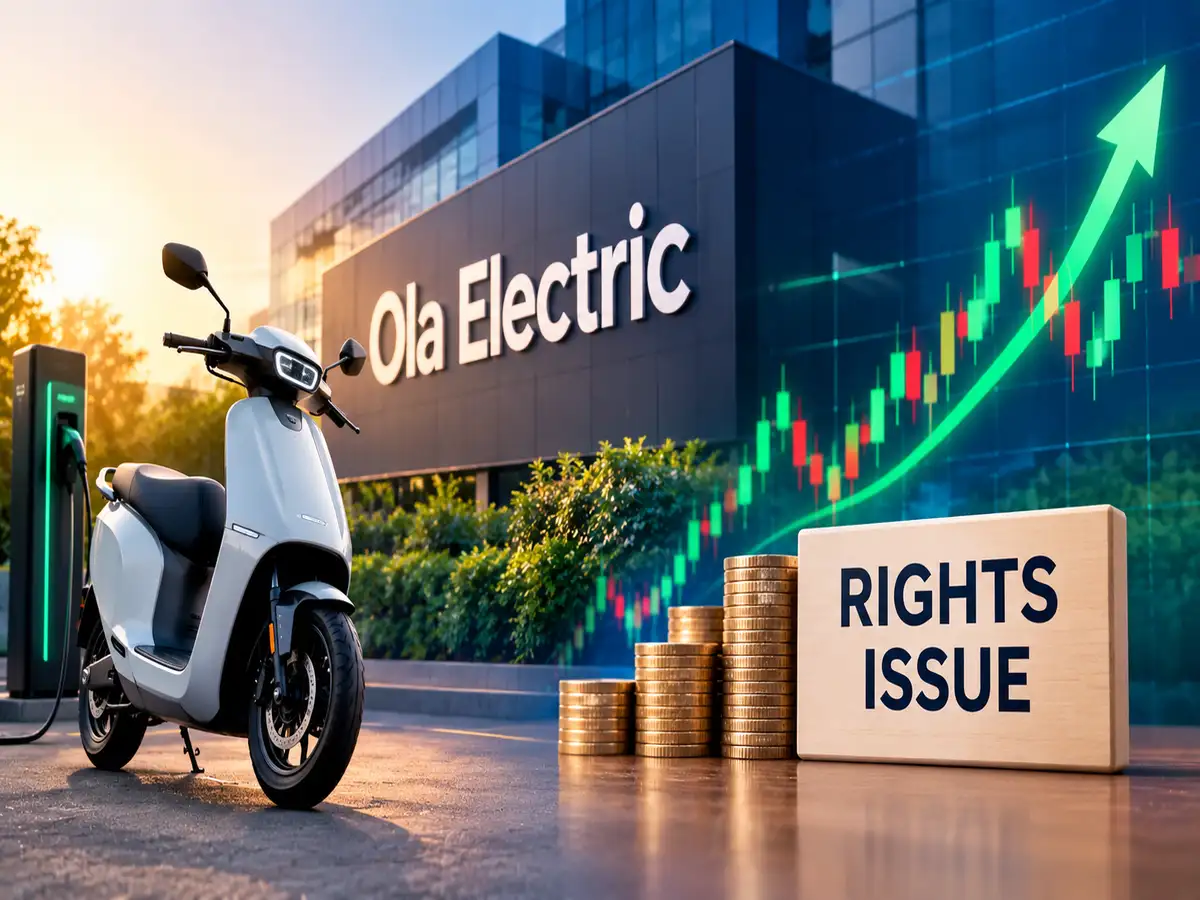
Ola Electric is looking to raise ₹1,000 crore through a rights issue, offering new shares at ₹27 apiece as the electric vehicle maker seeks fresh funds to strengthen its finances and move closer to cash break-even.
The issue price represents a 26% discount to the company’s previous closing price, giving existing shareholders an opportunity to purchase additional shares at a significantly lower price.

Credits: Business Today
Shareholders can buy two shares for every 25 held
Shareholders whose names appear on Ola Electric’s records as of October 13 will be eligible to participate in the rights issue.
Eligible investors can purchase two additional shares for every 25 shares they already own. The subscription window will remain open from October 22 to October 30, giving shareholders just over a week to decide whether to participate.
The rights issue is designed to provide existing shareholders with the first opportunity to invest in the company’s fresh equity before the shares are potentially offered more broadly.
Investors who do not want to subscribe to the additional shares will also have the option of selling their rights in the market. Trading in the rights entitlement will be available from October 22 through October 26.
Bhavish Aggarwal pledges 4.32% stake
Ola Electric founder and CEO Bhavish Aggarwal is backing the fundraising effort by pledging a 4.32% stake in the company.
The pledge signals Aggarwal’s continued commitment to the electric vehicle manufacturer as it attempts to improve its financial position and scale its operations.
The fundraising comes as Ola Electric continues to navigate the challenges facing India’s competitive electric two-wheeler market. The company has been working to improve its financial performance while investing in manufacturing capacity, technology and its broader EV ecosystem.
Funds could support debt reduction
The ₹1,000 crore raised through the issue could be used partly to reduce Ola Electric’s debt burden and support its efforts to reach cash break-even.
Improving cash generation remains an important priority for the company as it looks to reduce pressure on its balance sheet. Fresh equity capital could provide Ola with additional flexibility while it works toward more sustainable operations.
The fundraising also comes at a time when investors are closely watching the company’s ability to translate its position in India’s electric vehicle market into stronger financial performance.
Ola shares remain above issue price
Ola Electric’s shares have experienced volatility this year, reflecting investor concerns as well as expectations around the company’s future growth.
Despite earlier declines, the stock ended Wednesday 0.83% higher at ₹36.26. That puts the market price substantially above the ₹27 rights issue price, potentially making the discount attractive to eligible shareholders.
However, the difference between the market price and the issue price also means investors will be weighing the potential value of the discounted shares against the company’s financial and operational risks.
Credits: The Economic Times
Rights issue marks key funding move
Ola Electric’s latest fundraising plan comes at a crucial stage for the company. By seeking ₹1,000 crore from existing shareholders, the EV maker is aiming to strengthen its balance sheet while giving investors an opportunity to increase their holdings at a discounted price.
With Bhavish Aggarwal pledging part of his stake and the company targeting debt reduction and cash break-even, the rights issue could play an important role in Ola Electric’s next phase of growth.
For shareholders, the key dates will be October 13 for eligibility, October 22 for the start of subscriptions and rights trading, October 26 for the end of rights trading and October 30 for the close of the issue.
The fundraising could also give Ola Electric greater financial flexibility as it competes with established players and newer entrants in India’s fast-growing EV market. Investors will closely monitor whether the additional capital helps improve operating efficiency, strengthen liquidity and support the company’s longer-term expansion plans without placing further pressure on shareholders.