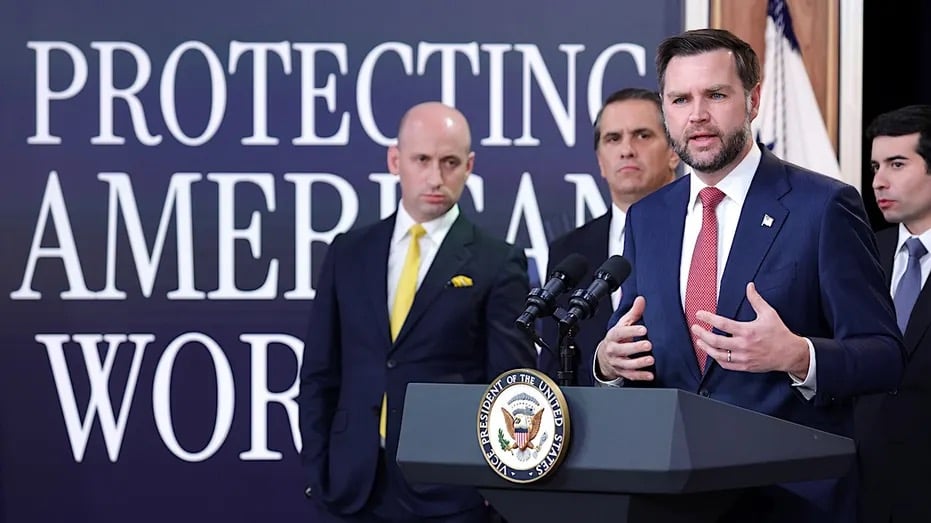
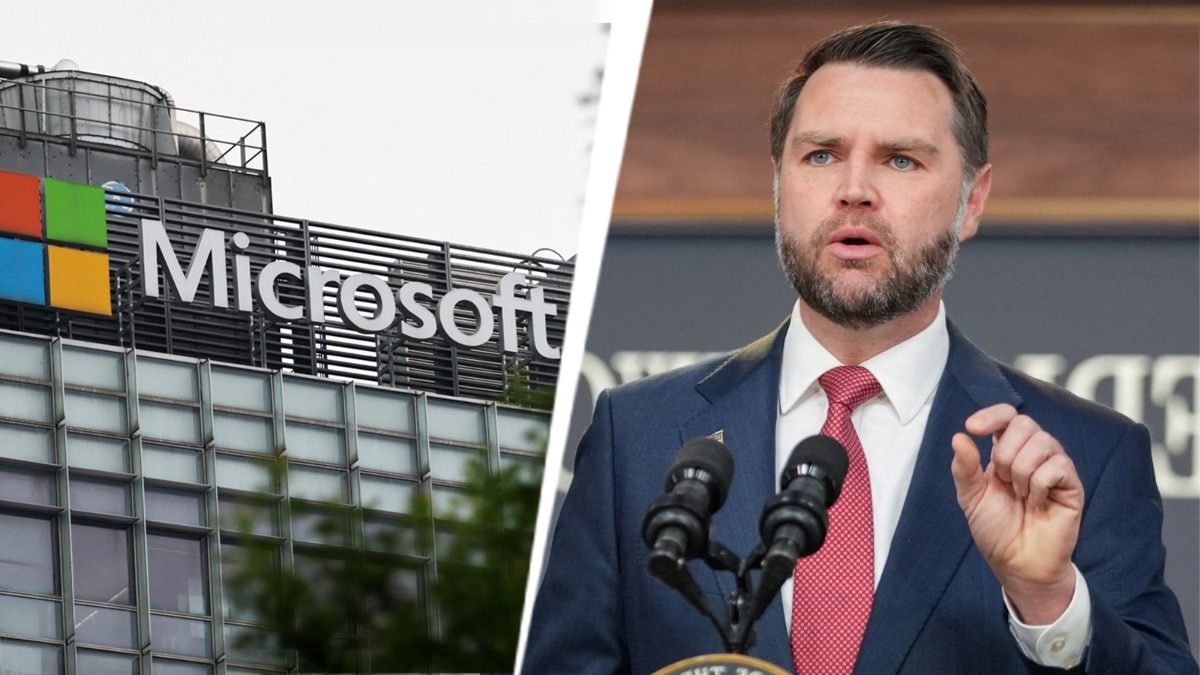
The debate over immigration and American technology jobs has intensified after US Vice President JD Vance alleged that Microsoft replaced laid-off American workers with foreign hires. The claim has drawn attention to the technology industry’s reliance on employment-based visa programmes and raised questions about whether companies are prioritising international recruitment while reducing their domestic workforce.
The controversy centres on Microsoft’s workforce reductions and its use of the H-1B visa programme, which allows US employers to hire foreign professionals for specialised occupations. Although the company has long recruited talent from across the world, critics argue that its hiring practices deserve closer scrutiny when American employees are losing their jobs.
However, understanding whether foreign workers directly replaced dismissed American employees requires a closer examination of employment and visa records. The number of visa approvals alone does not establish that a company hired foreign workers to fill the exact positions vacated by domestic employees.
What the Visa Data Shows
Microsoft received approximately 6,258 H-1B approvals in fiscal year 2025, according to figures discussed in connection with the controversy. Vance pointed to thousands of visa approvals alongside Microsoft’s layoffs to question the company’s workforce decisions.
The figures have become a focal point in the broader debate over the relationship between immigration policy and employment opportunities for American workers. Critics contend that companies should not be able to reduce their domestic workforce while continuing to bring in foreign professionals for comparable positions without adequately explaining their hiring decisions.

Nevertheless, H-1B approval figures require careful interpretation. An approved petition does not necessarily represent a newly recruited employee. It can involve an existing employee changing roles, extending their authorised employment or moving to another position within the company.
Consequently, the total number of approvals cannot automatically be treated as the number of foreign workers newly hired by Microsoft. Nor does it establish how many, if any, were recruited to replace American employees who had recently been laid off.
To establish a direct connection, investigators would need to compare the positions eliminated during Microsoft’s layoffs with the roles subsequently filled by foreign workers. Information about job responsibilities, departments, work locations and hiring dates would be particularly important in determining whether the same positions were involved.
Microsoft’s Layoffs Raise Questions
Microsoft, like other major technology companies, has adjusted its workforce amid changing business priorities, cost management efforts and increased investment in artificial intelligence. The technology sector has experienced significant restructuring as businesses redirect resources towards cloud computing, automation and AI-driven products.
These changes have created an apparent contradiction for critics: technology companies are cutting jobs in some areas while continuing to recruit professionals with specialised skills.
However, workforce reductions and recruitment can occur simultaneously for several reasons. A company may eliminate positions in one department while expanding another, particularly when the skills required for emerging technologies differ from those needed for older products or services.
That distinction does not eliminate legitimate questions about employment practices. If a company dismisses domestic employees and subsequently recruits foreign workers for substantially similar positions, the circumstances warrant closer examination. Establishing whether this happened at Microsoft, however, requires evidence beyond overall layoff and visa totals.
The issue also highlights the importance of transparency in corporate hiring decisions, particularly when companies benefit from immigration programmes while making substantial workforce changes.
H-1B Visas and Green Cards Are Different
The debate has also brought attention to the difference between temporary work visas and permanent residency applications.
The H-1B programme enables eligible employers to hire foreign professionals in specialised occupations. It is widely used in the technology industry for positions involving software engineering, data science, cybersecurity and other technical disciplines.
Green cards, by contrast, provide permanent residency in the United States. Employers may pursue employment-based permanent residency for eligible foreign employees through a separate process that generally involves demonstrating that qualified American workers are not available for the relevant position.
These processes serve different purposes, and their numbers should not be combined as though they represent identical hiring decisions. An employee holding an H-1B visa may also pursue permanent residency, meaning the two categories can relate to the same individual at different stages of employment and immigration.
Understanding these distinctions is essential when evaluating claims that companies are replacing American workers with foreign hires.
Government Scrutiny Intensifies
The controversy emerged amid broader efforts by the Trump administration to scrutinise employment-based immigration programmes and strengthen protections for American workers.
The administration has argued that immigration rules must not be used to undermine domestic employment opportunities. Its approach has placed technology companies and other major employers under greater scrutiny over their use of foreign-worker programmes.
Microsoft’s participation in the employment-based permanent residency process has also faced restrictions as part of the government’s wider action against certain employers. Such measures have intensified the debate over corporate accountability and the conditions under which companies can sponsor foreign employees.
However, restrictions affecting permanent residency applications should not be confused with the automatic cancellation of existing H-1B visas. The programmes operate under different rules, and changes to one process do not necessarily terminate a worker’s existing authorisation.
For technology companies, the developments could mean additional scrutiny of recruitment decisions, immigration paperwork and the circumstances surrounding workforce reductions.
What the Numbers Ultimately Establish
The available figures demonstrate that Microsoft has received thousands of H-1B approvals while also undertaking workforce reductions. They do not, on their own, prove that the company directly replaced laid-off American employees with foreign workers.
A definitive assessment would require detailed information connecting specific job cuts with subsequent recruitment. Researchers would need to establish whether the positions involved were comparable, whether the employees worked in the same locations and departments, and whether foreign hires filled vacancies created by the layoffs.
The distinction matters because broad employment figures can reveal patterns without establishing the reasons behind individual corporate decisions.
Ultimately, the controversy reflects a larger question facing the American technology industry: how can companies access global talent while maintaining fair employment opportunities for domestic workers? As scrutiny of skilled-worker immigration continues, the debate is likely to focus increasingly on transparent hiring practices, reliable employment data and evidence that distinguishes legitimate workforce restructuring from the direct replacement of American employees.
For now, the visa figures provide grounds for examining Microsoft’s employment practices, but the claim of direct replacement requires more specific evidence than aggregate approval and layoff totals alone.