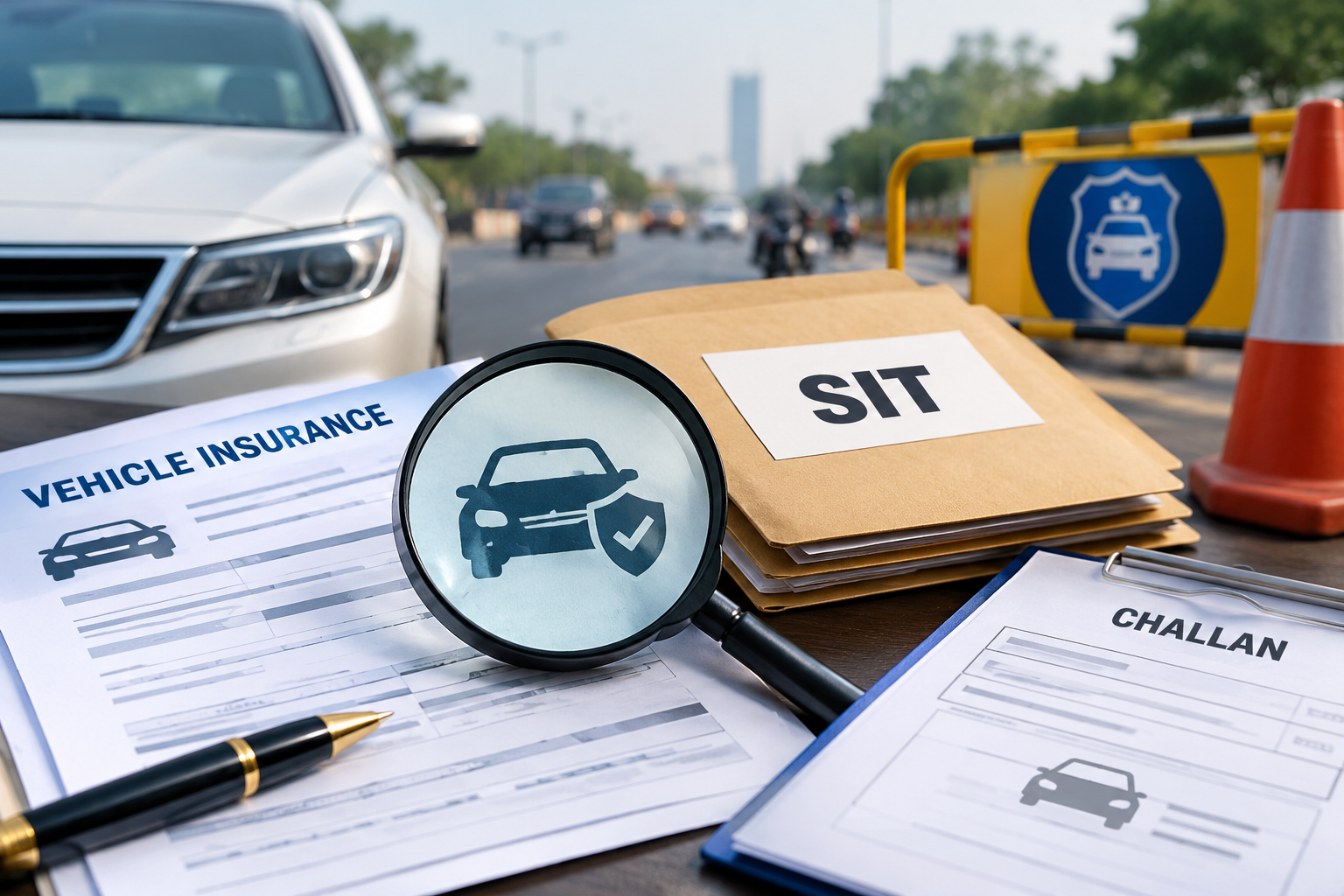
The Bihar government has set up a special investigation team (SIT) to probe fraud in vehicle insurance, and it has tightened the rules around challans. For anyone holding third party car insurance, the news is a reminder that a policy document helps only when it is genuine. Any gap or error in Car Insurance records can lead to legal and financial trouble, often at the worst possible time.
Why Fakes Matter
A fake policy usually looks real. It may carry a printed policy number, a logo, and a signature. The owner often finds the problem only after an accident or a roadside check. By then, the owner may have to pay an injured person directly and also face a penalty for using a vehicle without valid cover.
Fraud also affects honest policyholders. When insurers spend more on investigating fake claims and forged documents, those costs can push premiums up over time. A crackdown may help reduce this pressure, although results depend on how well the rules are enforced.
Third Party Cover
Under the Motor Vehicles Act, third party car insurance is mandatory for every vehicle used on public roads. It pays for injury, death, or property damage caused to another person by your vehicle. It does not pay for damage to your own car.
The premium for this cover is set by the regulator, so prices are similar across insurers. Because the cover is compulsory and the price is fixed, it is a frequent target for fraud. Many owners buy it only to avoid a challan, and some accept very cheap offers without checking who issued the policy.
Challan Rules
Authorities check insurance status during roadside inspections and through camera-based systems. A challan for missing insurance can lead to a fine and, in repeat cases, further action under traffic law.
Tighter norms mean more checks. A fake policy will now be found sooner, and an owner who relied on one may face the penalty without any remedy. This makes verification before purchase more important than it was earlier.
Spotting Fakes
Some warning signs appear again and again in fraud cases:
- A premium far below the regulated rate
- A seller who cannot show a valid license
- A request to pay into a personal bank account or wallet
- No policy email or SMS from the insurer after payment
- Spelling mistakes or poor print quality in the document
- A policy number that the insurer cannot find in its records
How to Verify
| Check | How to Do It |
| Insurer authenticity | Confirm the company is licensed by IRDAI |
| Policy number | Match it on the insurer’s official website or app |
| Payment | Pay only to the insurer’s account or an official gateway |
| Vehicle details | Compare registration, chassis, and engine numbers |
| Policy copy | Look for a copy sent to your registered email |
| Seller | Ask for the license number of any agent or broker |
If any detail does not match, call the insurer using the number on its official website, not the number printed on the document you received.
Owner Checklist
- Buy directly from the insurer or from a licensed intermediary.
- Save the digital policy copy on your phone and in your email.
- Set a reminder at least 30 days before the policy ends.
- Keep payment receipts and the transaction reference.
- Report any suspicious seller to the insurer and to the local police.
- Recheck the policy status after each renewal.
Cost of Fraud
The harm from a fake policy goes beyond a fine. A person injured in an accident may wait years for compensation if no real insurer stands behind the vehicle. The owner may have to sell assets or take a loan to pay a court order. Families who depend on a single vehicle for income can lose that income during the dispute.
Insurance fraud also creates trust problems. When buyers worry about fake papers, they may avoid buying cover at all, and that leaves more uninsured vehicles on the road. Stronger checks, such as the SIT, aim to rebuild that trust.
What Can Improve
Several steps can help reduce fraud over the long term:
- Better sharing of data between insurers and transport offices
- Simple tools that let owners verify a policy in seconds
- Public awareness drives about fake sellers
- Clear and quick action against agents who issue forged documents
Owners play a part too. Asking a few questions at purchase can make a fake seller walk away.
Conclusion
The SIT and the tighter challan rules show that insurance checks are becoming stricter in Bihar. Owners should treat third party car insurance as a legal duty and verify each document at purchase and again at renewal. A few minutes spent confirming a policy can prevent large losses later, and it keeps Car Insurance records clean for the long term.