

Ai Search Inc. announced on November 2 that iAsk.ai had surpassed one billion searches, a milestone for an answer engine launched in 2023. The announcement comes one week after the company introduced Search-to-Video, which lets users request a generated explanation to watch alongside a written response.
People can ask AI questions in everyday language and continue the exchange from the answer. Over time, iAsk has added image-based questions, guided learning and new ways to present a response around that original interaction.
The billion figure is the company’s running search total. It counts activity across the service’s history, rather than individual users. Earlier company announcements reported half a billion searches in March 2025 and 750 million in June 2026.
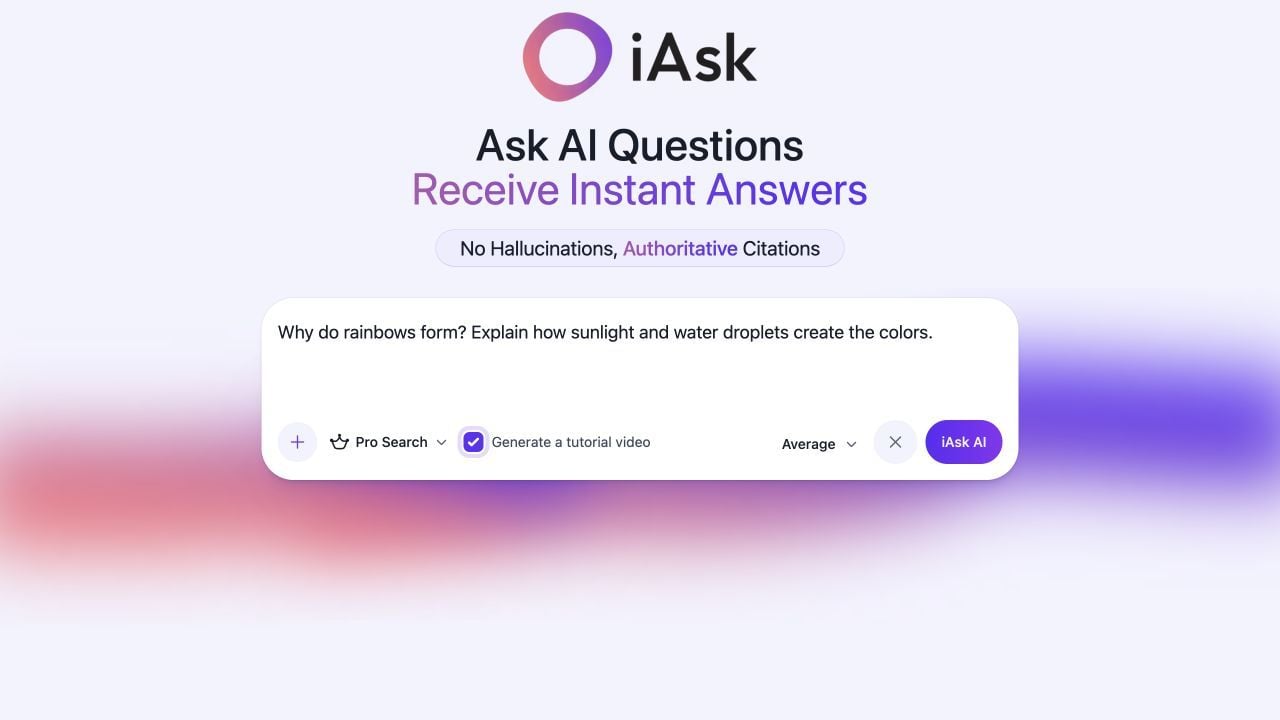
The latest product addition changes the format of an answer. Search-to-Video allows a user to request a tutorial when submitting a question; the generated video then sits alongside the written explanation. Ai Search Inc. says that feature is available to everyone.
The screenshot below shows the request stage with a question about rainbows and the tutorial-video option selected. The question supplies the subject. There is no separate script for the user to write, although the resulting video’s detail and presentation can vary with the request.
Written responses remain part of the result. They give a reader a place to revisit terminology, examine cited material or identify the point that needs a follow-up. The video adds another way into the subject without removing the text.
Education is another part of the platform’s expansion. Its AI homework helper includes Guide Me, a mode that prompts a learner through intermediate steps. The distinction matters: a learner trying to understand a method has a different task from someone seeking a quick definition.
Image uploads widen the starting point as well. A worksheet or diagram can supply context that would be cumbersome to type into a question box. Follow-ups let the user develop the inquiry once the first explanation reveals what they need to ask next.
Those additions sit around the same core action—asking a question—but address different parts of the exchange: how it begins, how the answer appears and how the user continues. The billion-search announcement puts a scale on the activity accumulated while that product has developed.
For iAsk, the next phase now includes both the search engine and the learning tools surrounding it. The milestone records how often people have used the service so far; the expanding formats show what the company is building for the questions that follow.