India’s fast-growing bubble tea and Korean street food brand Boba Bhai has raised ₹40 crore in a fresh funding round, signaling strong investor confidence in the rapidly emerging category of global street food formats in India.
The round was led by existing investors 8i Ventures, Titan Capital Winners Fund, and Global Growth Capital, with participation from new investors including BIG Capital and several prominent angel investors.
The investment comes at a fivefold increase in valuation compared to the company’s Series A round just a year ago, highlighting the brand’s rapid growth and the increasing popularity of bubble tea and Korean-inspired food among young Indian consumers.

Credits: Lapaas Voice
Capital to Fuel Expansion and Product Innovation
The fresh funding will primarily be used to accelerate Boba Bhai’s store expansion strategy across India. The company plans to deepen its footprint in Tier-1 cities while also making a structured entry into select Tier-2 markets where demand for global food trends is rising.
In addition to expanding its retail presence, the company intends to:
-
Strengthen its leadership and on-ground operational teams
-
Expand its Korean-inspired food and beverage menu
-
Build a packaged snacking category
-
Launch new products tailored for quick-commerce platforms
Boba Bhai’s omnichannel strategy already spans offline retail outlets, food delivery platforms, and quick-commerce partnerships, allowing the brand to reach customers across multiple consumption occasions.
Rapid Growth in Just Two Years
Founded by Dhruv Kohli, Boba Bhai has emerged as one of India’s fastest-growing new-age consumer brands in a very short time.
The company’s financial growth reflects its rapid consumer adoption:
-
FY24 revenue: ₹5 crore
-
FY25 revenue: ₹30 crore (6× growth)
-
Target: Crossing ₹100 crore ARR within the next two months
This explosive growth underscores the increasing appetite among Indian consumers for international street food formats, particularly those influenced by East Asian cultures.
Boba Bhai is also working toward an ambitious long-term goal of building 1,000 outlets across India over the next five years.
Riding the Wave of Korean Pop Culture
Founder Dhruv Kohli believes the brand’s success is closely tied to changing consumer preferences, especially among younger audiences.
According to Kohli, the company has spent the last two years building systems that ensure consistent scale—from product quality and supply-chain efficiency to store-level operations.
He noted that young Indian consumers increasingly seek bold global flavours, but loyalty only comes when the overall experience remains consistent. Korean street food, he said, fits naturally into this trend and offers significant growth potential in India.
The surge in Korean pop culture influence—from K-dramas to K-pop—has also helped popularise Korean flavours and cuisine, making the category more accessible and aspirational for Indian consumers.
Investors Double Down on Growth
Existing investors have reaffirmed their confidence in the company’s growth trajectory.
Vishwanath V, General Partner at 8i Ventures, highlighted that Boba Bhai’s repeatable operating playbook and strong performance metrics made it an easy decision for the firm to double down on its investment. He added that the company has successfully positioned itself as India’s leading bubble tea brand.
Similarly, Shiv Kapoor, Vice President at Titan Capital Winners Fund, praised the company’s strong execution across product quality, customer loyalty, and scaling capabilities. He also hinted at an upcoming pipeline of new menu innovations inspired by global flavours.
Meanwhile, Harsh Patel, Managing Partner at Global Growth Capital, said the team has demonstrated a rare ability to combine innovative ideas with disciplined execution, allowing them to build a category-leading brand within just two years.
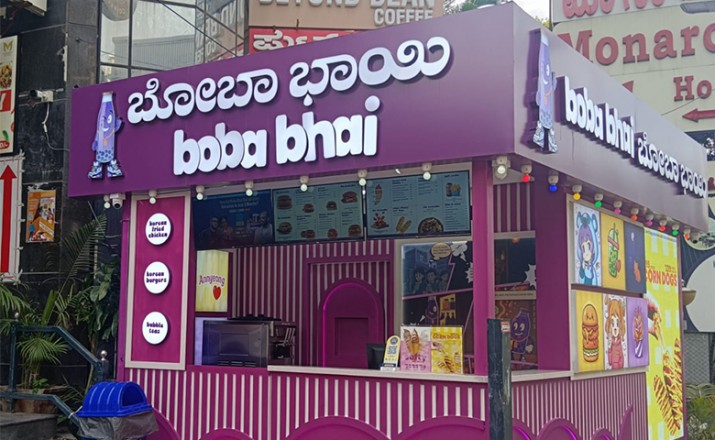
Credits: Retail4growth
Positioning for India’s Next QSR Wave
India’s quick-service restaurant (QSR) industry is witnessing a shift as young consumers actively explore global cuisines beyond traditional fast food.
With rising curiosity around Asian flavours, bubble tea culture, and Korean street food, Boba Bhai is positioning itself as a category leader in a relatively underdeveloped segment of the Indian food market.
Its omnichannel distribution model, coupled with product innovation and rapid store expansion, could help the company capture a significant share of this growing niche.
If its current growth momentum continues, Boba Bhai could emerge as one of the most prominent new-age food brands in India’s evolving QSR ecosystem.