• Send Us A Tip
  • Calling all Tech Writers
  • Advertise
Sunday, June 21, 2026
  • Login
TechStory
  • News
  • Crypto
  • Gadgets
  • Memes
  • Gaming
  • Cars
  • AI
  • Startups
  • Markets
  • How to
No Result
View All Result
  • News
  • Crypto
  • Gadgets
  • Memes
  • Gaming
  • Cars
  • AI
  • Startups
  • Markets
  • How to
No Result
View All Result
TechStory
No Result
View All Result
Home Future Tech AI

7 ways AI is impacting the Automotive Industry.

by Rohan Mathawan
August 13, 2018
in AI, Cars
Reading Time: 4 mins read
0
7 ways AI is impacting the Automotive Industry.

Pic Credits- Smart2Zero

TwitterWhatsappLinkedin
Artificial Intelligence
Pic Credits- AMR News

Artificial intelligence (AI) is having a big impact on many industrial sectors, including aviation, manufacturing, technology, and a host of others. That’s because the features of AI like machine learning and deep learning can make companies more efficient.
But one industry which is already seeing dramatic changes from AI is the automotive industry. Artificial intelligence is introducing entirely new ways for people to get around. It will soon have a big impact on how cars are produced and will change how the traffic is maintained in the cities, Here’s how

You might also like

Mitsubishi Hints at a Future Worthy of the Lancer Evolution Legacy

How to Increase Gas Mileage: Small Driving Changes That Save Big at the Pump

Honda Recalls Nearly 99,000 Vehicles Over Front Passenger Airbag Sensor Defect

Autonomous Cars

Pic Credits- Forbes

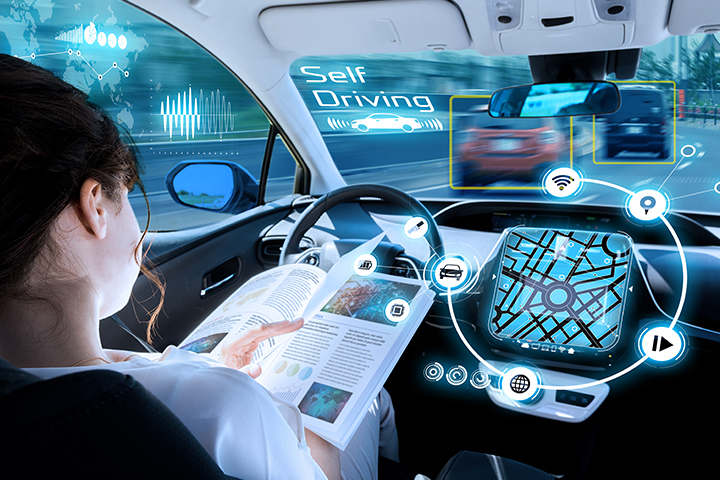
The attempts to create driverless cars began in 1970, but due to lack of advanced technology kept autonomous cars a distant dream. But with time, the technology improved there were more powerful computers, the GPS system and most notably AI, Autonomous cars are now not only a possibility, they are here, almost.

While fully autonomous cars have not made it to the showroom yet but there are few companies who have committed to making self-driving cars’s a reality in the near future. Google’s subsidiary, Waymo has been recognized as one of the leaders in autonomous car development with the likes of Tesla both the companies are spending millions of dollars on technology and Research and Development teams. Both the companies have test vehicles on the road in various cities and they are inching toward the future.

Tesla is in a comfortable position as their technology is ready. In October 2016, Tesla revealed that all new Tesla Vehicles will come equipped with all the hardware needed for fully autonomous driving. However, the company is still needing approval for regulations and software validation is needed before the vehicle could switch into a fully driverless mode.

And the likes of Uber are already committed to bringing fully autonomous cars by 2021.

Driver Assist Features
Pic Credits- CNET

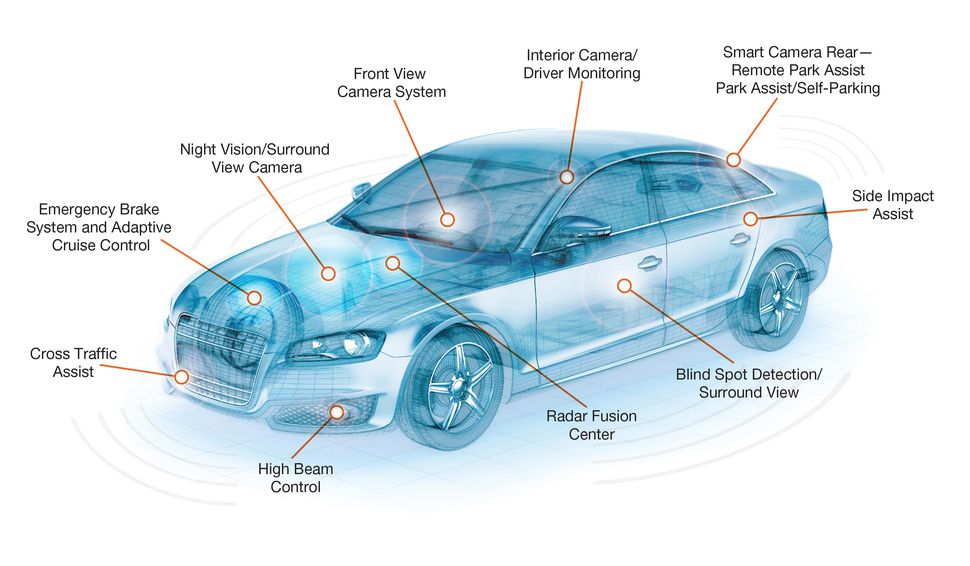
There are some companies who are working on fully autonomous and a number of manufacturers are easing in that direction. The companies are introducing features which can assist the drivers without taking the wheel, the companies are more putting more efforts in  AI-based features which can help vehicles with advanced safety features. Such as Automatic braking, collision avoidance systems, pedestrian and cyclists alerts, cross-traffic alerts, and intelligent cruise controls are some of the lesser features being powered by AI.

The Car manufacturer is willing to develop autonomous cars, trucks and open new opportunities.

Cloud-Hosted Intelligence
GM OnStar
Pic Credits- ZDNet

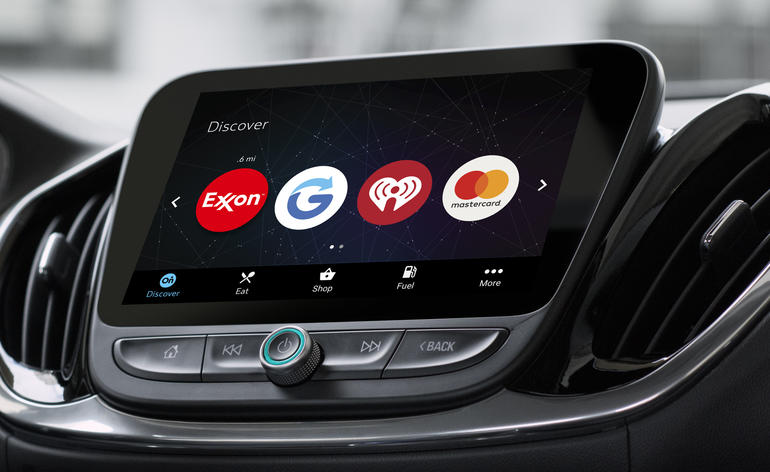
Cloud computing has positive advantages that can make it a perfect stage for Installing AI technology in the automotive field. Features such as Fast processing speed, data access and analytics, and centralized connectivity. Automobile manufacturers are looking to make cutting-edge technology, the cloud-based platform can help them to develop the technology.

A good example of where the cloud-based system is being used is the partnership between IBM and General Motors. IBM’s Watson supercomputer will help GM to develop an extension for its popular OnStar system which will include AI enhanced features.

Internet of Things
Credits- RFPage

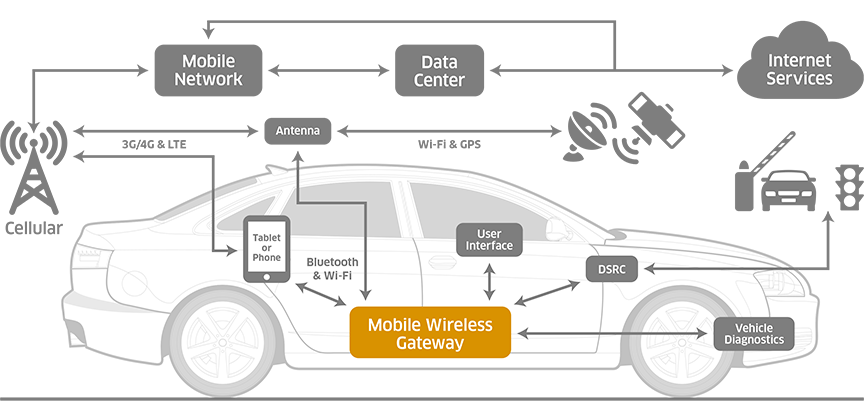
It is said by 2020, about 250 million cars on road will be connected with the internet. With new vehicles coming equipped with smart sensors, connectivity applications, big-data enhanced geo-analytical capabilities.

Here are some IOT will be an impact on Automobile Industry :

  • With over the air software updates, manufactures and dealers can update vehicle firmware easily.
  • It could help send data directly to the manufacturer or dealer and also vehicle can report problem and schedule repairs by using IoT.
  • It can help dealers to diagnose and correct some issues without requiring a shop visit.
  • Fleets can be managed easily and more effectively with more safety.
  • Better manufacturing quality is possible with the help of IoT.
  • Cars smart sensor could also help in detecting medical emergencies in vehicles.

Enhanced Connectivity

Pic Credits- TechCrunch

If there is one world which you will be hearing more about, it is connectivity. With the success of social media, people like to be connected to people and information and automobile makers are using AI to help them do that.

AI-based infotainment system will allow drivers to receive and send emails, perform internet searches, and interact with smartphone apps – all using voice command.

Some vehicles will soon include their own WiFi hotspots, which will provide internet connectivity using cell carriers.

One of the most important AI contributions is making in Automotive Industry is V2V, meaning vehicle-to-vehicle communication gets blended around a lot when self-driving cars and the future of car safety arise.

Intelligent Insurance Risk Assessment

Pic Credits- Compare policy

Insurance companies are always looking for ways to reduce risks. Nauto is one such company involved in this with BMW I ventures and Toyota Research Institute, and the big name insurance company Allianz Group.

With the help of deep-leaning AI technology, Nauto will make a cloud-based system that will help insurance companies to keep track of driver alertness, near misses, and unsafe driving habits.

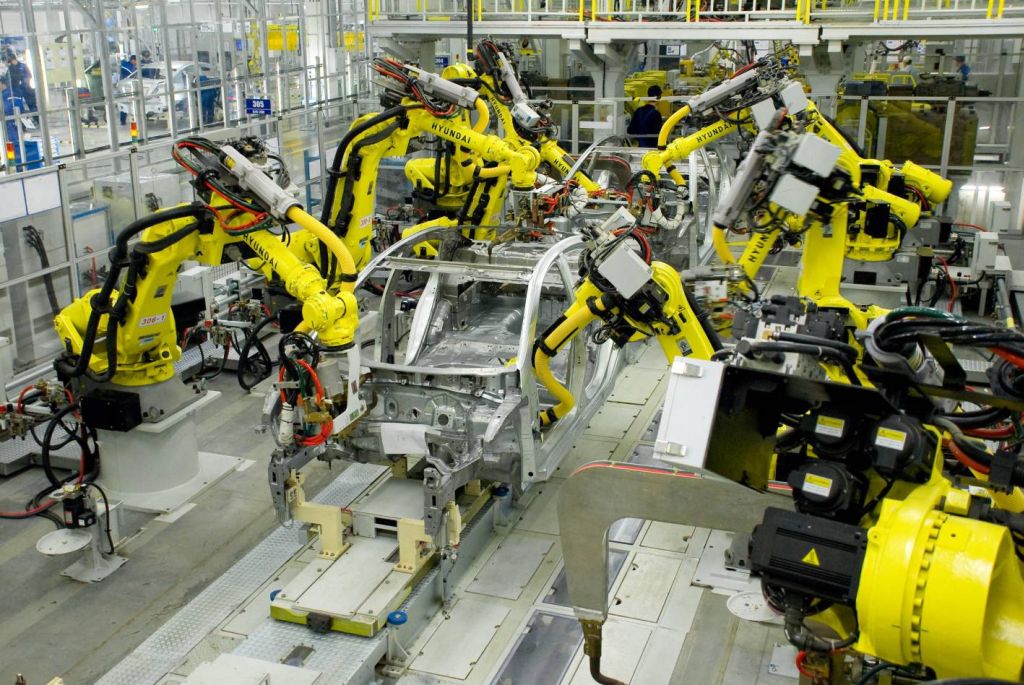
Huge improvements to automotive manufacturing are coming
Pic Credits- AutoEvolution

AI will help automobile makers how vehicles are made and how inventory is managed and the quality control will also improve.

This could also help in increasing the machinery life by 20% and machinery examination cost will also reduce by 25% and annual maintenance will be reduced by 10%.

AI will also help companies to built a better quality product and detects defects up to 90% much better than human and AI could also be implemented in demand forecasting and can reduce inventory cost by 50%.


Tags: Artificial IntelligenceInternet
Tweet54SendShare15
Previous Post

How Masayoshi Son built one of the most Successful Investment Firms in the World

Next Post

Gamepind raises $16 million from AGTech Holdings, One97 Communications

Rohan Mathawan

Content Editor at Techstory Media | Technology | Gadgets | Written more than 5000+ articles about different niches from Tech to online real money gaming for reputed brands and companies. Get in touch Email: rohan@techstory.in For Business Enquires related to TechStory Info@techstory.in

Recommended For You

Mitsubishi Hints at a Future Worthy of the Lancer Evolution Legacy

by Samir Gautam
June 21, 2026
0
Mitsubishi Hints at a Future Worthy of the Lancer Evolution Legacy

Mitsubishi Motors has reignited hopes among performance-car fans after its new president said the company wants to become capable of building another great car in the mould of...

Read more

How to Increase Gas Mileage: Small Driving Changes That Save Big at the Pump

by Samir Gautam
June 21, 2026
0
Fuel prices may rise and fall, but one thing stays constant: drivers want to make every litre go further. The good news is that improving gas mileage does not always require buying a new hybrid or changing cars altogether. A few disciplined habits behind the wheel, along with basic maintenance, can make a noticeable difference over time. For most drivers, the biggest gains come from reducing waste. That means less aggressive acceleration, fewer unnecessary trips, correctly inflated tyres and a car that is mechanically healthy. Smooth Driving Uses Less Fuel The quickest way to burn more fuel is to drive as if every traffic light is a starting grid. Hard acceleration, sharp braking and sudden changes in speed force the engine to work harder and consume more petrol. A smoother approach works better. Accelerate gradually, maintain a steady speed where possible and look ahead to anticipate traffic. If a red light is visible in the distance, easing off the accelerator early is usually more efficient than rushing forward and braking hard at the last moment. Speed also matters. As speeds rise, aerodynamic drag increases and the engine needs more energy to keep the vehicle moving. On highways, staying within a sensible cruising range rather than constantly pushing at high speeds can help reduce fuel consumption. Check Tyre Pressure Regularly Tyres are easy to ignore until something goes wrong, but they play a major role in fuel economy. Under-inflated tyres create more rolling resistance, which means the engine has to use more fuel just to move the car forward. Drivers should check tyre pressure at least once a month, preferably when the tyres are cold. The correct pressure is usually listed on the driver-side door frame or in the owner’s manual. It is important not to use the maximum pressure printed on the tyre sidewall as a target. That figure is not necessarily the recommended setting for the vehicle. The US Environmental Protection Agency notes that under-inflation reduces fuel economy, increases tyre wear and adds to emissions. Stop Carrying Extra Weight A car is not a storage room. Heavy items in the boot may seem harmless, but extra weight makes the engine work harder, especially in city traffic where the vehicle is constantly stopping and starting. Clear out unnecessary tools, boxes, sports gear and other items that have been sitting in the car for weeks. Roof racks and cargo boxes can also hurt mileage by increasing aerodynamic drag. If they are not being used, remove them. This is especially relevant for drivers who spend most of their time on highways, where wind resistance becomes a bigger factor. Keep Up With Maintenance A well-maintained vehicle is usually a more fuel-efficient vehicle. Delayed oil changes, worn spark plugs, clogged air filters, dragging brakes and poor wheel alignment can all affect how efficiently a car runs. Following the manufacturer’s service schedule is the safest route. Use the recommended engine oil grade and get warning lights checked instead of ignoring them. A sudden drop in mileage can be an early sign that something needs attention. The EPA advises motorists to follow their vehicle maintenance schedule and use the recommended motor oil to support better fuel efficiency and safer operation. Combine Trips and Avoid Long Idling Short trips can be surprisingly fuel-hungry because the engine has not had enough time to reach its most efficient operating temperature. Combining errands into one planned route can reduce cold starts, unnecessary kilometres and fuel use. Idling is another quiet fuel drain. If you are waiting for an extended period, switching off the engine can be more sensible than leaving it running. Modern cars do not need long warm-up periods before driving. Start, settle for a few seconds and drive gently. The Bottom Line Better gas mileage is less about one miracle trick and more about consistent habits. Drive smoothly, maintain the right tyre pressure, remove excess weight and service the car on time. These small changes may not feel dramatic on a single trip, but over months of commuting, school runs and highway drives, they can add up to real savings.

Fuel prices may rise and fall, but one thing stays constant: drivers want to make every litre go further. The good news is that improving gas mileage does...

Read more

Honda Recalls Nearly 99,000 Vehicles Over Front Passenger Airbag Sensor Defect

by Samir Gautam
June 20, 2026
0
Honda Recalls Nearly 99,000 Vehicles Over Front Passenger Airbag Sensor Defect

Honda is recalling nearly 99,000 vehicles in the United States after identifying a defect in the front passenger seat weight sensor that could affect how airbags deploy in...

Read more
Next Post
Gamepind

Gamepind raises $16 million from AGTech Holdings, One97 Communications

Please login to join discussion

Techstory

Tech and Business News from around the world. Follow along for latest in the world of Tech, AI, Crypto, EVs, Business Personalities and more.
reach us at info@techstory.in

Advertise With Us

Reach out at - info@techstory.in

Aviator Game India 2026

BROWSE BY TAG

#Crypto #howto 2024 acquisition AI amazon Apple Artificial Intelligence bitcoin Business China cryptocurrency e-commerce electric vehicles Elon Musk Ethereum facebook funding Gaming Google India Instagram Investment ios iPhone IPO Market Markets Meta Microsoft News OpenAI samsung Social Media SpaceX startup startups tech technology Tesla TikTok trend trending twitter US

© 2025 Techstory.in

No Result
View All Result
  • News
  • Crypto
  • Gadgets
  • Memes
  • Gaming
  • Cars
  • AI
  • Startups
  • Markets
  • How to

© 2025 Techstory.in

Welcome Back!

Login to your account below

Forgotten Password?

Retrieve your password

Please enter your username or email address to reset your password.

Log In
Are you sure want to unlock this post?
Unlock left : 0
Are you sure want to cancel subscription?