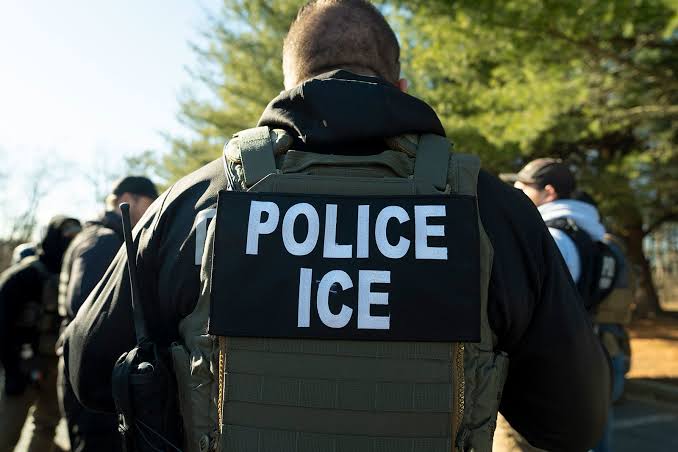
The U.S. Immigration and Customs Enforcement (ICE) has expanded its surveillance capabilities by spending $825,000 on specialized vehicles fitted with cellphone-tracking technology. The deal, finalized earlier this year, went to TechOps Specialty Vehicles (TOSV), a Maryland-based company known for building advanced law enforcement and security vehicles.
According to public records, the contract dated May 8, 2025, was issued to provide Cell Site Simulator (CSS) Vehicles for the Homeland Security Technical Operations program, including additional units for the agency’s expanding surveillance fleet.
This agreement follows an earlier $818,000 contract in September 2024 between ICE and the same company, showing that their partnership predates the Trump administration.
Vehicles Built for Covert Surveillance
TOSV specializes in creating custom vehicles for federal and local law enforcement agencies, integrating surveillance systems, communications equipment, and other mission-specific technology. Its product catalog includes mobile forensic labs, SWAT response trucks, bomb disposal units, and covert surveillance vans.
While TOSV confirmed it integrates cell-site simulators into its vehicles, the company emphasized that it does not manufacture the technology itself. Details about where these simulators are sourced from remain undisclosed, citing trade confidentiality.
The company, located just outside Washington, D.C., also manufactures vehicles for non-police purposes such as medical response units, fire department trucks, and mobile libraries, highlighting its diverse customer base.
Part of a Larger Surveillance Expansion
The new contract underscores the federal government’s growing reliance on mobile surveillance technologies to track individuals during immigration enforcement operations. ICE’s use of such tools has come under scrutiny as part of the Trump administration’s wider immigration and deportation efforts.
Earlier this year, Forbes revealed a search warrant showing that ICE had deployed a cell-site simulator to locate a person linked to a U.S.-based gang who had been ordered deported in 2023. The report also mentioned contracts for “cell site simulator vehicles,” though the specific supplier was not identified at that time.
These surveillance systems, often referred to as stingrays, were first developed by Harris Corporation (now L3Harris Technologies). They have since become a generic term for IMSI catchers — devices capable of impersonating cell towers to collect data from nearby phones.
How Cell-Site Simulators Work
Cell-site simulators act as fake cellphone towers, tricking nearby mobile devices into connecting with them. This allows authorities to gather identifying data, such as International Mobile Subscriber Identity (IMSI) numbers, and pinpoint a phone’s location.
While traditional methods rely on data from telecom providers — which can be less precise — these simulators can locate devices with exceptional accuracy, sometimes within a few meters. In some cases, the technology can even intercept calls, text messages, and internet traffic.
Privacy Concerns and Lack of Transparency
Despite their effectiveness, cell-site simulators remain deeply controversial. Privacy advocates argue that these tools collect information from every phone in range, not just the intended target, effectively sweeping up data from innocent bystanders.
For years, law enforcement agencies have been bound by non-disclosure agreements with equipment manufacturers, limiting transparency about how the technology operates or is deployed. Critics say this secrecy undermines public accountability and enables potentially warrantless surveillance.
Though courts have increasingly ruled that a warrant is required for such technology, there is little clarity on whether ICE consistently adheres to that standard. The agency has not publicly addressed questions about how or where the vehicles are used.
ICE’s reliance on stingray devices dates back more than a decade. Records obtained by the American Civil Liberties Union (ACLU) in 2020 showed that ICE used these tools at least 466 times between 2017 and 2019. An earlier report by BuzzFeed News found that the agency deployed similar technology over 1,800 times between 2013 and 2017.
Despite the repeated revelations, ICE has remained largely silent about the extent of its current use or oversight measures.