OpenAI CEO Sam Altman has pulled back the curtain on some challenging times ahead for the artificial intelligence giant. A leaked internal memo reveals that the company is grappling with what Altman calls “rough vibes” and “economic headwinds”, a far cry from his usual public optimism about trillion-dollar ambitions.
The memo, which surfaced last month according to The Information and was accessed by The Economic Times, paints a sobering picture. Altman reportedly warned employees that revenue growth could slow dramatically, potentially dropping to single digits by 2026. That’s a stark reality check for a company currently valued at around $500 billion and expected to pull in approximately $13 billion in revenue.
The timing of this admission is particularly telling. It comes just days after Google launched Gemini 3 Pro, effectively reclaiming the performance crown in the AI race. Altman didn’t mince words when discussing the competition, telling his team that “Google has been doing excellent work recently in every aspect,” with special praise for their pre-training capabilities.
This acknowledgment represents a notable shift in tone. While Altman has always been competitive, this level of candor about a rival’s strengths is unusual for the typically confident executive.
He admitted that Google’s success could “create some temporary economic headwinds for our company,” though he quickly added that OpenAI is “catching up fast” and expects to emerge as the leader.
Altman Acknowledges Competition from Google and Anthropic Amidst $100 Billion Superintelligence Goal
Google isn’t the only rival nipping at OpenAI’s heels. Altman’s memo specifically mentioned Anthropic, whose cloud model uses conversational signals to generate computer code for various tasks. Meanwhile, Google is aggressively integrating its Gemini AI chatbot across its ecosystem, into search, productivity tools, and numerous other services.
The competitive landscape has shifted dramatically from just a year ago, when OpenAI’s ChatGPT seemed untouchable. Now, the company finds itself defending territory rather than conquering new ground.
Perhaps the most daunting challenge OpenAI faces is financial. While $13 billion in expected revenue sounds impressive, the company’s ultimate goal achieving superintelligence carries an estimated price tag of approximately $100 billion. That’s a massive gap that explains why Altman is being realistic with his team about the road ahead.
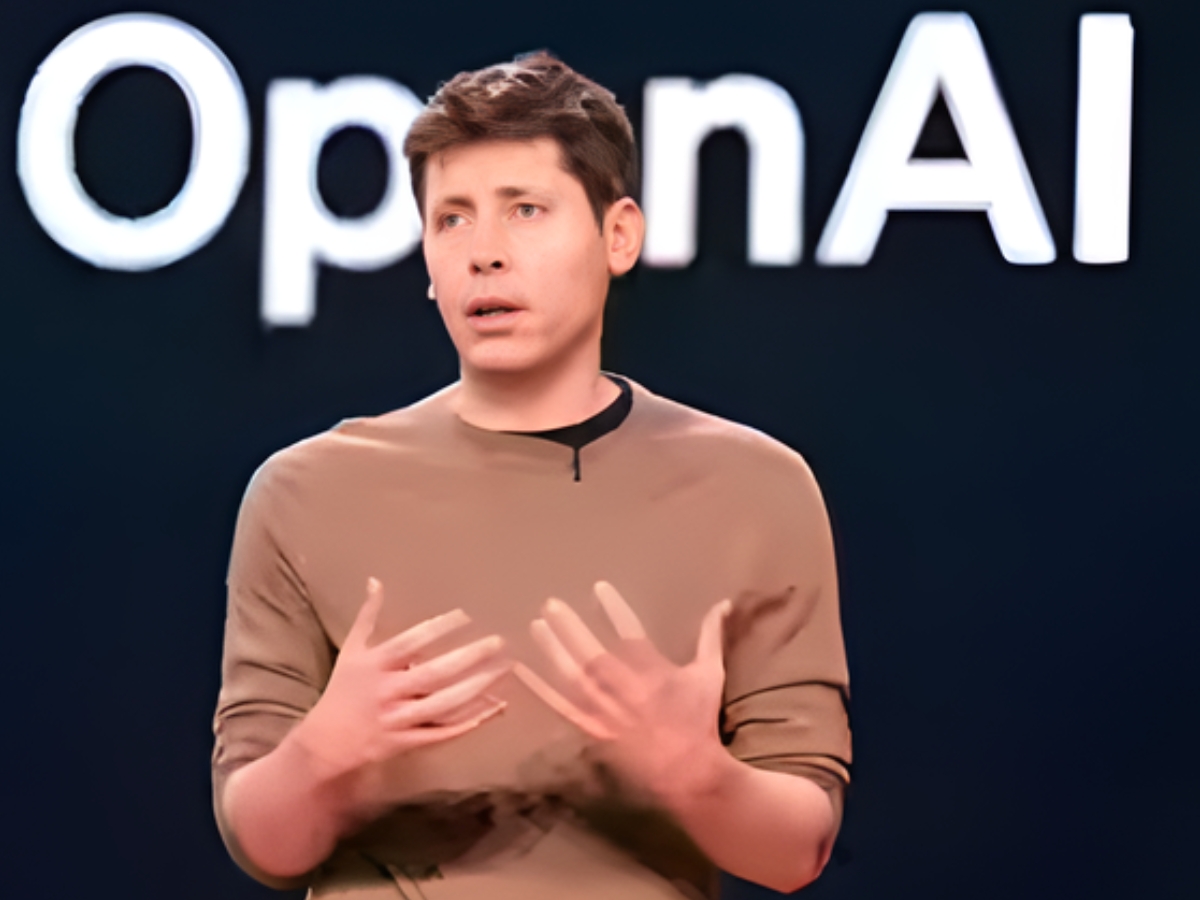
Despite the challenges, Altman struck a defiant tone in his memo. He told employees that OpenAI has “built enough strength as a company to weather great models shipping elsewhere,” emphasizing that focusing on superintelligence remains critically important.
He acknowledged the difficulty of juggling multiple roles simultaneously being the best research lab, the best AI infrastructure company, and the best AI platform and product company all at once.
“It s**ks that we have to do so many hard things at the same time,” Altman wrote, “but such is our lot in life. And I wouldn’t trade positions with any other company.”
OpenAI Teams Up with Foxconn in AI Infrastructure Race, Sam Altman Urges Focus Amidst “Rough Vibes” and Fierce Competition
OpenAI isn’t just sitting still while competitors advance. The company recently announced a partnership with Foxconn, Apple’s largest supplier, to design and manufacture AI data-center components in the United States. This collaboration will help develop future server systems, with OpenAI potentially purchasing Foxconn-made hardware down the line.
Altman framed this partnership in patriotic terms, calling it “a step toward ensuring the core technologies of the AI era are built here” in the US. He described AI infrastructure production as a “generational opportunity to reindustrialise America.”
Altman’s transparent communication with his team reveals the intense pressure facing OpenAI. The company that essentially kicked off the current AI boom with ChatGPT now finds itself in a genuine fight for supremacy.
The admission of “rough vibes” and potential single-digit growth suggests that the AI market is maturing faster than many expected, with established tech giants like Google leveraging their resources and infrastructure effectively.
For OpenAI employees, Altman’s message was clear: stay focused on the bigger picture. While competitors may ship impressive models, the real prize is superintelligence and that race is far from over. Whether OpenAI can maintain its momentum while managing financial pressures and fierce competition will define the next chapter of the AI revolution.