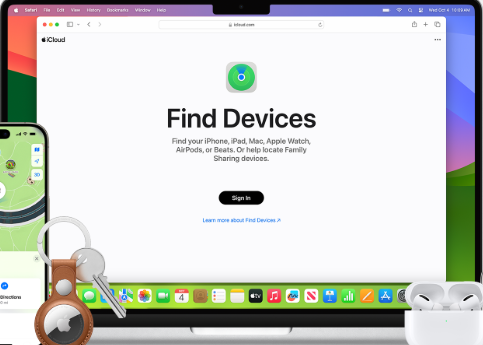
Losing a premium smartphone, wireless earbud, or travel briefcase used to mean a permanent loss of property unless the item was actively connected to a cellular network or a known Wi-Fi hotspot. Early device-recovery tools were strictly dependent on active internet pipelines and onboard Global Positioning System (GPS) hardware. If a device’s battery died, or if a thief toggled off the cellular antenna, the item effectively vanished from digital maps. Today, this limitation has been completely dismantled by massive, internet-scale crowdsourced systems. Investigating exactly how find my networks locate lost devices reveals a highly sophisticated integration of low-energy hardware protocols and advanced cryptography, turning billions of everyday consumer gadgets into a unified, worldwide search team.
This tracking ecosystem operates as a massive decentralized sensor grid. By utilizing Bluetooth Low Energy (BLE), Ultra-Wideband (UWB) radio frequencies, and secure point-to-point data relays, platforms like Apple’s Find My, Google’s Find My Device, and Samsung’s SmartThings Find can pinpoint offline hardware with remarkable accuracy. This process is executed without compromising the personal privacy or geographic history of the user. Understanding the underlying science of this network highlights a striking technical balance: using the phones of complete strangers to trace a lost item across a city, while keeping the identity and data of everyone involved entirely secure.
1. The Core Architecture: The Three Pillars of Crowdsourced Location
The transition from traditional, active-internet GPS pinging to modern crowdsourced locating relies on three foundational engineering layers. When a device goes offline or slips between couch cushions, these components work together seamlessly to broadcast its presence back to the owner.
1. Bluetooth Low Energy (BLE) Beaconing
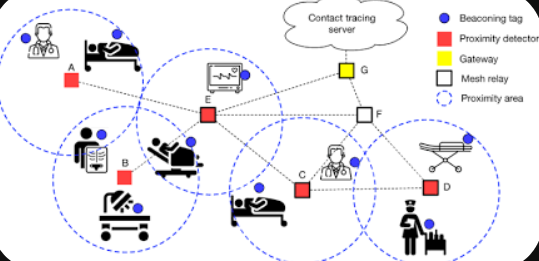
The primary baseline of modern tracking network operations is Bluetooth Low Energy (BLE), a specialized, low-power iteration of wireless technology designed to sip minuscule amounts of battery power. When an ecosystem-linked item such as an AirTag, a Chipolo finder, or a paired laptop, is marked as lost, its internal controller switches into a continuous, low-overhead broadcasting state.
Even if a device is completely powered down or lacks a cellular SIM card, its Bluetooth controller remains active on a hardware-subsystem level. The item continuously pulses a short, encrypted data packet known as a “beacon” into its immediate surrounding space, traveling outward roughly 30 to 100 feet in all directions.
2. The Passerby Relay (The Human Mesh)
The true power of the network relies on sheer volume. For example, Apple and Google each manage active, global networks comprising more than a billion active devices (smartphones, tablets, and smartwatches) carried by everyday users.
When a stranger walks past a lost briefcase, their active smartphone silently catches the encrypted BLE beacon emitting from the tracker. The passerby’s device does not flash a notification, interrupt their workflow, or show any visible indicator of the event. Instead, running quietly as a background OS service, the helper phone captures the signal strength (RSSI), matches it with its own onboard GPS chip to pull its current coordinate, and uploads that aggregated data package straight to the central cloud platform.
3. Asymmetric Cryptography and the Privacy Loop
The primary technical hurdle in building a crowdsourced tracking network is privacy protection. To prevent bad actors from using the platform to track people or intercept sensitive location data, tracking networks rely heavily on asymmetric cryptography, implementing an intricate dual-key system. Because the public key shifts to a completely new cryptographic variation every few minutes, an outside observer intercepting the BLE airwaves cannot track a user as they move through a city. Furthermore, because the central cloud servers only store the encrypted data bundle, the platform provider itself remains blind to the device’s true location. Only the owner’s master device possesses the corresponding private key required to decrypt the package, ensuring absolute data security across the entire pipeline.
2. Advanced Localized Trajectories: Moving from Proximity to Precision
Once the crowdsourced network successfully delivers an approximate GPS location coordinate to the owner’s map interface, the search phase transitions from macro-tracking down to micro-precision localization.
Ultra-Wideband (UWB) and Time-of-Flight Physics
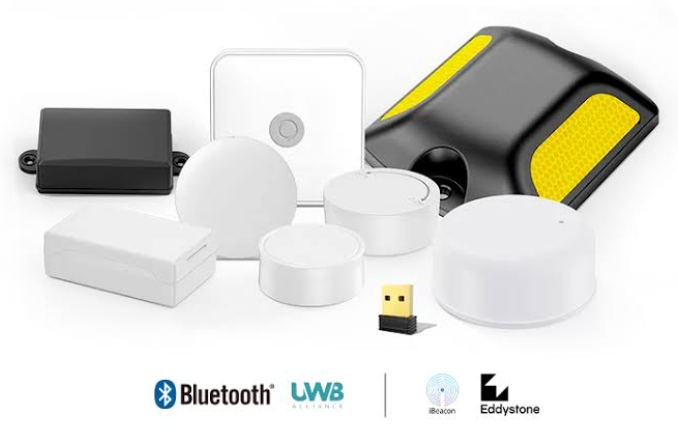
While standard Bluetooth can determine if a device is roughly near or far by measuring raw signal degradation, it cannot natively determine direction or exact distance. To solve this limitation, premium smart tags incorporate an Ultra-Wideband (UWB) wireless chip.
UWB operates on an entirely different set of physics, utilizing high-frequency radio waves spread across a wide spectrum. Instead of measuring signal power, UWB calculates Time-of-Flight (ToF) the precise nanosecond window it takes for a radio pulse to travel between the seeker’s phone and the lost object. Because radio waves travel at the absolute speed of light, calculating this time window allows the seeking device to map spatial distances down to a fraction of an inch.
Angle-of-Arrival (AoA) Directionality
Simultaneously, modern smartphones feature multiple, offset internal UWB antennas. When the lost item’s signal strikes the phone, the micro-pulses arrive at each internal antenna at slightly different times.
By running these minutely offset arrival times through an onboarding Phase-Difference of Arrival (PDoA) calculus, the phone’s interface can determine the exact vector angle of the source. This is what enables real-world features like directional search displays, showing a live arrow on the screen that physically guides the user directly to the object’s location.
3. Comparative Ecosystem Mechanics: Apple vs. Google vs. Samsung
While all major modern tech platforms rely on similar underlying principles of BLE beaconing and crowdsourced data relays, their real-world performance varies based on hardware density and ecosystem policies.
Tracking Grid Architecture and Performance Profiles
| System Attributes | Apple Find My Network | Google Find My Device Grid | Samsung SmartThings Find |
| Global Network Scale | Over 1.5 Billion active devices | Over 1.0 Billion active devices | ~400 Million active opt-in nodes |
| Privacy Configuration | Mandatory encryption baseline | Aggregated multi-device defaults | Opt-in security protocols |
| Micro-Location Hardware | U1 / U2 Custom Silicon (UWB) | Certified Third-Party UWB chips | Standardized UWB standards |
| Offline Performance | Excellent in urban and rural hubs | Highly dependent on urban density | Strong localized performance hubs |
The defining operational difference between Apple and Google’s respective frameworks centers on their default privacy thresholds. Apple’s Find My network treats every active iOS device as an active, automated relay by default, providing exceptional tracking density across both busy cities and remote rural environments.
Conversely, Google’s Find My Device network implemented an aggregation policy to protect user privacy. In its baseline configuration, a helper device will not upload a lost item’s location unless multiple independent Android devices detect the same beacon within a specific window of time. While this approach prevents individual tracking abuses in isolated settings, it can reduce tracking speeds in low-density rural areas compared to a single-relay system.
4. Technical Safeguards: Mitigating the Threat of Malicious Tracking
The creation of a highly sensitive network capable of tracking physical assets across global distances introduces an obvious, highly dangerous vulnerability: the risk of malicious stalking or unauthorized surveillance. To counter this threat, industry competitors have developed a unified security framework.
Unsolicited Tracking Notifications
If an unknown tracker is detached from its registered owner and moves continuously alongside an unauthorized user over time, the network recognizes the pattern as a potential stalking event.
The system tracks this by mapping the unknown device’s identification key against the geographic movement of the target’s smartphone. If a persistent match is confirmed over a set period, the target’s phone will issue a high-priority alert: “Item Found Moving With You.” The interface allows the user to play a sound on the hidden tag to find it, and provides clear instructions on how to physically disable the module.
Cross-Platform Security Alliances
Historically, tracking security was restricted by software ecosystems, meaning an AirTag could stalk an Android user without triggering an automatic software alert. To close this dangerous gap, Apple and Google formalized a cross-platform security partnership.
Modern mobile operating systems include unified background scanners that actively identify foreign trackers, ensuring that no matter who manufactured the tracking beacon, targets are immediately alerted to unauthorized surveillance, keeping the system safe for everyone.
The Future of Crowdsourced Infrastructure
Analyzing the mechanics of how find my networks locate lost devices highlights an important shift in how we interact with ambient technology. These networks have evolved past simple asset-recovery maps into a massive, highly secure computing layer that blankets the entire globe.
As low-power silicon design advances and cross-platform tracking alliances grow stronger, the physical risk of permanently losing valuable property is quickly becoming a thing of the past. By turning billions of separate consumer gadgets into a cooperative search team, modern technology has woven an invisible safety net across our cities, proving that our devices are strongest when they work together to protect our things.