CuePilot AI, a voice-first, AI-native platform designed for preschools and daycares, has raised $1.8 million in a pre-seed funding round, signalling growing investor confidence in the future of AI-powered early childhood education. The round was led by Ronnie Screwvala of Unilazer Ventures and upGrad, with participation from Eximius Ventures and Titan Capital.
The fresh capital will be used to deepen CuePilot’s voice and AI orchestration stack, ship integrations for priority global markets, and scale go-to-market efforts across India, the Middle East, and Southeast Asia, followed by an expansion into the United States, where average revenue per user (ARPU) and payments volume are significantly higher.
Credits: Entrackr
Tackling a Silent Crisis in Early Education
As dual-income households become the norm, demand for high-quality childcare and preschool education is rising sharply. However, behind the scenes, teachers are increasingly overwhelmed—not by children, but by administration.
Preschools generate vast amounts of data daily, spanning attendance, health logs, classroom photos, assessments, billing, and parent communication. Yet much of this information remains scattered across WhatsApp chats, spreadsheets, and outdated legacy software, making operations inefficient and error-prone.
CuePilot was built to address this exact gap—by eliminating screens from the classroom and putting voice at the centre of data capture.
How CuePilot’s Voice-First Platform Works
CuePilot positions itself as a full-stack preschool management system that automates nearly 80% of administrative work. Its core innovation lies in a voice-enabled AI that allows teachers to record short debriefs about classroom activities, student behaviour, or learning milestones.
These unstructured voice inputs are instantly converted into structured records, progress updates, and operational outputs using large language models (LLMs). The result: teachers stay focused on children instead of dashboards, while school leaders gain real-time visibility across academics, operations, admissions, and billing.
By turning everyday classroom narratives into institutional memory, CuePilot unlocks a level of personalisation and insight that has historically been missing from early education.
Built by Founders Who Know the Classroom
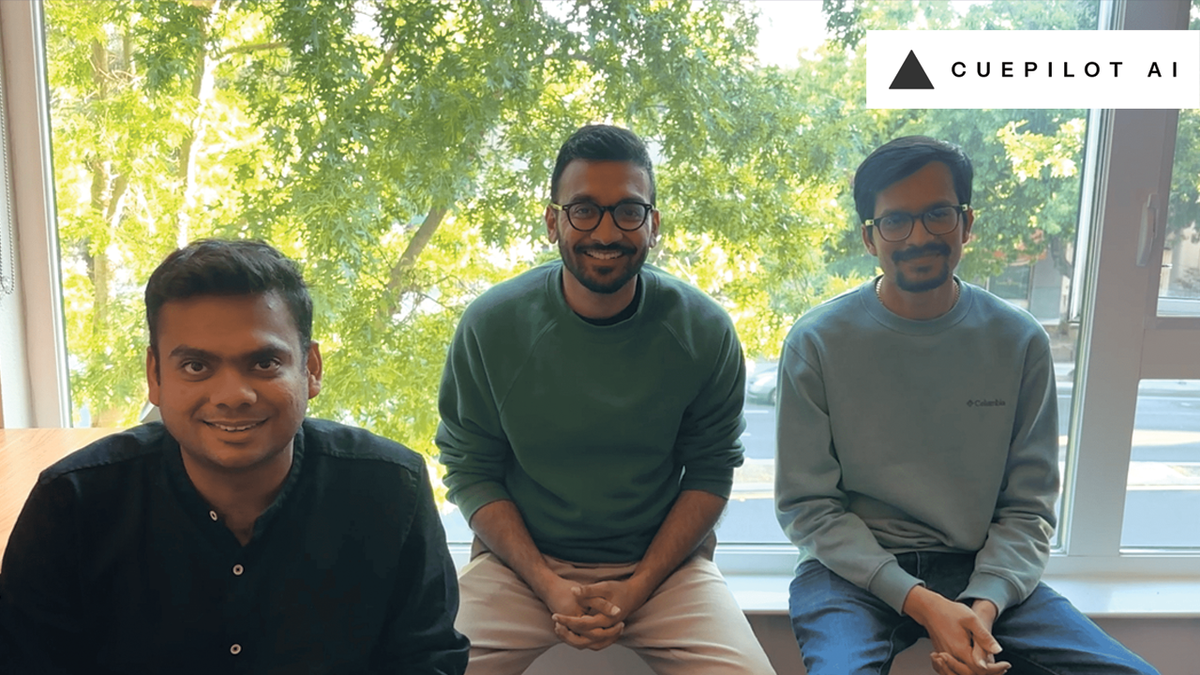
CuePilot’s approach is deeply shaped by its founding team’s on-ground experience. Co-founder and CEO Ankur Agarwal previously launched Arthshala, a Reggio-inspired preschool in Kolkata, giving him first-hand exposure to the operational challenges faced by educators.
“Preschool teachers have an exceptionally challenging job,” Agarwal says. “Much of their workday is spent on activities outside the classroom—which is unfortunate. We built CuePilot to automate 80% of that work and give them their time back, so they can spend time with children in the classroom.”
This practitioner-led perspective has helped CuePilot build a product that aligns closely with teachers’ natural workflows.
Why Investors Are Betting Big on Voice AI
Investors see CuePilot’s voice-first architecture as a category-defining shift in how education technology is built.
“Voice capture and LLM reasoning turn unstructured classroom narratives into institutional memory,” said Preeti Sampat, Partner at Eximius Ventures. “That is the unlock in early childhood, where data is rarely captured and personalisation is everything.”
Ronnie Screwvala echoed this view, calling voice the most inclusive and scalable interface for early learning environments. Titan Capital also highlighted CuePilot’s early traction and the founders’ clarity on an underserved but massive market.
Credits: Asia Education Review
Scaling Globally in a $676 Bn Market
CuePilot currently serves 130+ schools across India and Southeast Asia. Over the next 12–18 months, the company aims to onboard 1,000 schools globally, with aggressive expansion into the US market.
This growth ambition aligns with broader industry trends. The global early years education market is projected to reach $676.7 billion by 2030, making it one of the most foundational—and under-digitised—segments of education.
Early customers report faster teacher onboarding, improved parent communication, and several hours of administrative time saved each week—proof that voice-first AI may finally give educators what they need most: time back with children.