Given our highly connected era, most actions performed over the Internet depend on a digital identity. You are required to provide a digital identity when logging into your email accounts, purchasing online, performing transactions in mobile banks, accessing public services provided by government agencies, or signing into corporate applications.
The digital identity explained as an easy-to-grasp concept, refers to the unique information that serves as evidence for your identity in the digital environment. Digital identity goes way beyond a username and password combination, as it encompasses data, credentials, and identifiers which make it possible for the digital environment to recognise you.
In times when more and more services are provided online, digital identity has evolved into one of the crucial aspects of cybersecurity, privacy, and user experience. Corporations use it to secure their systems, governments to deliver public services, and ordinary people in their daily life activities.
Here is your ultimate guide to digital identity explained in simple terms, which includes how it works, why it is essential, its types, advantages, difficulties, and prospects.
What Is Digital Identity?
Digital identity explained starts with a simple definition.
It is an aggregate of data associated with an individual, machine, application, or company that enables computer systems to recognize and authenticate the entity.
In place of identifying an individual by their facial appearance or documentation, digital systems use digital attributes.
The list of these attributes can comprise:
- Username
- Email id
- Phone number
- Password
- Digital ID issued by the government
- Biometrics
- Digital certificates
- Security tokens
- Device identifiers
- Behavioral data
All this information constitutes a unique digital identity.
For instance, while accessing your online banking website, the system checks your username, password, one-time password (OTP), and also your fingerprint or facial recognition. All this constitutes part of your digital identity.
Without digital identities, secure online services will not exist.
Why Digital Identity Matters?
Billions of people and machines use the Internet on a daily basis.
It is imperative for organizations to know precisely who it is that is seeking entry before any sensitive information is made available to anyone.
It can help address the following questions:
- Is this actually the account holder?
- Is this person authorized to enter?
- Is this software legitimized?
- Is this machine authenticated?
- Is this login attempt abnormal?
If not for identity verification, then it would be very easy for the cybercriminals to access confidential information, financial systems, health care records, and other business assets.
That’s why it forms the core of contemporary cybersecurity practices.
Digital Identity Explained Through a Simple Example
Think about walking into an office building.
Your identification card is checked by the security guard to let you in.
The online world is the same in terms of security.
In place of a physical identification card, the online world will check your digital ID through passwords, biometrics, and security tokens.
If all is well, you will gain access.
If anything is fishy, further authentication may be needed.
This takes seconds when you log in to an application.
What Makes Up a Digital Identity?
Understanding Digital Identity requires understanding the elements that make up to the whole.
Unique Identifiers
This refers to something that uniquely identifies a particular individual or system.
This includes:
- Email Address
- Employee ID Number
- Customer ID Number
- Username
- Device ID
-
Authentication Credentials
These prove ownership of the identity.
Common credentials include:
- Passwords
- PINs
- One-time passwords
- Security keys
- Biometrics
- Smart cards
Modern systems often combine several authentication methods for better security.
Personal Attributes
Attributes provide additional information about the identity.
Examples include:
- Name
- Date of birth
- Address
- Phone number
- Job title
- Department
- National ID number
Organizations store only the information necessary for their services.
Behavioral Data
Many modern identity platforms also analyze behavior.
Examples include:
- Typing speed
- Mouse movement
- Login locations
- Device usage
- Login times
Behavioral analytics can detect unusual activity that may indicate account compromise.
Types of Digital Identity

Digital identity is not limited to people.
Several types exist.
Human Digital Identity
This represents individual users.
Examples include:
- Employee accounts
- Student IDs
- Customer accounts
- Online banking profiles
- Government digital IDs
These identities allow people to securely access online services.
Machine Identity
Devices also need identities.
Examples include:
- Servers
- IoT devices
- Cloud applications
- APIs
- Virtual machines
- Software services
Machine identities usually rely on digital certificates instead of passwords.
As cloud computing grows, machine identities now outnumber human identities in many organizations.
Federated Identity
A federated identity allows users to access multiple applications using one trusted login.
Instead of creating separate accounts for every service, users authenticate once.
Single Sign-On (SSO) is one of the most common examples.
This improves convenience while reducing password fatigue.
How Digital Identity Works
Understanding digital identity explained also means understanding the authentication process.
The process usually follows these steps.
Step 1: Identity Creation
A user creates an account.
The organization stores identity information securely.
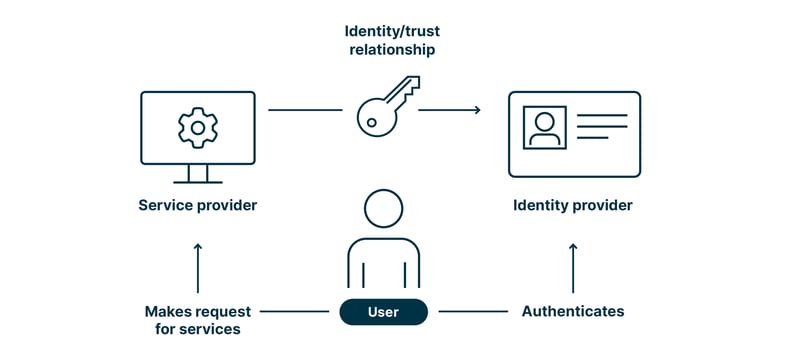
Step 2: Authentication
The user attempts to log in.
The system checks credentials such as passwords, fingerprints, or security keys.
Step 3: Authorization
After authentication succeeds, the system checks permissions.
Different users receive different levels of access.
For example:
- Employees access company applications.
- Managers approve expenses.
- Administrators manage systems.
Authentication confirms identity.
Authorization determines what the user can do.
Step 4: Monitoring
Modern identity systems continuously monitor activity.
They look for unusual behavior such as:
- Impossible travel
- Unknown devices
- Multiple failed logins
- Unexpected access requests
This helps detect attacks early.
Digital Identity and Identity Access Management (IAM)
Identity and Access Management (IAM) is the framework that manages digital identities across an organization.
IAM systems perform tasks such as:
- Creating user accounts
- Resetting passwords
- Managing permissions
- Enforcing multi-factor authentication
- Recording login activity
- Removing access when employees leave
Large organizations often manage millions of digital identities through IAM platforms.
Without IAM, access control becomes difficult and security risks increase.
Benefits of Digital Identity
Stronger Security
Digital identities help protect systems from unauthorized access.
Organizations can verify users before granting access to valuable resources.
Better User Experience
Users can log in faster with:
- Single Sign-On
- Passwordless authentication
- Biometrics
This reduces frustration while improving security.
Reduced Fraud
Financial organizations employ digital ID verification solutions for the detection of identity fraud and fraud.
State-of-the-art solutions can recognize any suspicious activity prior to causing any harm.
Regulatory Compliance
A variety of sectors is obliged to meet the requirements of privacy and security policies.
Digital identity solutions will be useful for organizations to manage the access to their data and log all actions.
Remote Access
Remote employment relies greatly on trusted digital identities.
Employees can safely access company resources regardless of their location.
Common Authentication Methods
Different systems use different authentication methods.
Passwords
Passwords remain common but are vulnerable to phishing and credential theft.
Organizations now encourage stronger alternatives.
Multi-Factor Authentication (MFA)
MFA requires two or more verification methods.
Examples include:
- Password plus OTP
- Password plus fingerprint
- Password plus hardware security key
MFA greatly reduces account compromise.
Biometrics
Biometric authentication includes:
- Fingerprints
- Face recognition
- Iris scans
- Voice recognition
These methods improve convenience while increasing security.
Passwordless Authentication
Many organizations are moving toward passwordless login.
Instead of passwords, users authenticate using:
- Security keys
- Mobile authentication apps
- Biometrics
- Device-based authentication
Passwordless systems reduce phishing risks.
Challenges of Digital Identity
Although digital identities improve security, challenges remain.
Identity Theft
Attackers constantly attempt to steal digital identities.
Common methods include:
- Phishing emails
- Malware
- Social engineering
- Credential stuffing
Protecting digital identities requires both technology and user awareness.
Privacy Concerns
Organizations collect significant amounts of personal information.
Users want transparency regarding:
- What data is collected
- Why it is collected
- How it is stored
- Who can access it
Strong privacy policies help build trust.
Data Breaches
If identity databases are compromised, attackers may gain access to sensitive information.
Encryption, monitoring, and strict access controls reduce this risk.
Identity Sprawl
Many users have hundreds of online accounts.
Managing so many identities becomes difficult.
Organizations also struggle to manage employee identities across multiple cloud platforms.
Digital Identity in Everyday Life

Digital identities support many daily activities.
Online Banking
Banks verify customers before allowing access to accounts or approving transactions.
Healthcare
Patients use digital identities to access medical records, schedule appointments, and communicate with healthcare providers.
Government Services
Many governments now offer digital identity systems for:
- Tax filing
- License renewals
- Benefit applications
- Passport services
E-commerce
Retailers use digital identities to:
- Process payments
- Store shipping information
- Recommend products
- Prevent fraud
Education
Schools and universities provide digital identities for:
- Student portals
- Online classes
- Digital libraries
- Examination systems
Digital Identity and Artificial Intelligence
Artificial intelligence is changing identity verification.
AI can analyze:
- Facial recognition
- Voice recognition
- Fraud patterns
- Behavioral analytics
- Risk scores
Instead of relying only on passwords, AI helps identify suspicious activity in real time.
However, organizations must also address concerns about algorithm bias, transparency, and privacy.
The Rise of Decentralized Digital Identity
Centralized systems are the typical method used to keep user data in traditional identity systems.
Another system is the decentralized digital identity system.
Some features of decentralized digital identity include:
- Individuals manage their own credentials.
- User information is kept in secure digital wallets.
- Organizations can check credentials without keeping too much personal information on hand.
This allows for more control over personal information as well as the reduction in risk of a data breach.
Decentralized digital identity is expected to become increasingly popular in the coming decade.
Best Practices for Protecting Your Digital Identity
Individuals can strengthen their digital identity by following several simple practices.
- Use unique passwords for every account.
- Enable multi-factor authentication whenever possible.
- Avoid clicking suspicious links.
- Keep devices updated.
- Review account activity regularly.
- Use password managers to store credentials securely.
- Limit the personal information shared online.
- Lock lost or stolen devices immediately.
Small habits can significantly reduce identity-related risks.
The Future of Digital Identity
It is something which continues to evolve.
Several trends are shaping the future:
- Passwordless authentication
- AI-powered identity verification
- Biometric authentication
- Decentralized identity systems
- Continuous authentication
- Stronger privacy regulations
- Zero Trust security architectures
Organizations are shifting from verifying identity only during login to continuously validating trust throughout each session.
This approach provides stronger protection against modern cyber threats.
Final Thoughts
The definition of digital identity, in essence, can be reduced to a question of trust in the digital sphere. Everything that takes place online hinges on the need to prove that whoever or whatever tries to gain access is who he claims to be.
The more advanced cyber threats get and the wider the use of digital services becomes, the more important the role of digital identity will play in the spheres of cybersecurity, privacy, and daily life. To know how digital identities operate is useful both to safeguard oneself and to develop secure systems.
Whatever your background whether you are a consumer, an IT specialist, an executive, or a student studying digital identity explained will help you navigate the digital world of today.