• Send Us A Tip
  • Calling all Tech Writers
  • Advertise
Monday, July 13, 2026
  • Login
TechStory
  • News
  • Crypto
  • Gadgets
  • Memes
  • Gaming
  • Cars
  • AI
  • Startups
  • Markets
  • How to
No Result
View All Result
  • News
  • Crypto
  • Gadgets
  • Memes
  • Gaming
  • Cars
  • AI
  • Startups
  • Markets
  • How to
No Result
View All Result
TechStory
No Result
View All Result
Home Tech

Encyclopedia Britannica Files Copyright Suit Against OpenAI

by Sneha Singh
March 19, 2026
in Tech
Reading Time: 3 mins read
0
Encyclopedia Britannica Files Copyright Suit Against OpenAI
TwitterWhatsappLinkedin

The publisher of an online encyclopedia, Encyclopaedia Britannica, and its subsidiary Merriam-Webster have filed a lawsuit against OpenAI. The lawsuit was filed on March 13, 2026, in the United States District Court for the Southern District of New York. It concerns how OpenAI trains its models, including GPT-4 and other models used for ChatGPT.

You might also like

Why Your Browser Uses So Much RAM?

Electroninks Is Betting on India’s Semiconductor Moment and It Is Bringing the Right Materials to Do It

AI Startup Mercor in Talks to Double Valuation to $20 Billion as AI Training Revenue Hits $2 Billion Run Rate

The Legal Battle Over AI “Memorization” and Digital Scrutiny

The lawsuit concerns the concept of “memorization.” The lawsuit alleges that GPT-4 has the ability to reproduce parts of Britannica’s content with little or no modification. In some instances, the text generated by GPT-4 is almost identical to the original text. The lawsuit claims that this goes beyond patterns and into copying.

The lawsuit also alleges that this has harmed Britannica’s business. This harms Britannica’s business. The lawsuit claims that this is direct competition based on stolen work.

The other important claim is related to the use of trademarks. Britannica says that ChatGPT sometimes refers to them as a source in a way that implies endorsement and partnership. They claim that this is misleading. They say that OpenAI has not been given permission to imply that Britannica is their source in this way.

As evidence, Britannica provides examples of ChatGPT’s responses. These are examples of text that is almost identical to Britannica’s published work. They describe their database as the result of years of work done by experts. They emphasize that this is not trivial and easily replaceable content.
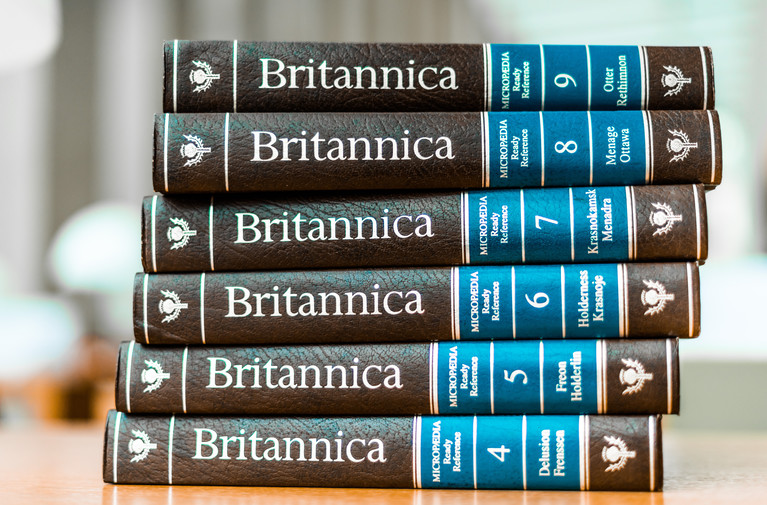
Encyclopedia Britannica Files Copyright Suit Against OpenAI
Credits: Law.com

The lawsuit is seeking different kinds of remedies. Britannica is seeking financial compensation. They are also seeking that any profits made on the basis of the misuse be returned. In addition, the publishers are seeking that the court prevent OpenAI from using their content in the future. This could have implications for the creation of large language models. 

No statement has been made by OpenAI so far on this case. This is as of March 17, 2026.

The lawsuit alleges that OpenAI used close to 100,000 pieces of content from Encyclopaedia Britannica and Merriam-Webster. The content includes encyclopedia articles and dictionary definitions. The lawsuit alleges that OpenAI used this content without permission.

Britannica vs. OpenAI and the Battle for Content Rights

This lawsuit is part of a larger trend. Publishers, news groups, and content owners have begun to take legal action against AI companies. Many believe that using copyrighted content for model training without permission is a clear infringement of law. However, AI companies often claim fair use and transformation.

The law has not yet ruled definitively. Judges still argue about whether model training constitutes copying. Another area of confusion is whether AI model outputs that resemble their source material constitute infringement.

Britannica has filed similar lawsuits before. In fact, around six months ago, it filed a lawsuit against another AI company, Perplexity AI, for similar reasons. This is clear evidence of their intentions. The company is taking a strong stance against using its content for model training without permission.

The outcome of this particular case could be an important precedent. If the court sides with Britannica, there could be more regulation of data for AI companies. This could mean that these companies could be restricted on what they could use for their training. If OpenAI succeeds, it could further support their argument that their methods of training are legal.

The current situation shows an emerging conflict. On one hand, there are content creators who put their own work into their products. On the other, there are AI programs that require access to large amounts of data to work. The law will have to balance these interests, and this could define these industries for years to come.


Tags: AI ProgramsArtificial IntelligenceBritannicaChatGPTEncyclopediaOpenAI
Tweet54SendShare15
Previous Post

Inside North Korea’s Covert IT Workforce: How Fake Tech Workers Are Infiltrating Global Companies

Next Post

Teens Sue xAI Over Hyper-Sexualized Grok Generations

Sneha Singh

Sneha is a skilled writer with a passion for uncovering the latest stories and breaking news. She has written for a variety of publications, covering topics ranging from politics and business to entertainment and sports.

Recommended For You

Why Your Browser Uses So Much RAM?

by Sneha Singh
July 13, 2026
0
Why Your Browser Uses So Much RAM?

Have you ever launched Task Manager or Activity Monitor to discover that your browser is using several gigabytes of RAM? You’re not alone! The question of why your...

Read more

Electroninks Is Betting on India’s Semiconductor Moment and It Is Bringing the Right Materials to Do It

by Rohan Mathawan
July 13, 2026
0
Electroninks Is Betting on India’s Semiconductor Moment and It Is Bringing the Right Materials to Do It

India's semiconductor ambitions have attracted chip designers, fab investors, and packaging specialists from across the globe. But the quieter story, the one that actually determines whether a packaging...

Read more

AI Startup Mercor in Talks to Double Valuation to $20 Billion as AI Training Revenue Hits $2 Billion Run Rate

by Rounak Majumdar
July 13, 2026
0
AI Startup Mercor in Talks to Double Valuation to $20 Billion as AI Training Revenue Hits $2 Billion Run Rate

Mercor, a San Francisco-based AI training data startup founded in 2023 by three former high school debate teammates, is in early talks to raise a new funding round...

Read more
Next Post
Teens Sue xAI Over Hyper-Sexualized Grok Generations

Teens Sue xAI Over Hyper-Sexualized Grok Generations

Please login to join discussion

Techstory

Tech and Business News from around the world. Follow along for latest in the world of Tech, AI, Crypto, EVs, Business Personalities and more.
reach us at info@techstory.in

Advertise With Us

Reach out at - info@techstory.in

Aviator Game India 2026

BROWSE BY TAG

#Crypto #howto 2024 acquisition AI amazon Apple Artificial Intelligence bitcoin Business China cryptocurrency e-commerce electric vehicles Elon Musk Ethereum facebook funding Gaming Google India Instagram Investment ios iPhone IPO Market Markets Meta Microsoft News OpenAI samsung Social Media SpaceX startup startups tech technology Tesla TikTok trend trending twitter US

© 2025 Techstory.in

No Result
View All Result
  • News
  • Crypto
  • Gadgets
  • Memes
  • Gaming
  • Cars
  • AI
  • Startups
  • Markets
  • How to

© 2025 Techstory.in

Welcome Back!

Login to your account below

Forgotten Password?

Retrieve your password

Please enter your username or email address to reset your password.

Log In
Are you sure want to unlock this post?
Unlock left : 0
Are you sure want to cancel subscription?