Bengaluru-based insurtech startup Plum has raised ₹193 crore in a fresh Series B funding round, led by Peak XV Partners, with participation from Tanglin Venture Partners and GMO Venture Partners. The fundraise signals growing investor confidence in the evolving employee health benefits ecosystem, where technology and experience are becoming key differentiators.
In this article, we will delve into Plum’s latest fundraise, its evolving business model, and how it is reshaping the future of employee health benefits in India.

Credits: Moneycontrol
Building a New-Age Insurance Infrastructure
Founded in 2019 by Abhishek Poddar and Saurabh Arora, Plum has positioned itself as more than just an insurance provider. The company is building a full-stack employee health benefits platform that integrates insurance with healthcare services, making it easier for companies to support their workforce.
Today, Plum serves over 6,000 organisations, ranging from fast-growing startups to large enterprises such as CRED, Meesho, PhonePe, and Swiggy. Its platform currently covers more than 600,000 employees across India, highlighting its rapid adoption in a competitive market.
Where the Money Will Go
The fresh capital infusion will be used strategically to deepen Plum’s technology backbone and expand its product offerings. A key focus area will be strengthening AI-driven claims processing systems, which the company believes is central to improving customer experience.
Additionally, Plum plans to:
- Enhance enterprise-grade security infrastructure
- Invest in talent acquisition across tech and operations
- Expand integrations with HR and payroll systems
- Build a broader healthcare stack including preventive care, primary care, mental wellness, and telehealth
This approach reflects a shift from being just an insurance intermediary to becoming a comprehensive health ecosystem for employees.
The Claims Experience as a Differentiator
At the heart of Plum’s strategy lies one clear focus: claims experience. According to CEO Abhishek Poddar, the company has prioritised this from day one, recognising that insurance value is truly realised only during claims.
That focus is already yielding measurable outcomes. Since its inception, Plum has processed over 500,000 claims. It has also significantly improved operational efficiency, reducing median hospital discharge times to just 47 minutes and bringing reimbursement turnaround time down to 1.5 days.
These metrics are critical in an industry often plagued by delays and friction, and they position Plum as a customer-first player in the insurtech space.
A Shift Towards Sustainable Growth
Plum’s latest fundraise comes at an interesting time. The company has reported its first full year of EBITDA and cash flow profitability, marking a transition from growth-at-all-costs to sustainable scaling.
In FY25, Plum reported nearly ₹70 crore in revenue and achieved six months of EBITDA profitability. This financial discipline stands out in a sector where many startups are still navigating the path to profitability.
The company had previously raised $15 million in its Series A round in 2021, backed by investors including Tiger Global, Peak XV’s Surge, Tanglin Venture Partners, Incubate Fund, and Gemba Capital.
Riding the Wave of Workplace Wellness
The timing of Plum’s growth aligns with a broader shift in how companies view employee wellbeing. Post-pandemic, organisations are increasingly prioritising comprehensive health benefits—not just as a perk, but as a strategic necessity for talent retention and productivity.
Investors are taking note of this trend. GV Ravishankar highlighted that Plum’s strong focus on claims efficiency and customer experience gives it a competitive edge as enterprises look for reliable and seamless insurance solutions.
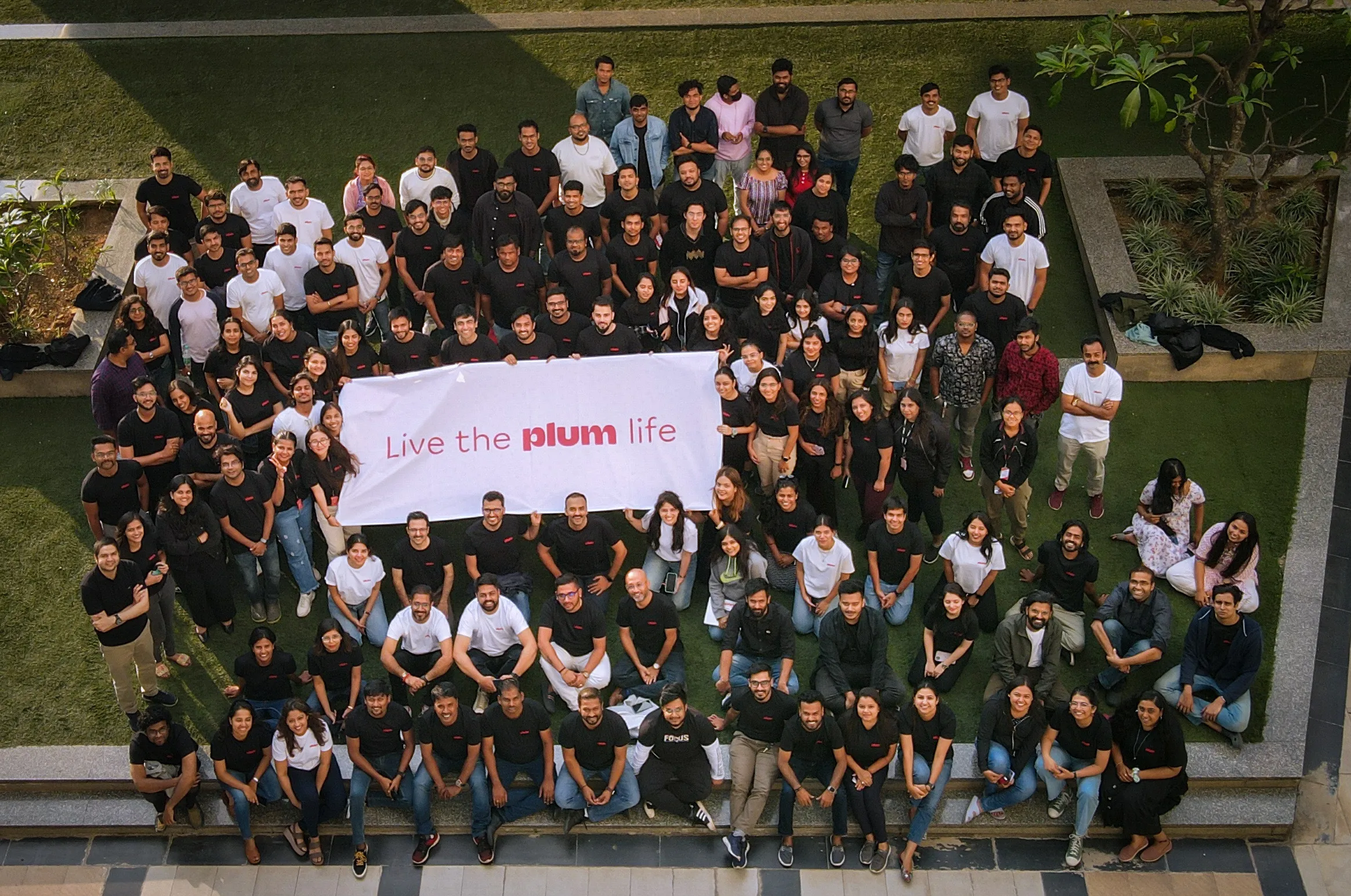
Credits: Tech in Asia
What Lies Ahead
With fresh capital in hand and a clear product roadmap, Plum is now looking to expand its footprint in India’s rapidly evolving insurtech market. By combining insurance with preventive and primary care services, the company aims to redefine how employee health benefits are delivered.
If execution matches ambition, Plum could emerge as a category-defining platform—bridging the gap between insurance, healthcare, and workplace wellbeing in a way that few players currently do.