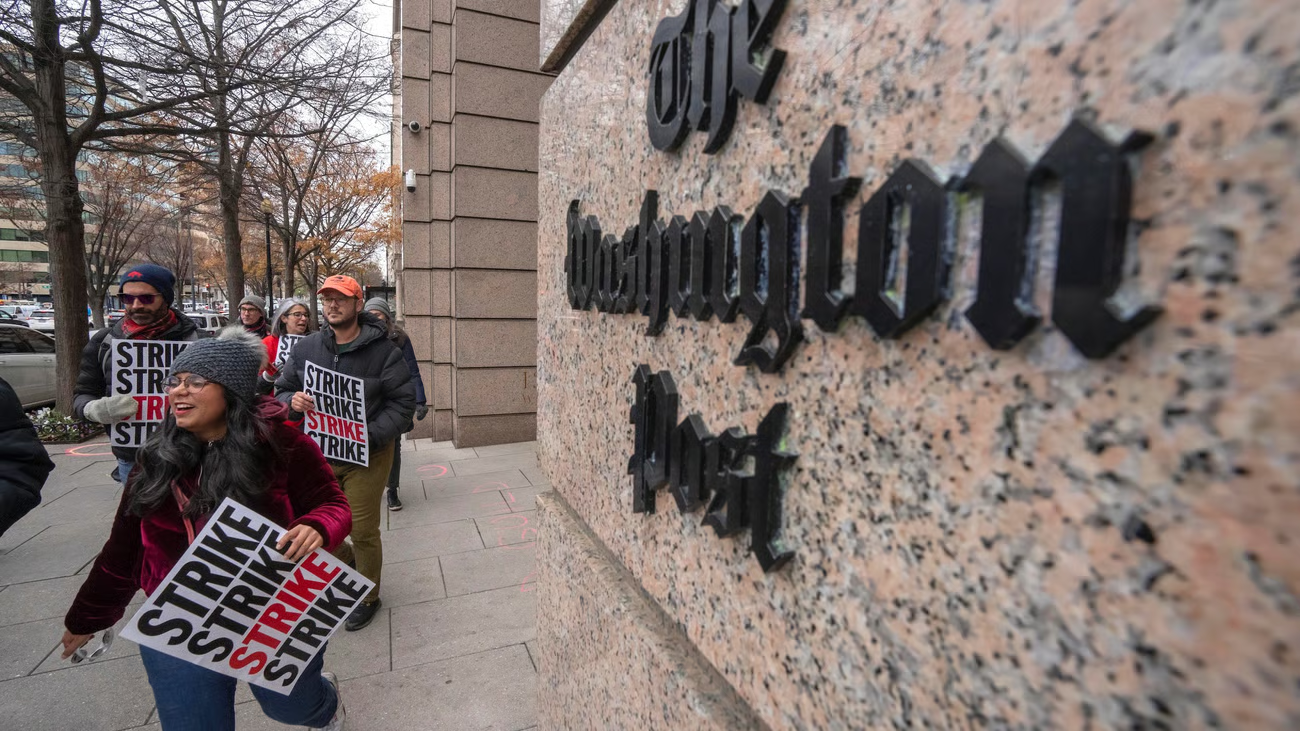
A class-action lawsuit has been filed against The Washington Post on charges that the newspaper exploited subscriber data to overcharge loyal subscribers who use the service.
Chelsea Blink, a subscriber, filed the lawsuit in Washington D.C., accusing the newspaper of collecting personal information from its customers. This information has allegedly been collected to predict how much each customer was willing to spend on his or her subscription.
The practice is believed to have emerged after the acquisition of the newspaper by Jeff Bezos in the year 2013 at a cost of $250 million. The newspaper allegedly gathered data through customers’ phones, tablets, and computers. After analyzing the information gathered, the willingness of each subscriber to pay higher fees was predicted.
Loyal subscribers are believed to have suffered greatly from the practice. Instead of getting any reward from their continued use of the services offered by The Washington Post, long-time users allegedly ended up paying more than necessary as a result of the increased knowledge about their habits.
“The more loyal a reader became, the more data The Post could gather to estimate how much more that person might tolerate paying at renewal,” the lawsuit states.
Lawsuit Accuses Washington Post of “Surveillance Pricing” in Subscriber Renewal Scheme
Blink claims that this pricing system amounted to “surveillance pricing,” a term used to describe the practice of adjusting prices based on personal data collected about customers. The lawsuit argues that such conduct violates consumer protection laws in Washington, D.C.

The complaint seeks statutory damages of at least $1,500 for each affected subscriber. It also requests punitive damages and reimbursement of legal fees.
The allegations gained attention earlier this year after reports suggested that some Washington Post subscribers received notices explaining that their renewal prices had been determined by an algorithm using personal data. According to reports, these disclosures appeared after a New York law required greater transparency about automated pricing systems.
The lawsuit claims that the newspaper would not have revealed the practice without legal pressure. It alleges that readers were unaware their personal information could influence the price they were offered.
The Washington Post Faces Legal and Public Challenges
A case mentioned in the lawsuit relates to a subscriber allegedly noticing an increase in the cost of renewal from $170 to $260. After canceling their subscription, they went on to read a Washington Post article online and obtained a discount subscription based on the lower annual cost.
Another example cited by the plaintiff concerns online forum conversations involving subscribers getting vastly differing prices for a subscription. A certain user received an offer priced at $60, whereas another was charged much higher fees for the same type of subscription.
Such examples constitute a crucial piece of evidence in the case. The complaint suggests that individual readers receive prices based not on market forces but their personal information instead.
So far, the Washington Post has not made any comments regarding the issue. According to the available reports, officials of the newspaper did not respond to the request for a comment right after the lawsuit was filed.
It is important to emphasize that the legal action comes at a particularly challenging time for the publication. Once considered one of the most powerful news organizations in the country, The Washington Post has been facing a number of scandals and other issues lately.
Firstly, the newspaper suffered from the subscriber decrease after Bezos denied his publication the right to endorse a particular presidential candidate for the 2024 election. According to the opponents of such a step, the publisher had changed the policy of endorsements.
Secondly, the subscriber decrease was also linked to the change in the newspaper’s opinion section. Bezos announced that the content of the opinion section would center around the topics like individual freedom and free market economy, thus provoking dissatisfaction from some of the readers.
The Washington Post Faces Class Action Lawsuit Over Personalized Pricing Allegations
At the same time, financial problems have been bothering the newsroom as well. As reported earlier this year, the company fired hundreds of employees as part of the restructuring process.
The latest suit presents yet another problem for the newspaper as well as the owner. In this case, there is an ongoing discussion of the issue related to companies’ using of customer data as well as personalized pricing practices being unethical or illegal.
The proponents of personalized pricing emphasize that businesses have always been adjusting their prices based on market changes and customers’ demands. However, opponents state that such an approach may lead to a situation where the most loyal clients will be charged more simply because the business thinks that the clients are able to afford it.
Ultimately, the court should consider whether there is anything illegal regarding these allegations and whether they are sufficient to continue the process as a class action lawsuit. However, at this point, these issues are mere allegations, and The Washington Post will have an opportunity to defend itself.