
Family offices have quietly become some of the most influential players in global finance. While venture capital firms, private equity funds, and hedge funds often dominate headlines, family offices operate behind the scenes, managing the wealth of some of the world’s richest families and increasingly shaping investment trends across industries.
From preserving generational wealth to backing startups and acquiring businesses, family offices have evolved into sophisticated financial institutions. But what exactly is a family office, how does it work, and why are they becoming increasingly important in today’s investment landscape?

Credits: Deserv
What Is a Family Office?
A family office is a private wealth management entity established to oversee the financial affairs of a wealthy individual or family. Unlike traditional wealth management firms that serve multiple clients, a family office is dedicated to managing the assets, investments, taxes, estate planning, and personal financial needs of a single family or a small group of related families.
The primary goal of a family office is not merely to generate returns but to preserve and grow wealth across generations while managing risks and ensuring a smooth transfer of assets.
Think of a family office as a private company whose sole purpose is to manage a family’s financial empire.
Many billionaire families around the world—including business dynasties, technology entrepreneurs, and industrialists—operate family offices to maintain control over their wealth and investment decisions.
Why Family Offices Exist
Managing substantial wealth is significantly more complex than managing a typical investment portfolio.
Ultra-high-net-worth families often own diverse assets, including:
- Public market investments
- Private companies
- Real estate portfolios
- Venture capital investments
- Art collections
- Luxury assets
- Philanthropic foundations
- International holdings
Coordinating these assets requires specialized expertise across multiple disciplines.
Family offices help centralize decision-making and provide a structured approach to wealth management. They can oversee everything from investment strategies and tax planning to succession planning and family governance.
For wealthy families, the challenge is not simply earning money—it is ensuring that wealth survives for generations.
The History of Family Offices
The concept of family offices dates back centuries.
One of the earliest examples is the family office established by the House of Morgan in the 19th century. Wealthy European aristocratic families also maintained private teams to manage estates, investments, and financial affairs.
However, the modern family office model gained prominence in the United States during the industrial era when business magnates accumulated vast fortunes through railroads, steel, oil, and banking.
As wealth creation accelerated over the decades, particularly in technology and entrepreneurship, family offices evolved from simple administrative units into sophisticated investment organizations.
Today, many family offices operate similarly to institutional investment firms, employing experienced professionals from investment banks, private equity firms, hedge funds, and consulting companies.

Credits: FundCount
Types of Family Offices
Family offices generally fall into two major categories.
Single-Family Office (SFO)
A Single-Family Office serves one wealthy family exclusively.
It provides highly customized services tailored to the family’s unique needs and objectives.
Advantages include:
- Complete privacy
- Full control over investments
- Personalized financial planning
- Dedicated staff
However, operating an SFO can be expensive. Annual operating costs can run into millions of dollars, making this model practical only for families with substantial wealth.
Multi-Family Office (MFO)
A Multi-Family Office serves multiple wealthy families while offering many of the same services as a Single-Family Office.
By sharing resources and expertise across several clients, MFOs reduce costs while still delivering sophisticated wealth management solutions.
This structure is becoming increasingly popular among entrepreneurs and wealthy families who seek professional management without the expense of building a dedicated office.
Core Functions of a Family Office
Modern family offices provide a broad range of services that extend far beyond investing.
Investment Management
This is often the central function of a family office.
Investment teams manage portfolios that may include:
- Stocks and bonds
- Private equity
- Venture capital
- Real estate
- Infrastructure
- Alternative assets
The objective is to create a diversified portfolio aligned with the family’s long-term goals.
Tax Planning
Taxes can significantly impact wealth preservation.
Family offices work with tax experts to structure investments efficiently, reduce liabilities, and comply with regulations across multiple jurisdictions.
Estate and Succession Planning
One of the biggest challenges facing wealthy families is transferring wealth to future generations.
Family offices help design trusts, wills, and governance structures that ensure assets are distributed according to the family’s wishes.
Risk Management
Protecting wealth is just as important as growing it.
Family offices monitor financial risks, legal exposures, cybersecurity threats, and operational vulnerabilities.
Lifestyle and Concierge Services
Many family offices also manage personal matters, including:
- Travel arrangements
- Property management
- Security services
- Education planning
- Healthcare coordination
These services allow family members to focus on their businesses, careers, or personal interests.

Credits: Bright Advisors
How Family Offices Invest
Over the past decade, family offices have become increasingly active investors.
Historically, they relied heavily on public equities and fixed-income investments. Today, many are allocating larger portions of their capital to private markets.
Direct Investments
Instead of investing through traditional funds, many family offices now invest directly in companies.
This approach offers several advantages:
- Greater control
- Lower management fees
- Long-term investment flexibility
- Potentially higher returns
Direct investments have become particularly popular in sectors such as technology, healthcare, renewable energy, and consumer brands.
Venture Capital Investments
Family offices have emerged as significant participants in startup funding.
Many successful entrepreneurs who built fortunes through technology or business ventures are now using family offices to back the next generation of startups.
Unlike traditional venture capital firms, family offices often have longer investment horizons and may be more patient with founders.
Real Estate Investments
Real estate remains a cornerstone of family office portfolios.
Investments may include:
- Commercial properties
- Residential developments
- Logistics facilities
- Hospitality assets
- Data centers
These assets provide income generation, capital appreciation, and diversification benefits.
The Rise of Family Offices Worldwide
The number of family offices has grown rapidly in recent years.
Several factors have contributed to this trend:
Entrepreneurial Wealth Creation
The technology boom has produced a new generation of billionaires and ultra-high-net-worth individuals.
Founders who sell companies or take them public often establish family offices to manage their newfound wealth.
Increasing Global Wealth
Wealth accumulation has expanded significantly across regions such as Asia, the Middle East, and India.
As fortunes grow, families seek more sophisticated methods of wealth management.
Desire for Greater Control
Many wealthy individuals prefer maintaining direct oversight of their investments rather than relying entirely on external fund managers.
Family offices provide this flexibility.
Family Offices in India
India is witnessing a rapid increase in family office activity.
The country’s startup boom, expanding capital markets, and rising number of wealthy entrepreneurs have fueled demand for professional wealth management structures.
Prominent business families and startup founders are increasingly setting up family offices to manage investments across public markets, private companies, venture capital, and real estate.
Indian family offices are also becoming active participants in startup funding rounds, often competing alongside venture capital firms and institutional investors.
As more startups generate significant exits through acquisitions and public listings, the family office ecosystem is expected to expand further.
Challenges Faced by Family Offices
Despite their advantages, family offices face several challenges.
Succession Issues
Generational transitions can create conflicts regarding investment strategies and wealth distribution.
Talent Acquisition
Attracting top investment professionals can be difficult, especially when competing with large financial institutions.
Regulatory Complexity
Global investments often involve multiple jurisdictions, creating legal and compliance challenges.
Market Volatility
Family offices must balance wealth preservation with growth, particularly during periods of economic uncertainty.
The Future of Family Offices
Family offices are no longer just tools for preserving wealth. They are becoming more and more powerful investment forces that support entrepreneurial ecosystems, fund innovation, and influence markets.
The family office industry is expected to continue rising due to technological advancements, access to private market opportunities, and an increase in the number of affluent entrepreneurs. While retaining the flexibility that comes with private ownership, many are implementing institutional-grade investment strategies.
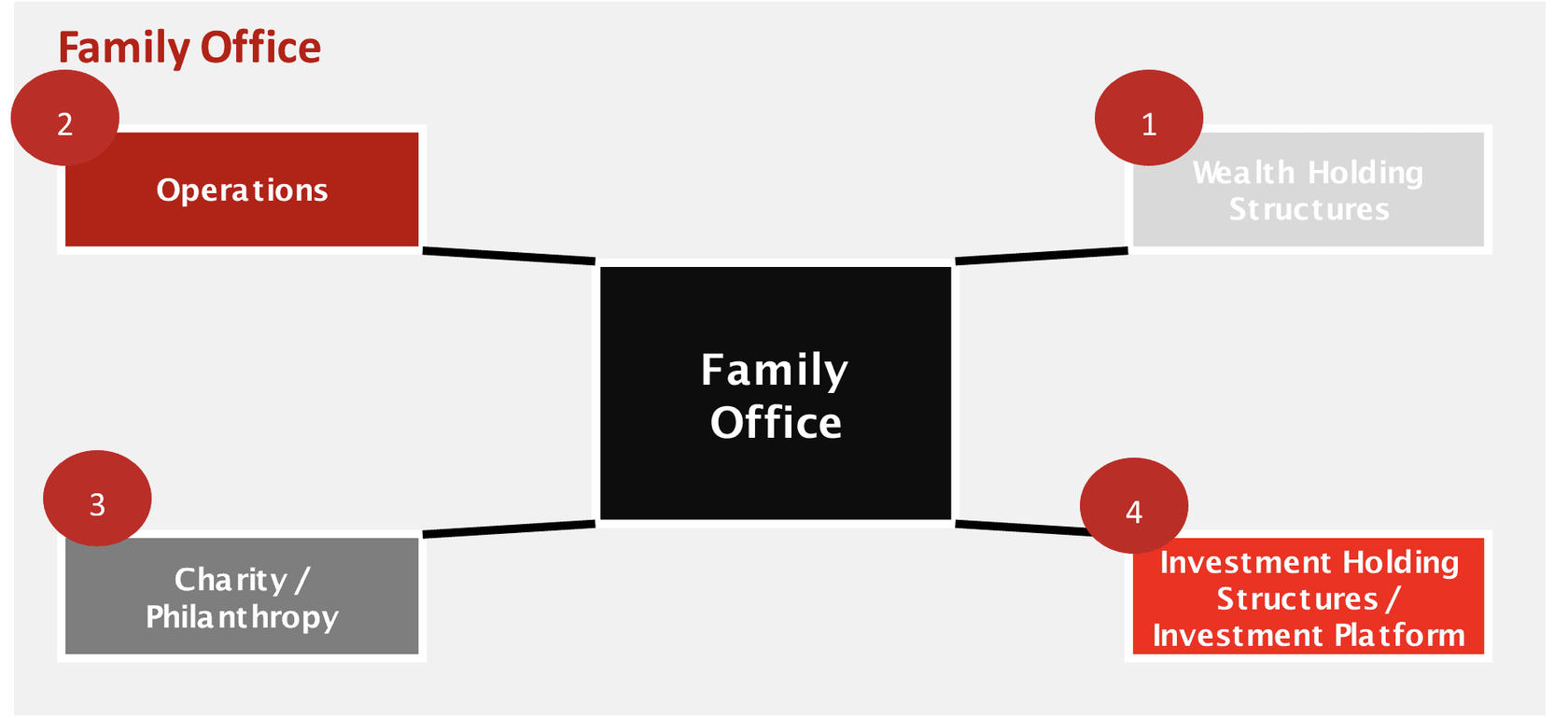
Credits: Jersey Finance
Conclusion
A wealth management company is only one aspect of a family office. Family offices give affluent families a consolidated method of handling their financial lives by combining investment management, tax planning, estate structuring, risk management, and lifestyle services under one roof.
In the domains of banking, venture capital, real estate, and long-term wealth creation, family offices are anticipated to become increasingly more significant as global wealth increases and entrepreneurial success stories proliferate. Even while their influence is frequently hidden, it is become harder to ignore how they affect international markets.